Newsletter 31.10.2026


After the autumn break, GISA returned to school life full of energy. Across the classes, students have been calculating, writing, experimenting, presenting, creating and researching – while at the same time, many of the next major events are already beginning to take shape.
The excitement surrounding our Lantern Festival is particularly visible: in the Crèche, Kindergarten and Primary School, the children are creating a wonderful variety of lanterns with great creativity. Our Secondary School is also looking ahead to an eventful few weeks. Students are increasingly taking responsibility for their own learning, contributing to social projects and preparing for school trips, presentations and special encounters.
With School Trip Week, the Gerald Asamoah Foundation's Heart Surgery Week, our Lantern Festival, the Cultural Festival and many other events ahead, November promises to be an especially varied and exciting month.
We wish all our students lots of fun on their upcoming school trips and our entire school community a great start to this eventful month!
Leaving Creative Traces – Street Art at GISA
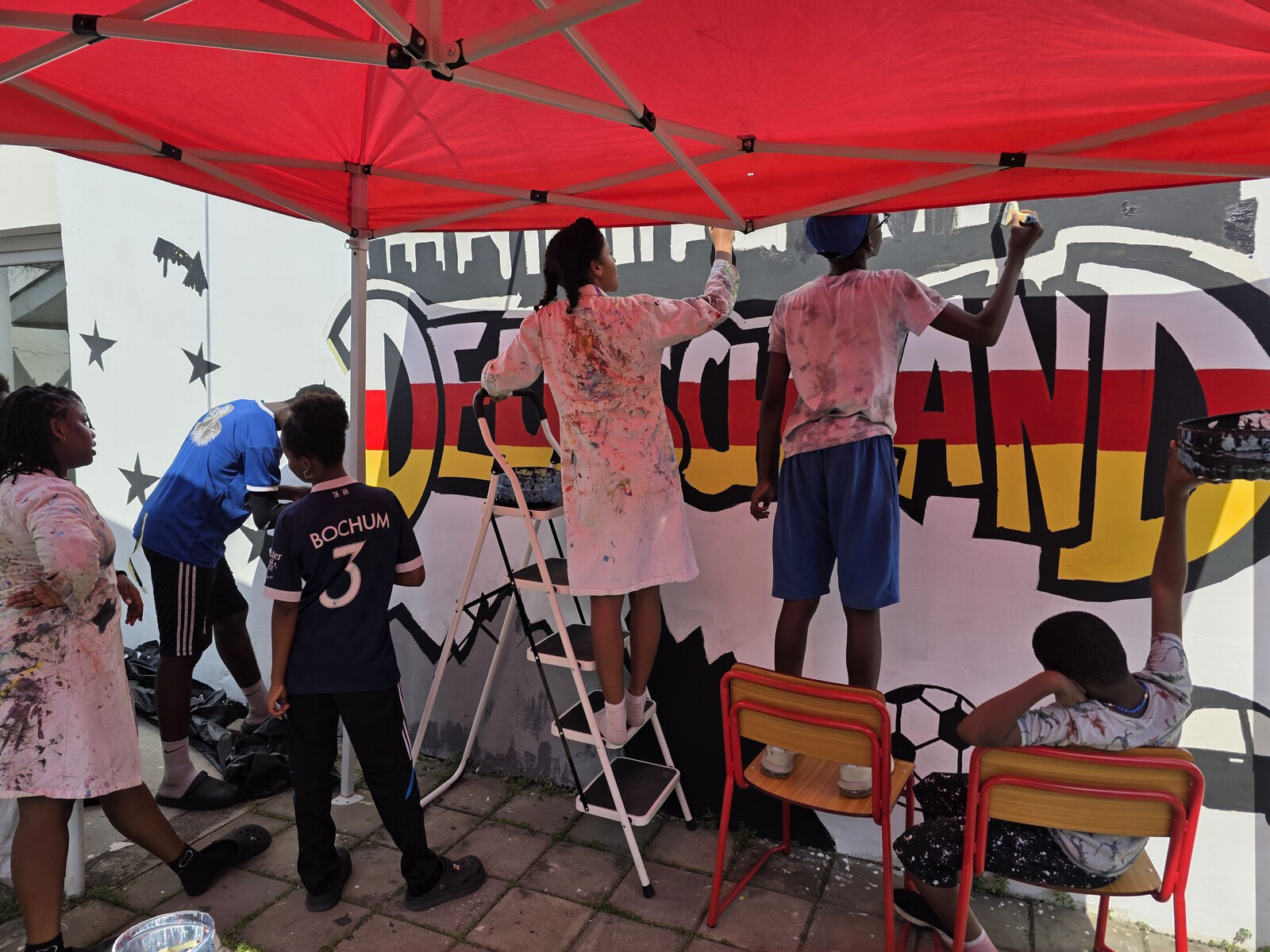 Colourful, creative and designed together! As part of the German Days, students led by Clemencia Mayoga created an impressive street art project. The colourful artwork now brightens our campus and leaves a lasting mark of creativity and teamwork.
➡️ Read more: Leaving Creative Traces – Street Art at GISA
Christmas Project Time at GISA
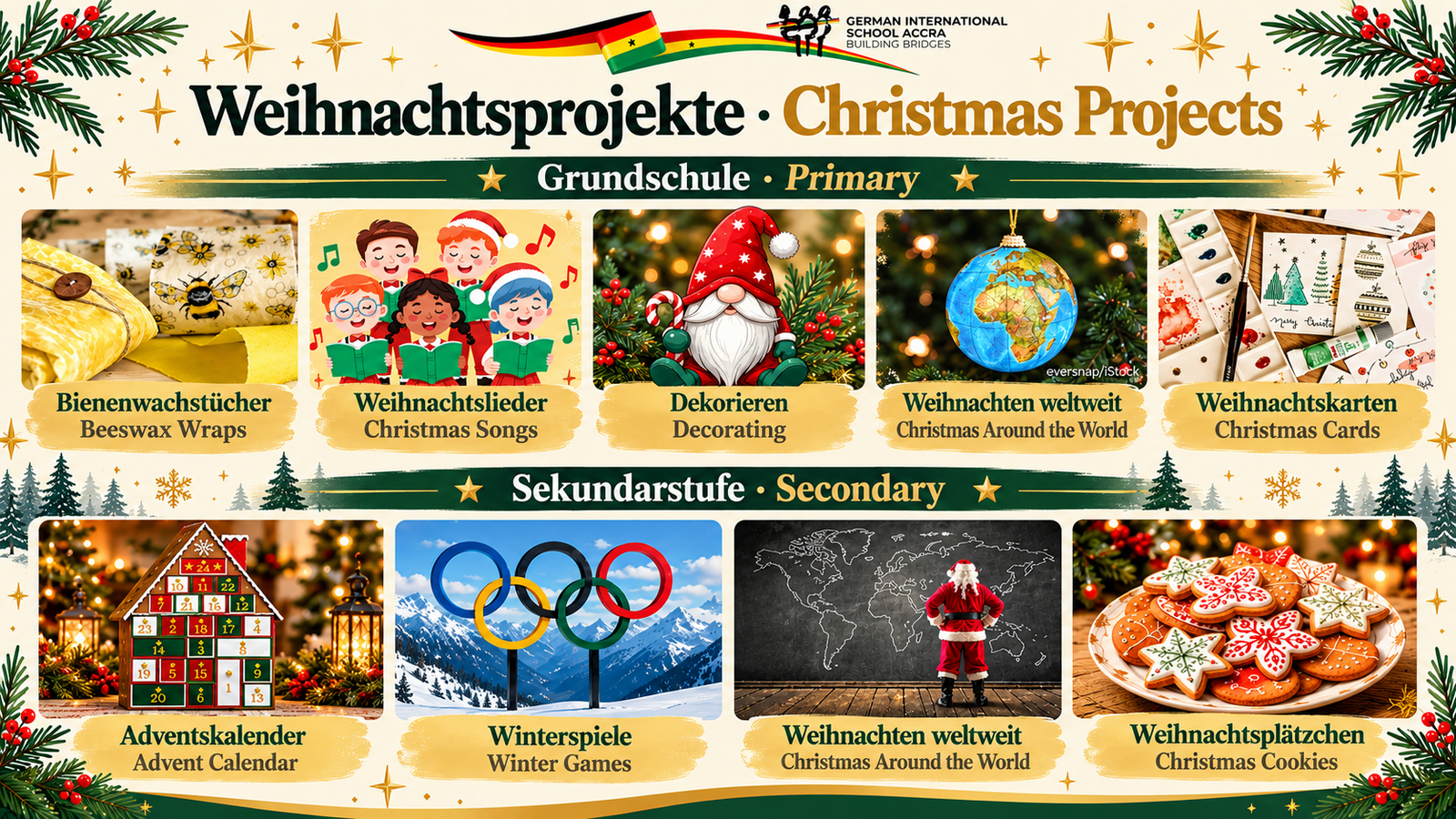 After German Language Day and School Trip Week, GISA is getting ready for its Christmas Project Time. Primary and Secondary School students can choose from a colourful range of creative, active and festive projects – from beeswax wraps and Christmas cards to Advent calendars, winter games, Christmas songs, baking and traditions from around the world.
The focus is on learning together, creativity and plenty of excitement for the Christmas season ahead.
➡️ Read more: Christmas Project Time at GISA
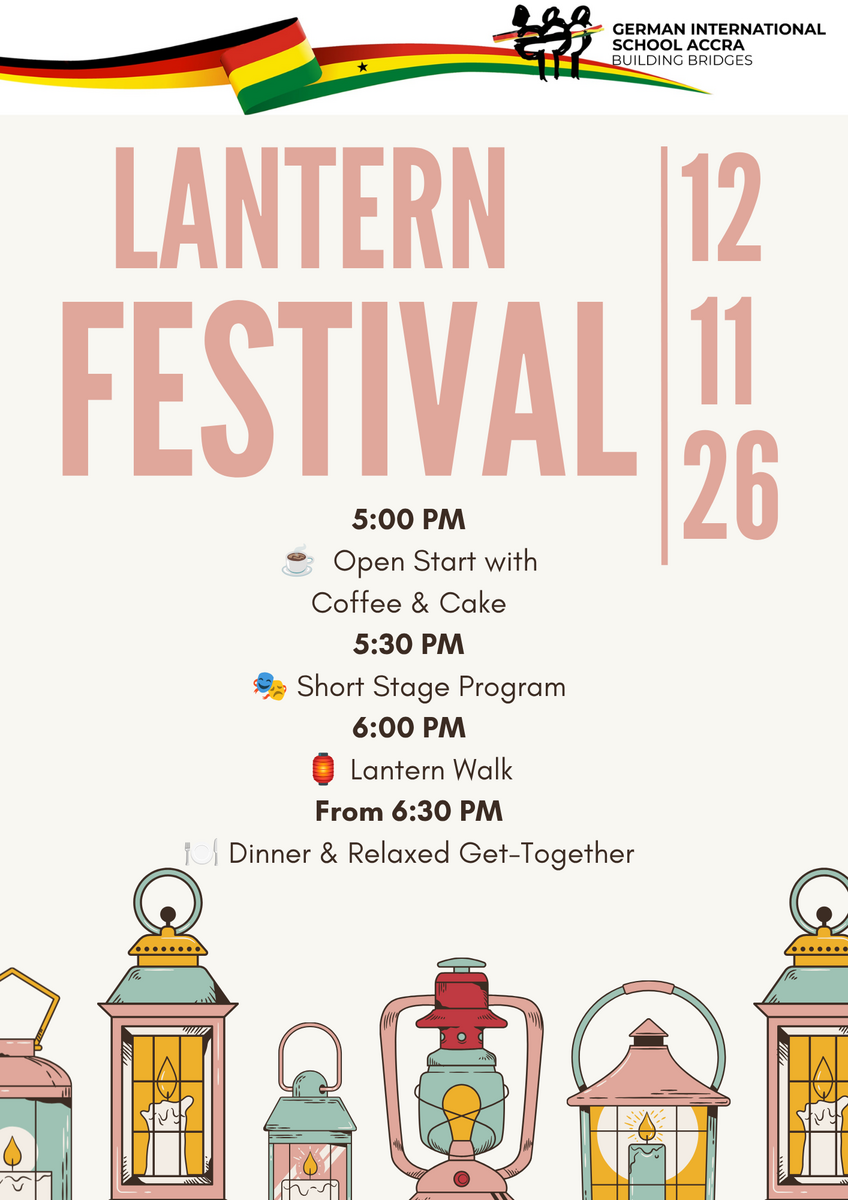
🏮 GISA Lantern Festival on 12 November 2026
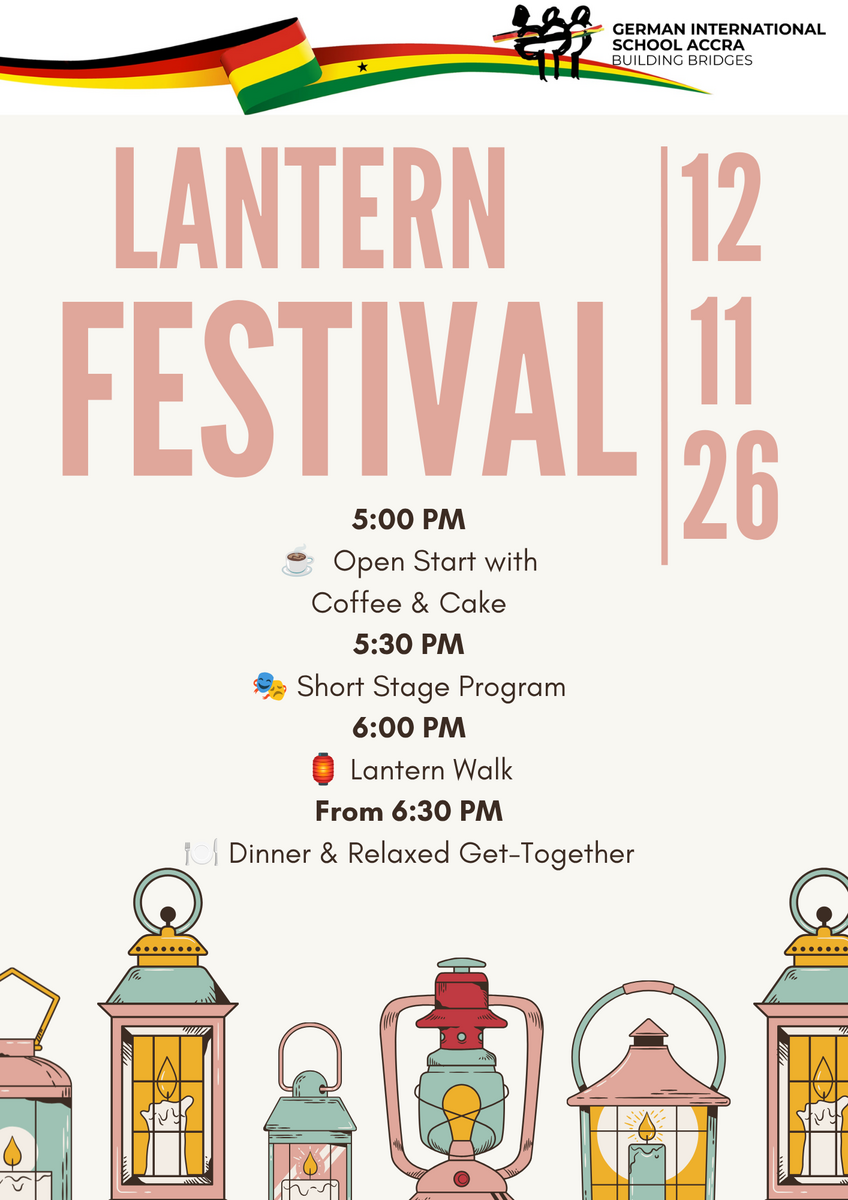 On Thursday, 12 November, GISA warmly invites the entire school community as well as friends and guests to our traditional Lantern Festival! From 5:00 p.m., everyone can look forward to a festive evening featuring a Kindergarten stage programme, a shared lantern parade and a relaxed get-together afterwards. Food for dinner can be pre-ordered until 6 November.
We look forward to many glowing lanterns and smiling children!
➡️ Read more: Invitation to the GISA Lantern Festival on 12 November 2026
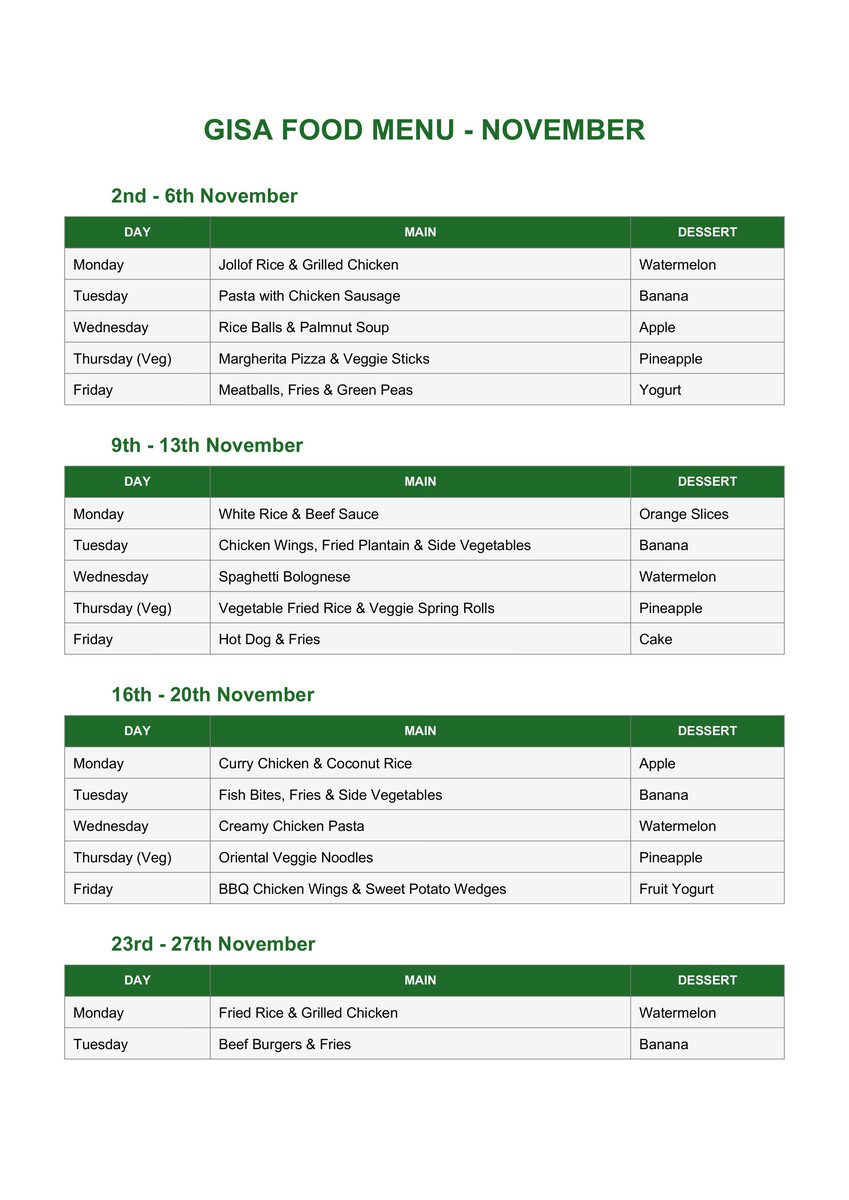
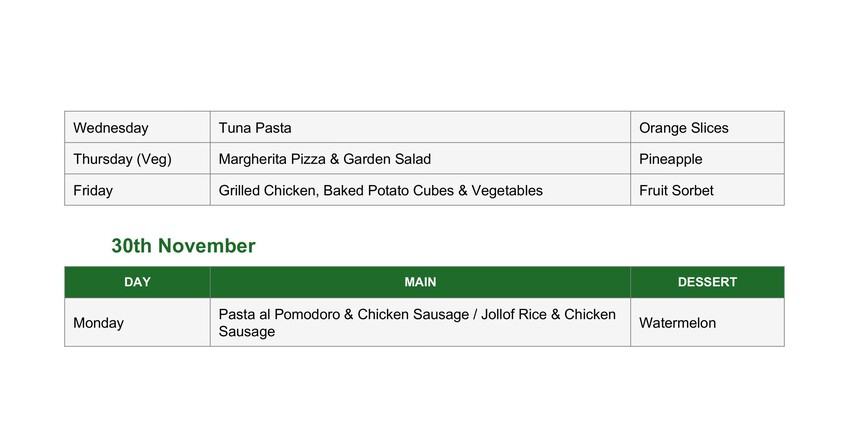
Lunch at North Ridge Café – November Menu
We are pleased to let you know that the North Ridge Café lunch menu for November is now available.
Nursery & Kindergarten
Nursery – Settling Back In, Discovering and Preparing for St. Martin
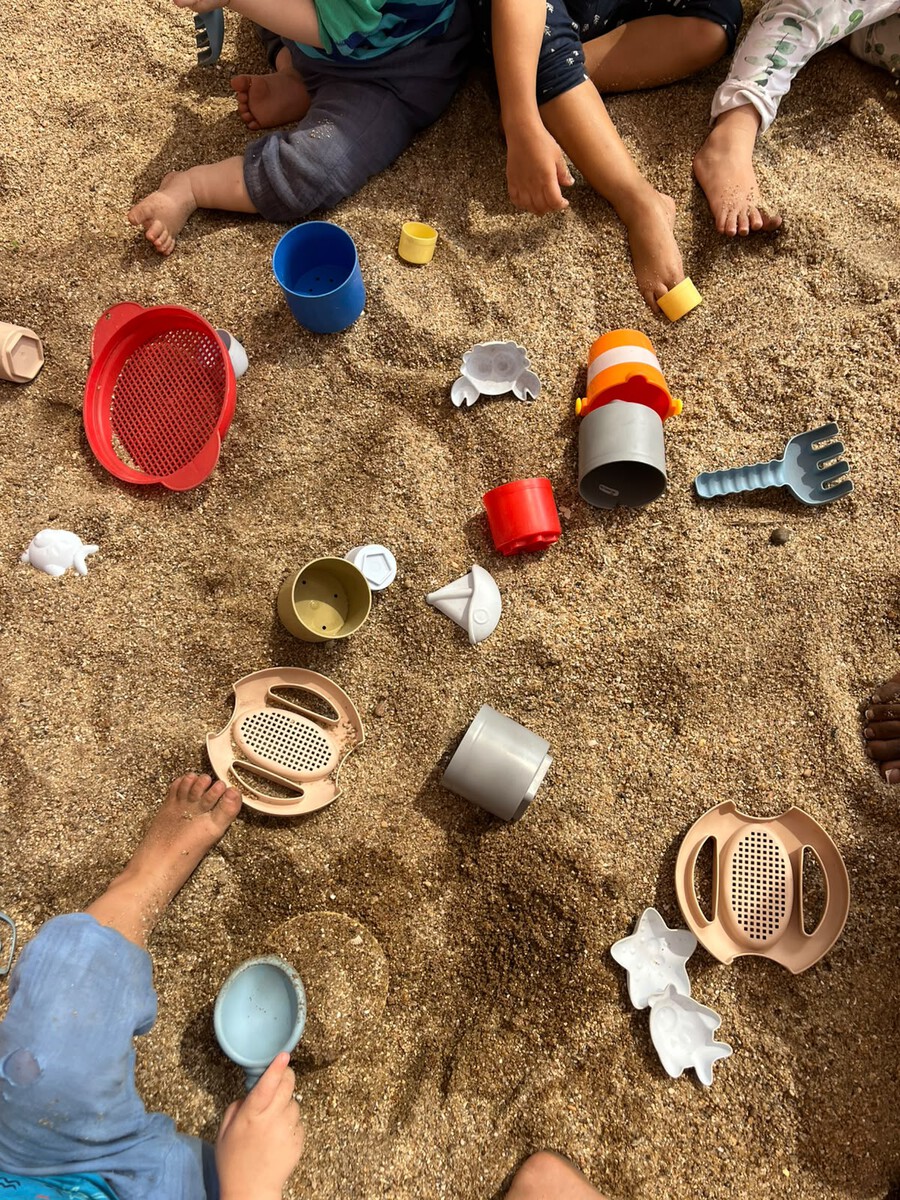
After the autumn break, settling back into everyday life in the Nursery was our main focus. The children enjoyed plenty of time for free play, shared discovery and activities in the garden. Exploring and building in the sand in particular offered many opportunities to develop creativity, motor skills and social skills through play.
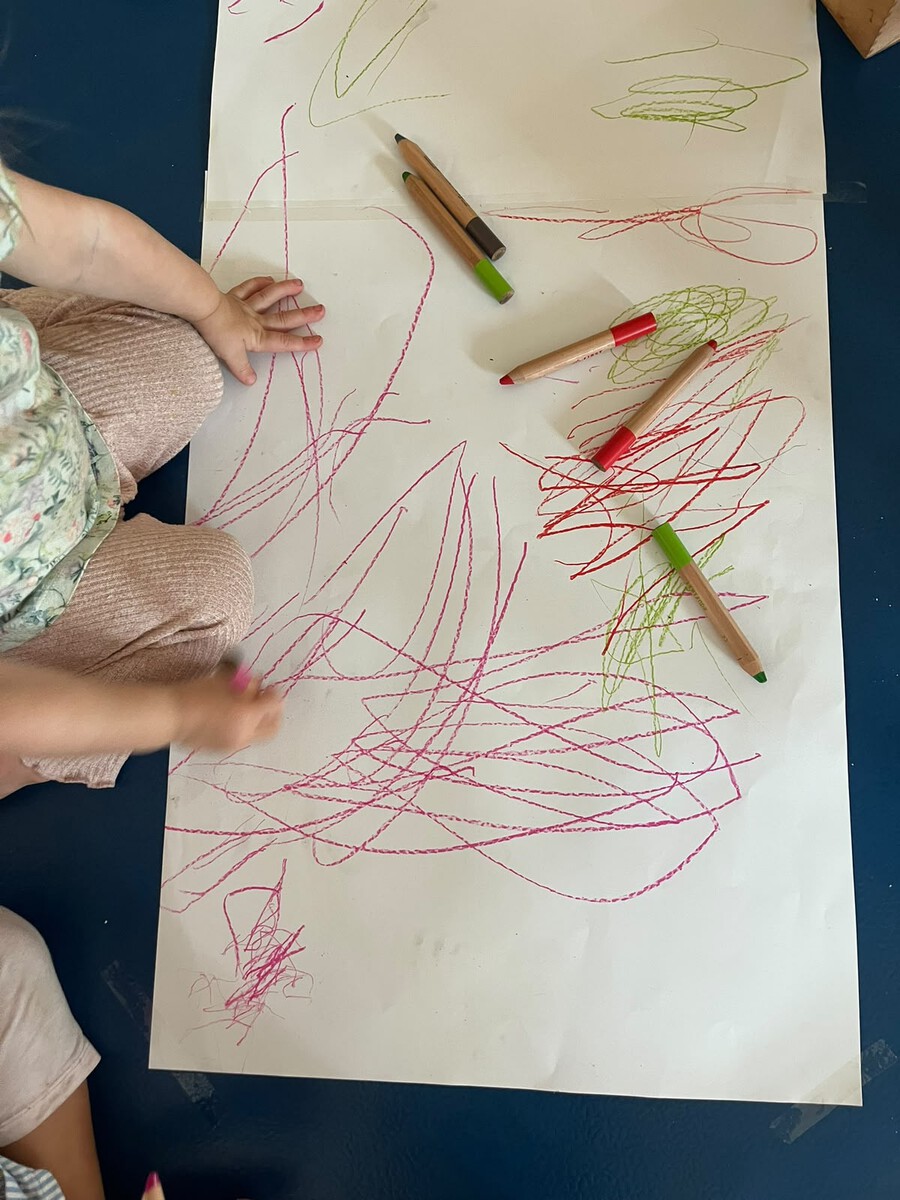
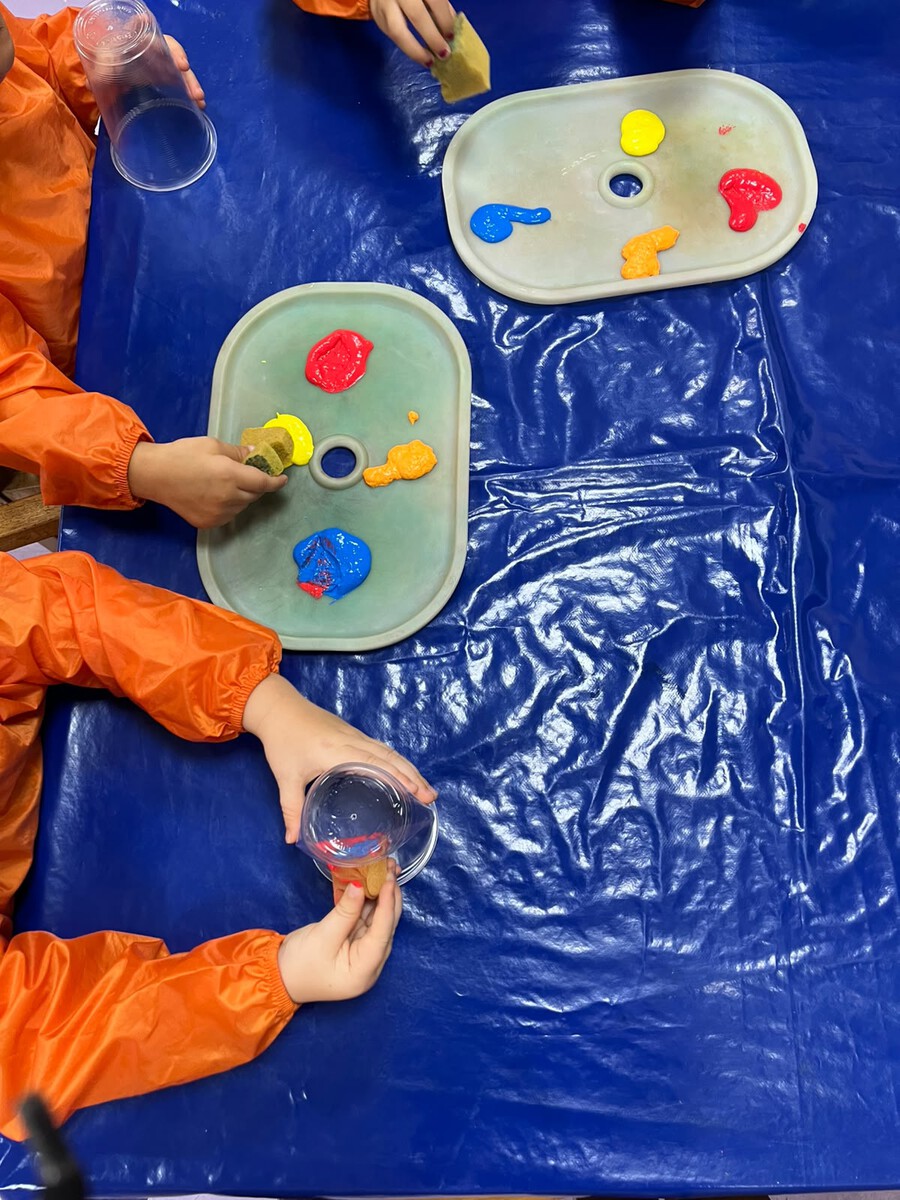
During a shared art workshop, the children created a large group picture, giving free rein to their imagination and enjoyment of creative work.
Preparations for St. Martin have also begun. Together, the children are creating their first decorations for the Crèche and getting ready for the upcoming lantern parade.
Kindergarten – Excitement for the Lantern Festival Is Growing
This week, preparations for our upcoming Lantern Festival were at the centre of our activities. With great enthusiasm and creativity, the children made decorations, practised our St. Martin songs and prepared for the festival together. Our preschool children are also busy rehearsing their small play based on the story of St. Martin.
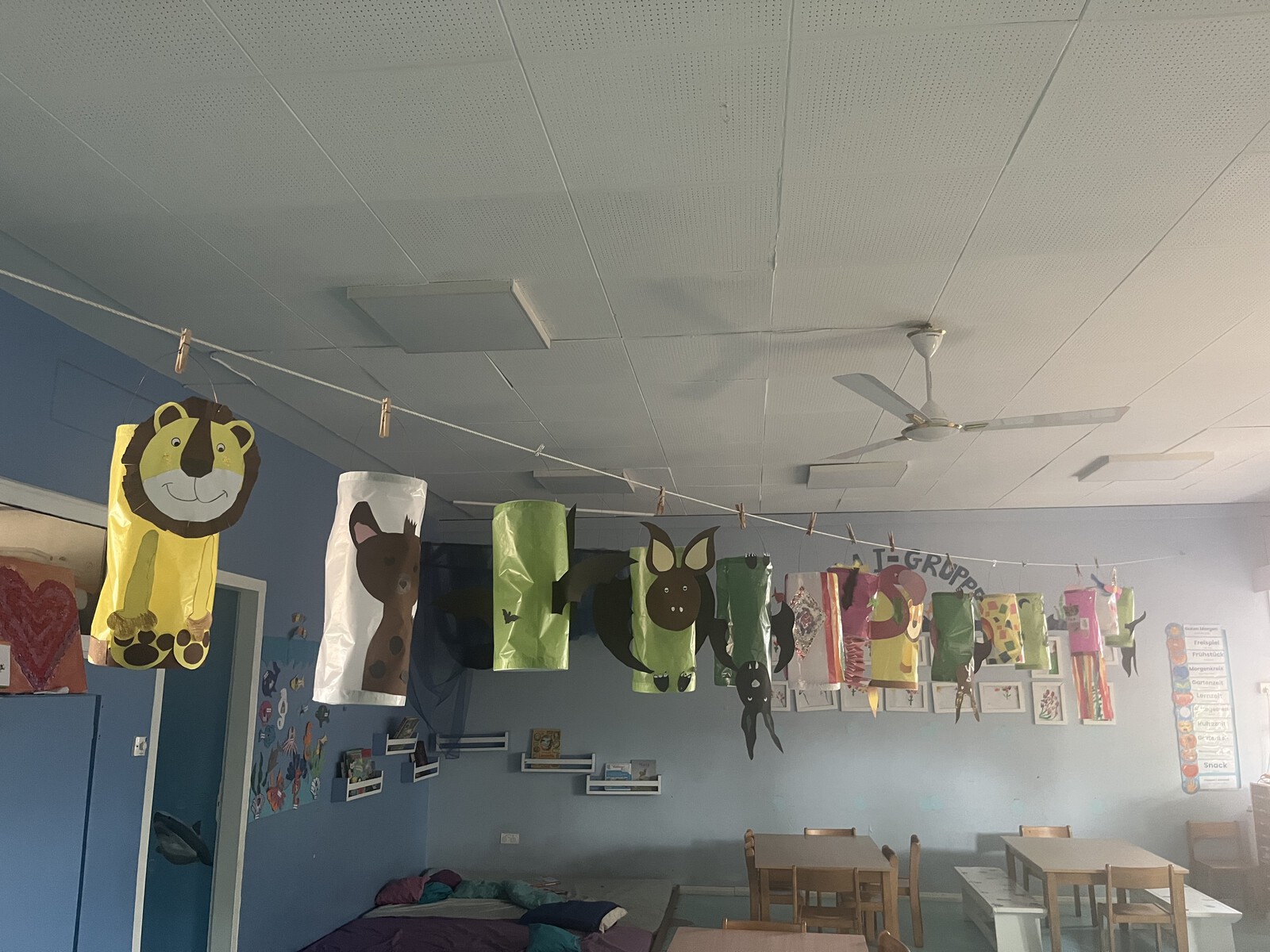
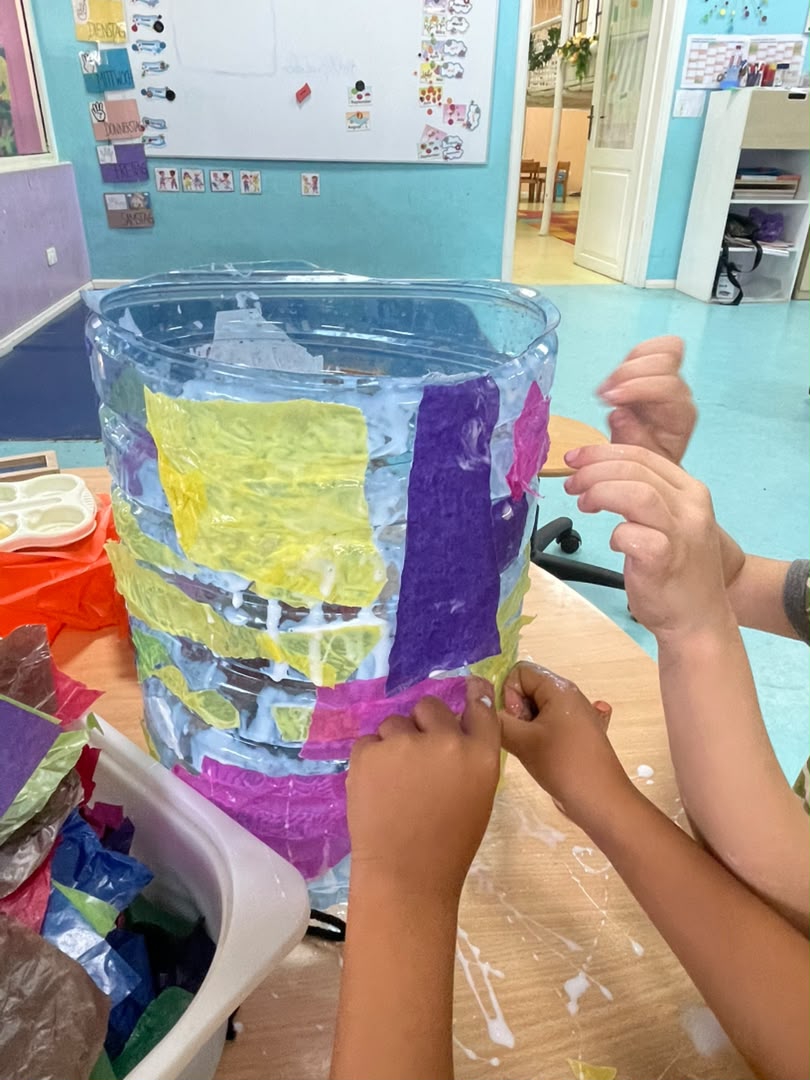
A special highlight was our craft afternoon on Wednesday, to which we invited parents. Together with their children, they created beautiful lanterns. Many different designs emerged – from animals and unicorns to rainbows and even ninja lanterns.
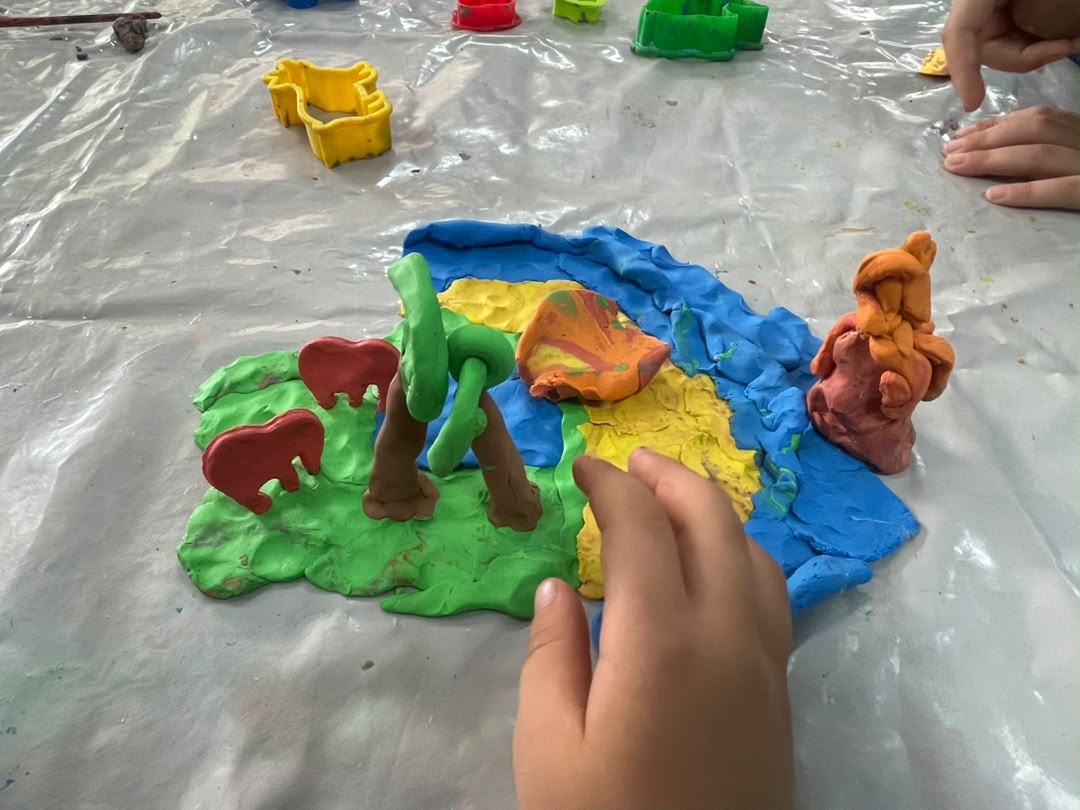
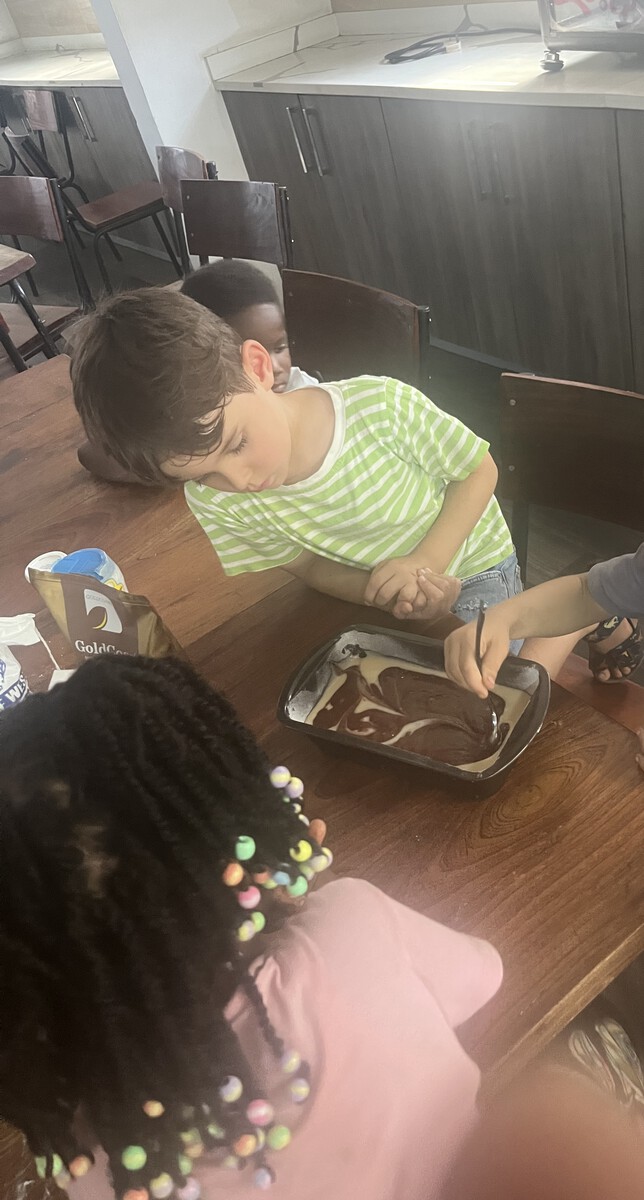
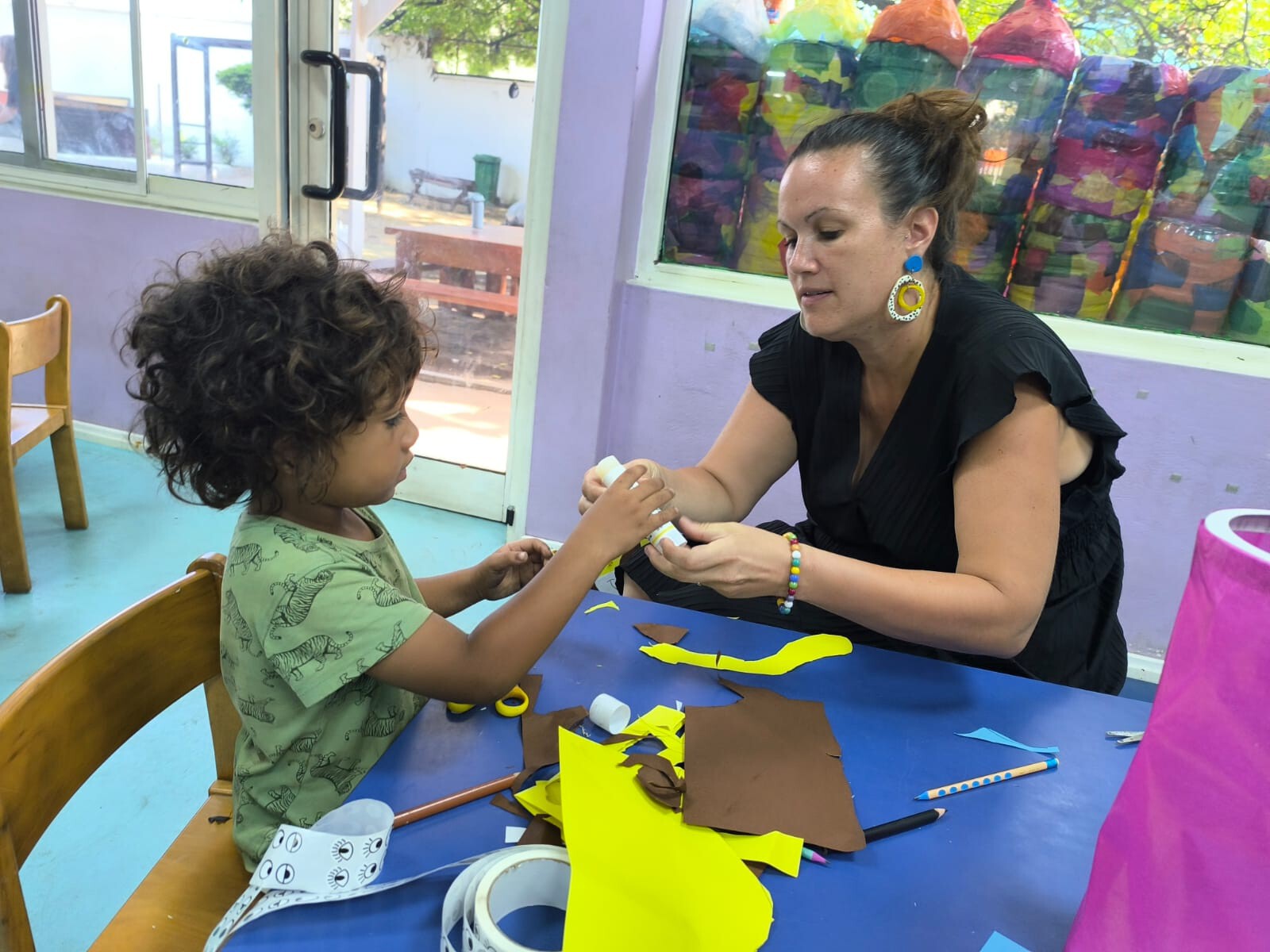
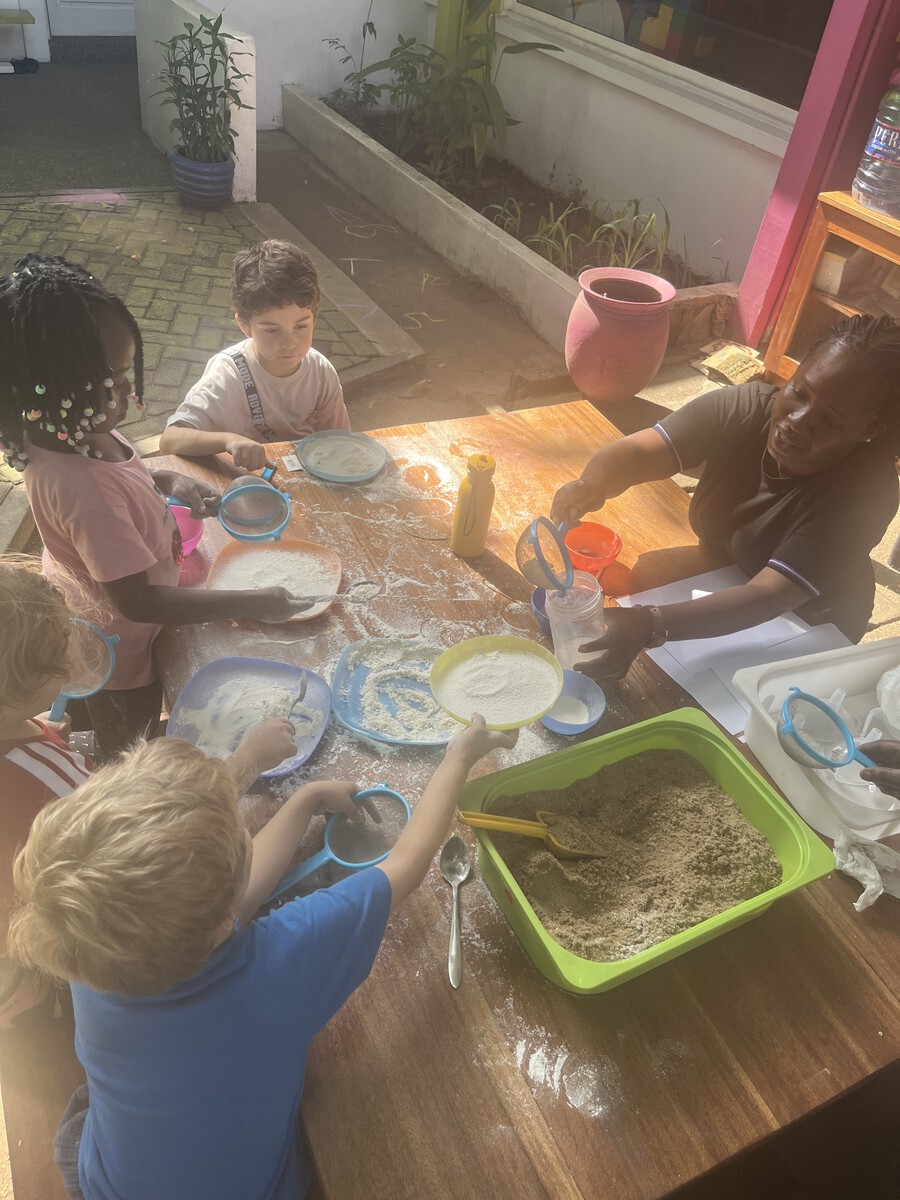
Our regular activities also continued throughout the week. In Science Club, for example, the children experimented with different sieves and explored how sand and flour can be separated. We also worked on the concept of quantities: water was poured into different containers and the children discussed which held more or less.
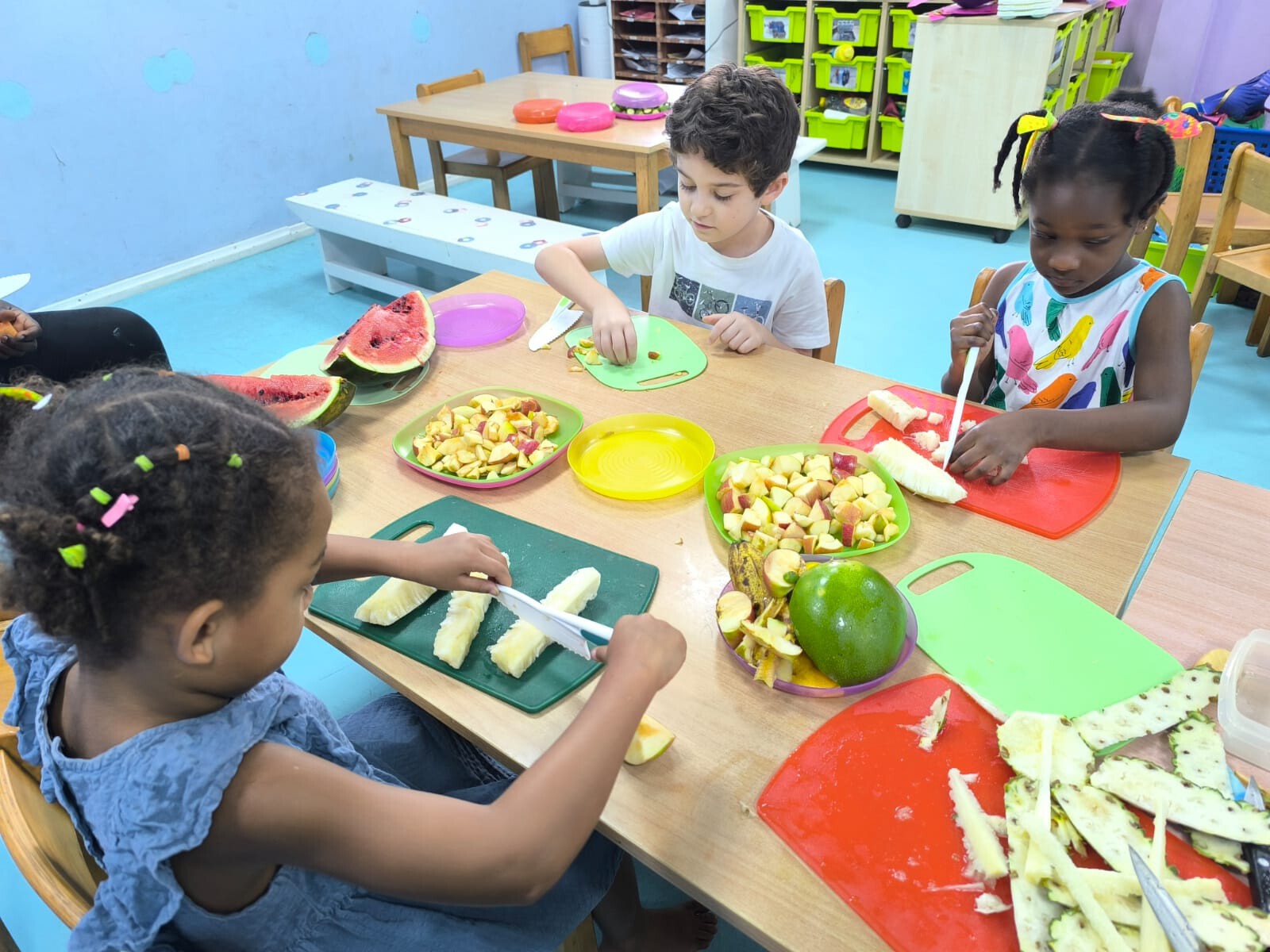
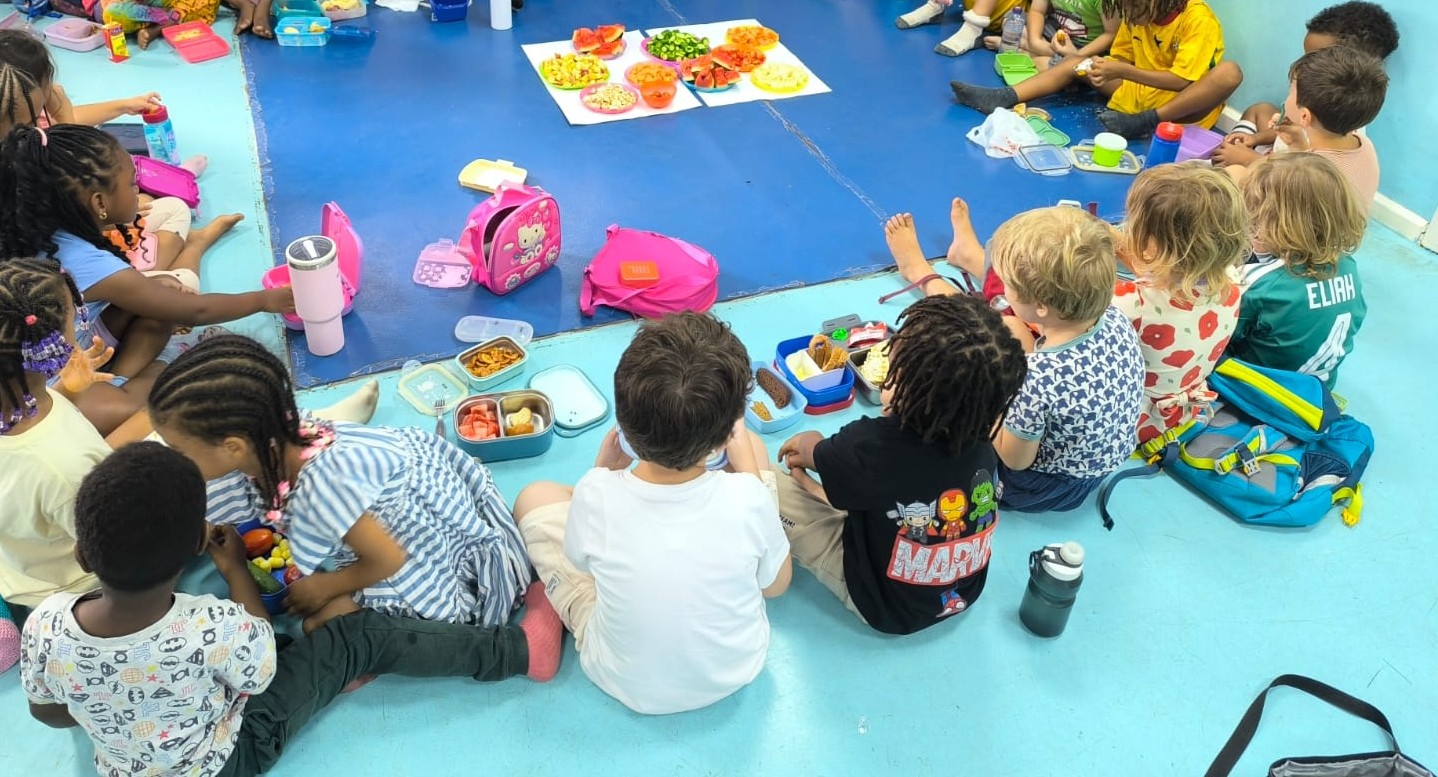
At the end of the week, we enjoyed our popular Fruits & Veggies Day. The children brought in a variety of fruits and vegetables, which we cut and prepared together. In the spirit of the St. Martin story, we then shared everything and enjoyed the food together.
A wonderful week full of creativity, community, exciting discoveries and growing anticipation for our Lantern Festival!
Creative Craft Afternoon in Kindergarten
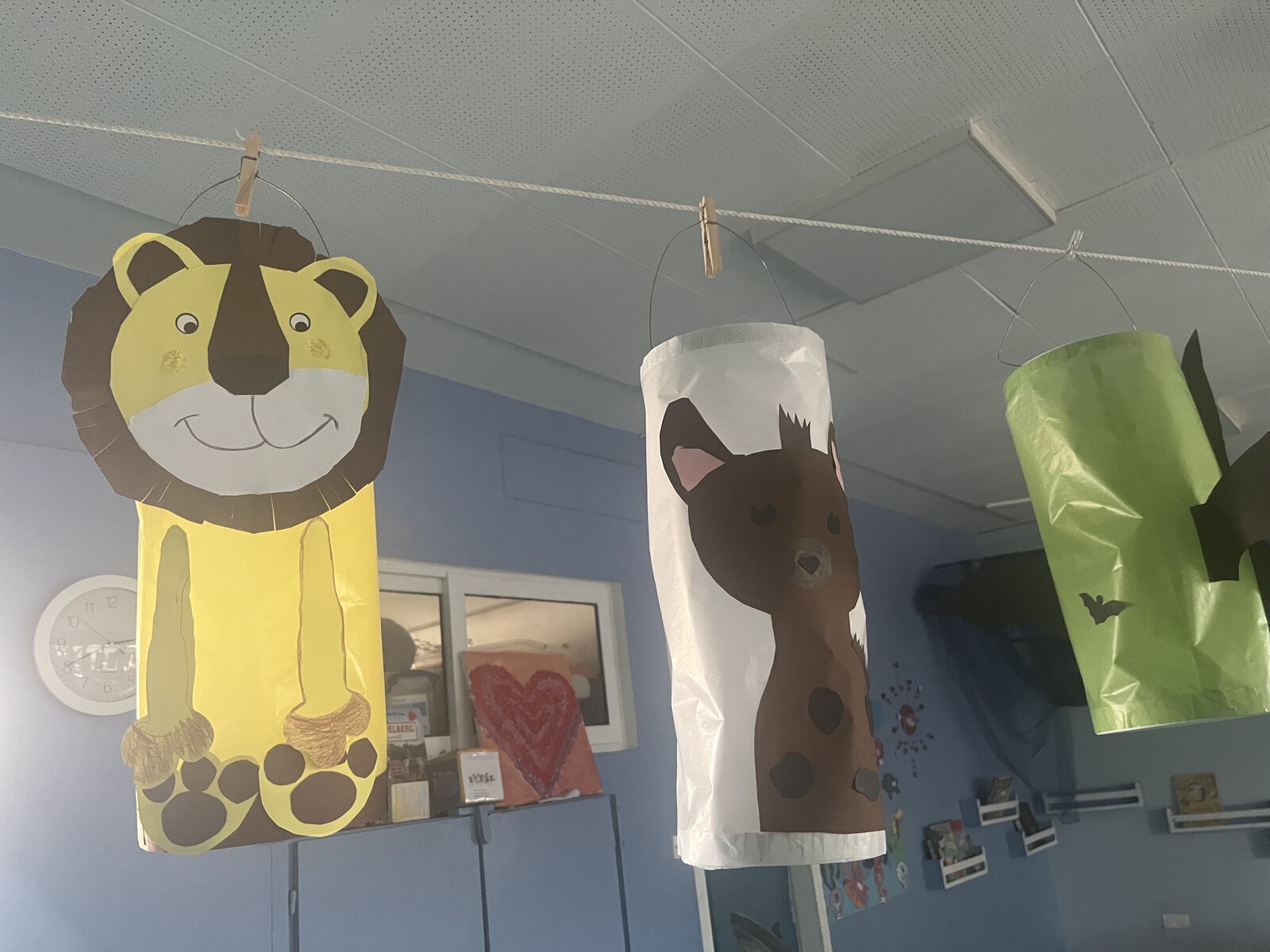 Together with their parents, our Kindergarten children created their very own lanterns for the upcoming Lantern Festival last Wednesday. Alongside all the creativity, the afternoon was above all about spending time together – with opportunities for conversations, encounters and many lovely shared memories.
➡️ Read more: Creative Craft Afternoon in Kindergarten – Creating Beautiful Lanterns Together
Primary School
Grade 1/2 – Reading, Mathematics, Birdwatching and Bringing Zebras to Light
Congratulations! In German, Grade 1 has already completed the second Lola workbook. The children are making steady progress in learning to read and write and are working with great enthusiasm and motivation.
Grade 2 explored charts, reading and creating them independently. The children also took a closer look at different everyday texts, including television schedules, tables of contents and weather maps. In doing so, they practised finding specific information in texts.
In Mathematics, Grade 1 began working on addition and also discovered the commutative property of addition. Grade 2 tackled step-by-step subtraction across a tens boundary. The motto was: "First go back to the ten!" Your child can probably already explain how this works. Why not try it with these examples: 53 − 7, 74 − 8 or 22 − 6. A little hint: the first step always takes you back to the nearest ten.
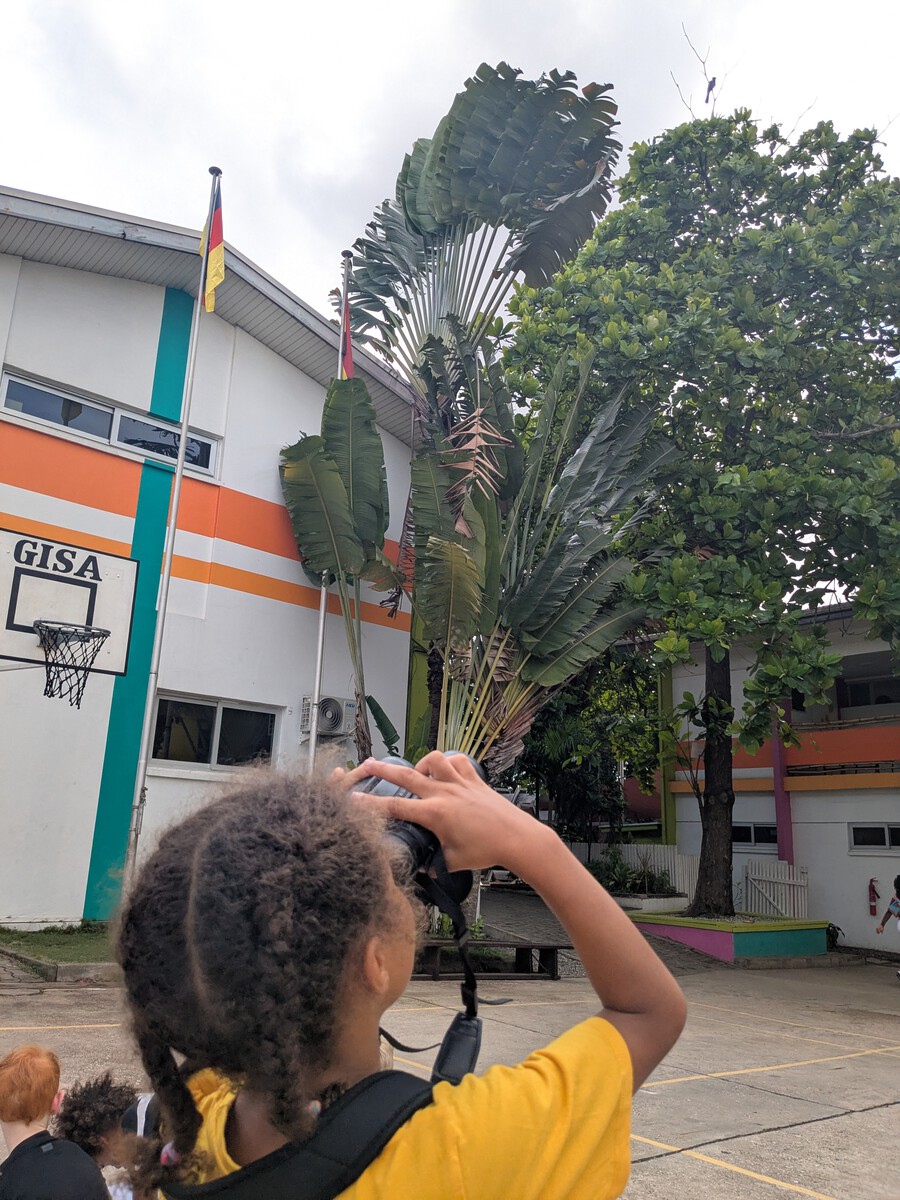
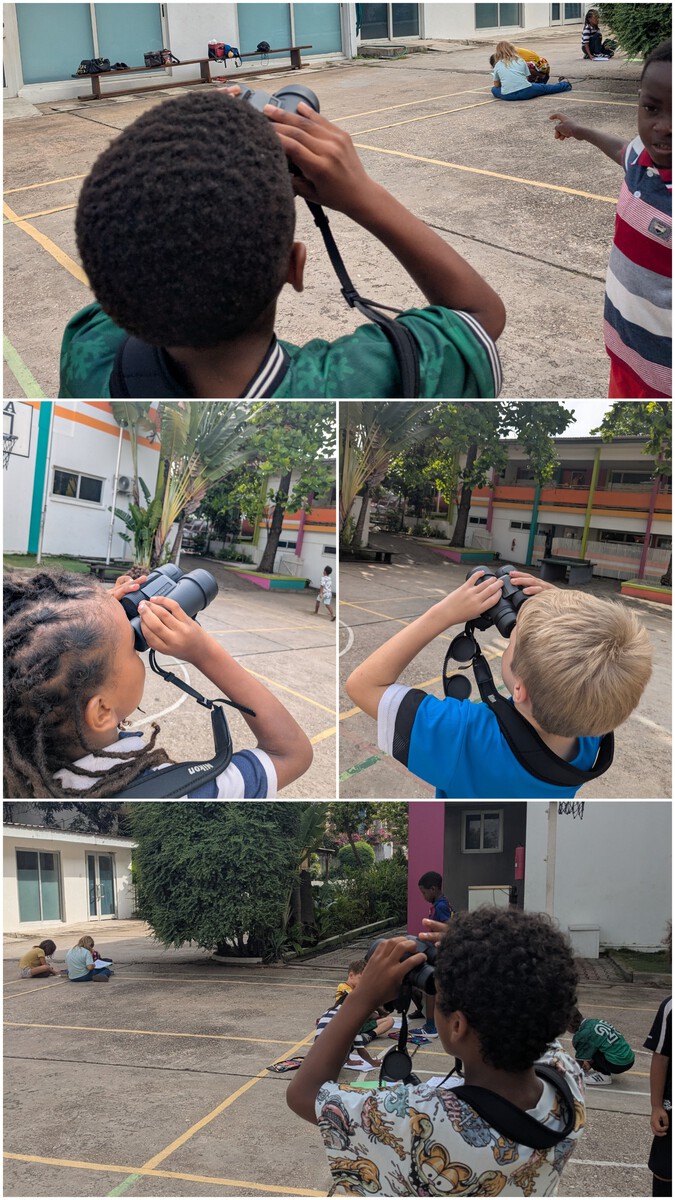
In General Studies, we went birdwatching! On our school grounds, we were able to spot several interesting birds, including Plantain-Eaters, kites, Green Wood Hoopoes and Common Bulbuls. With a little luck, you might also see Ring-necked Parakeets, kingfishers and African Grey Hornbills. So keep your eyes open in the mornings – perhaps you and your child will discover one of our feathered neighbours together!
Afterwards, we took a very close look at birds' beaks. A beak can tell us quite a lot about what its owner eats. Is it narrow and pointed like a pair of tweezers? Then it is particularly useful for picking up insects and other small treats. Is it short and strong like a pair of pliers? Then it can crack hard grains and seeds. In this way, we discovered that the shape of a bird's beak is closely connected to its feeding habits.
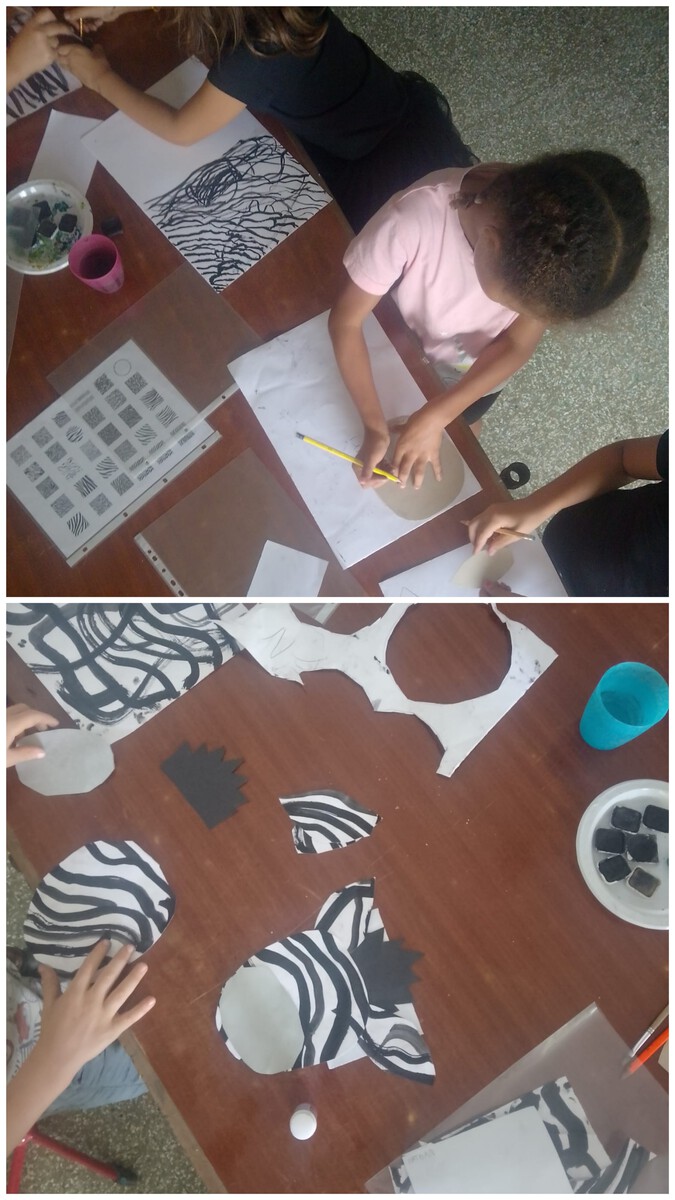
Stripe alert in the Art room! Our zebra lanterns are gradually taking shape. After exploring the world of zebra patterns with "Quak the Frog" last week and creating our own stripes, this week it was time for cutting and gluing.
Using templates, we drew heads, ears and manes onto our individually designed zebra patterns. Then we cut and glued until the first zebras were finally looking back at us.
Next week, our zebras will also get their bodies, which will form the main part of our lanterns. Then it will hopefully soon be time to say: "Lights on for our striped zebra herd!"
Grade 3 – Reading Strategies, Mathematical Challenges and Bee Lanterns
We worked very hard in German this week. We read challenging non-fiction texts and practised our reading strategies, which helped us answer many questions about the content.
We also held a small spelling race: working like real spelling detectives, we searched for mistakes in a text and found them using the FRESCH spelling strategies before copying the corrected version.
With a parts-of-speech Kahoot, we also became more confident in distinguishing between nouns, verbs and adjectives. This is especially important for using capital and lower-case letters correctly in German.
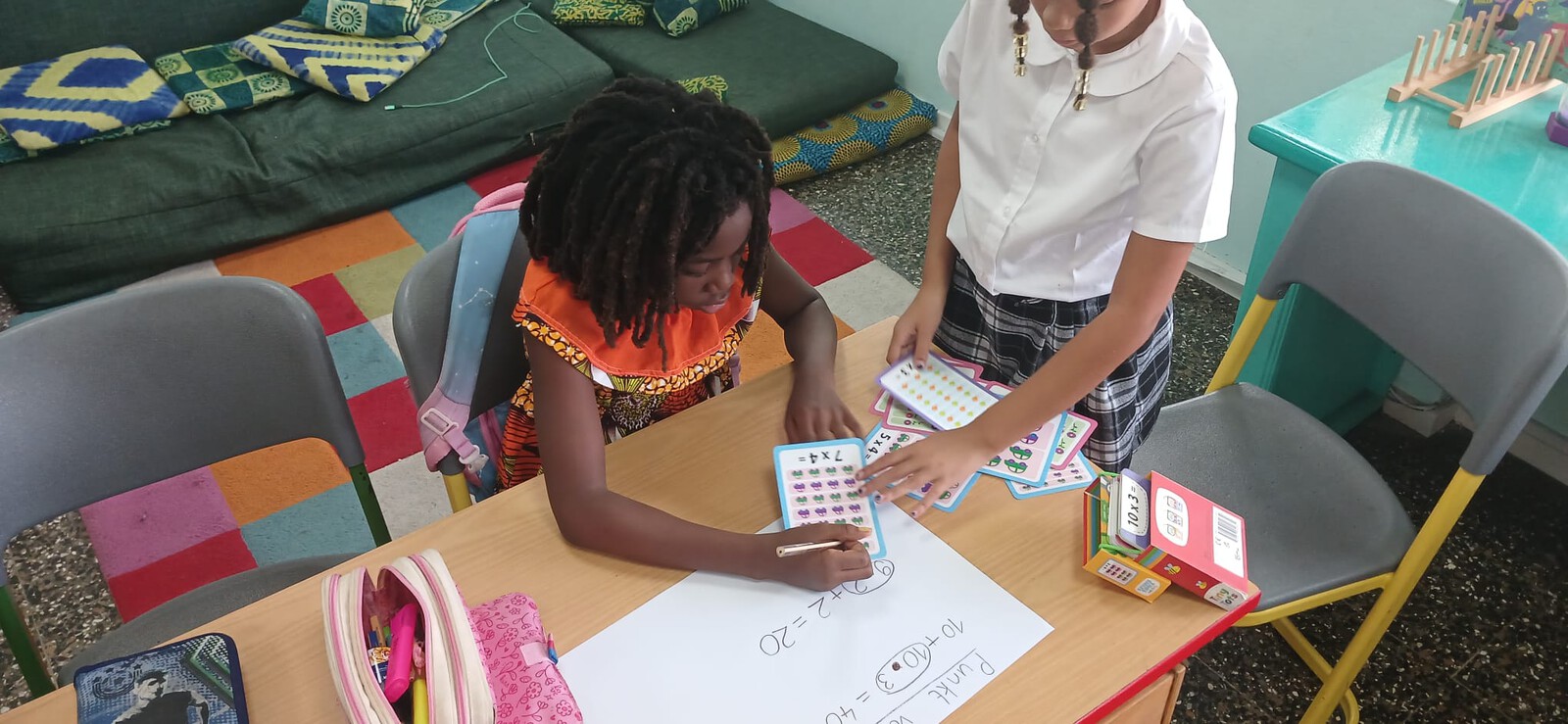
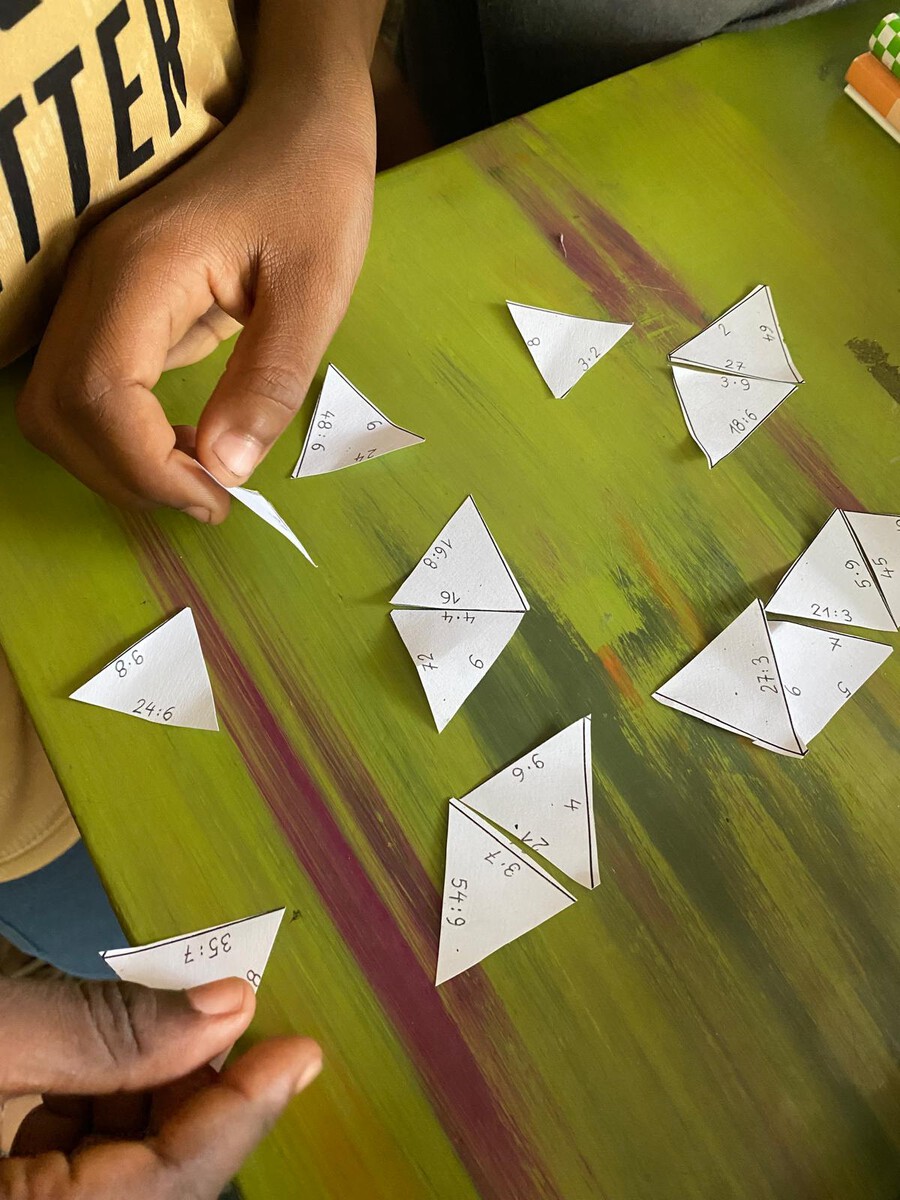
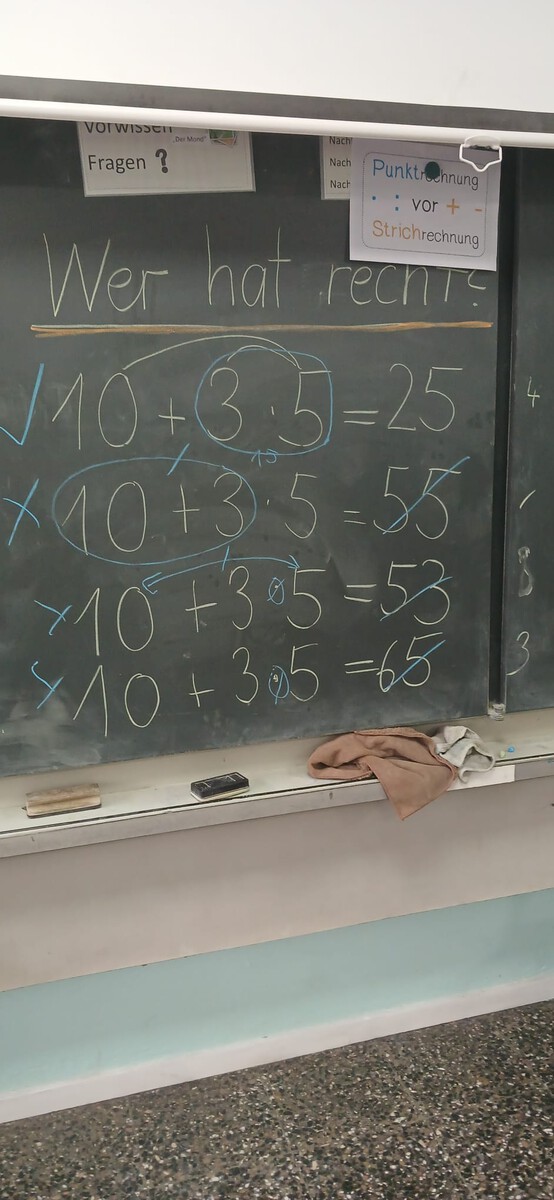
We were also particularly hard-working in Mathematics this week. We learned lots of new things and once again tackled more challenging tasks such as number puzzles and word problems. We were introduced to division with remainders as well as the rule that multiplication and division come before addition and subtraction. Our heads were steaming and our brain muscles grew stronger! At the same time, we continued consolidating our multiplication tables so that we can become even more confident at mental arithmetic.
In English, Grade 3 explored articles and learned how small words such as a, an and the help us build meaningful sentences. Through practical worksheet activities, the students applied their knowledge and practised choosing and using the correct articles in different contexts.
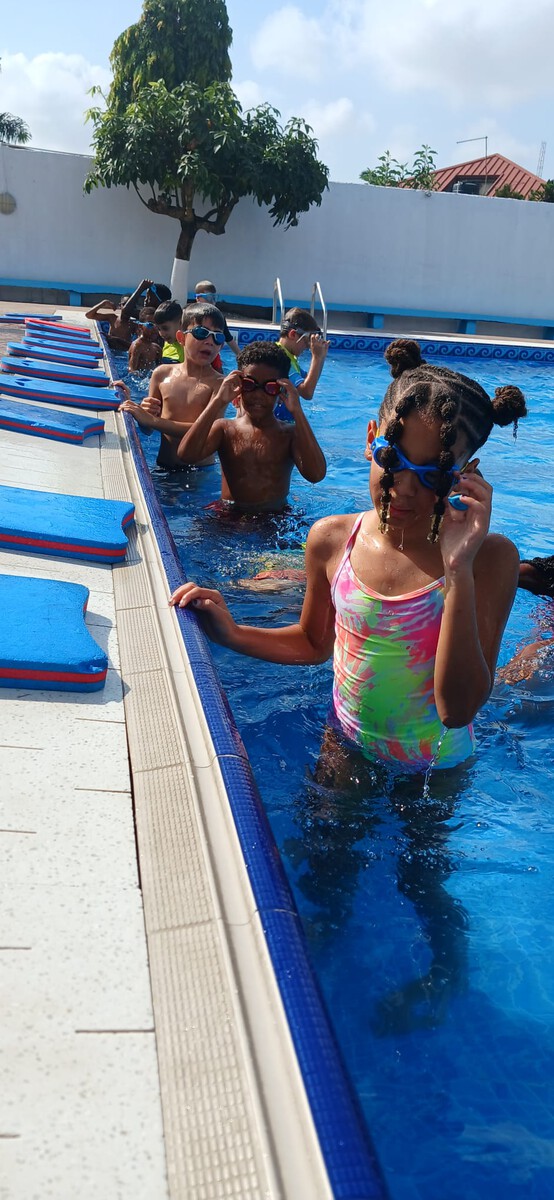
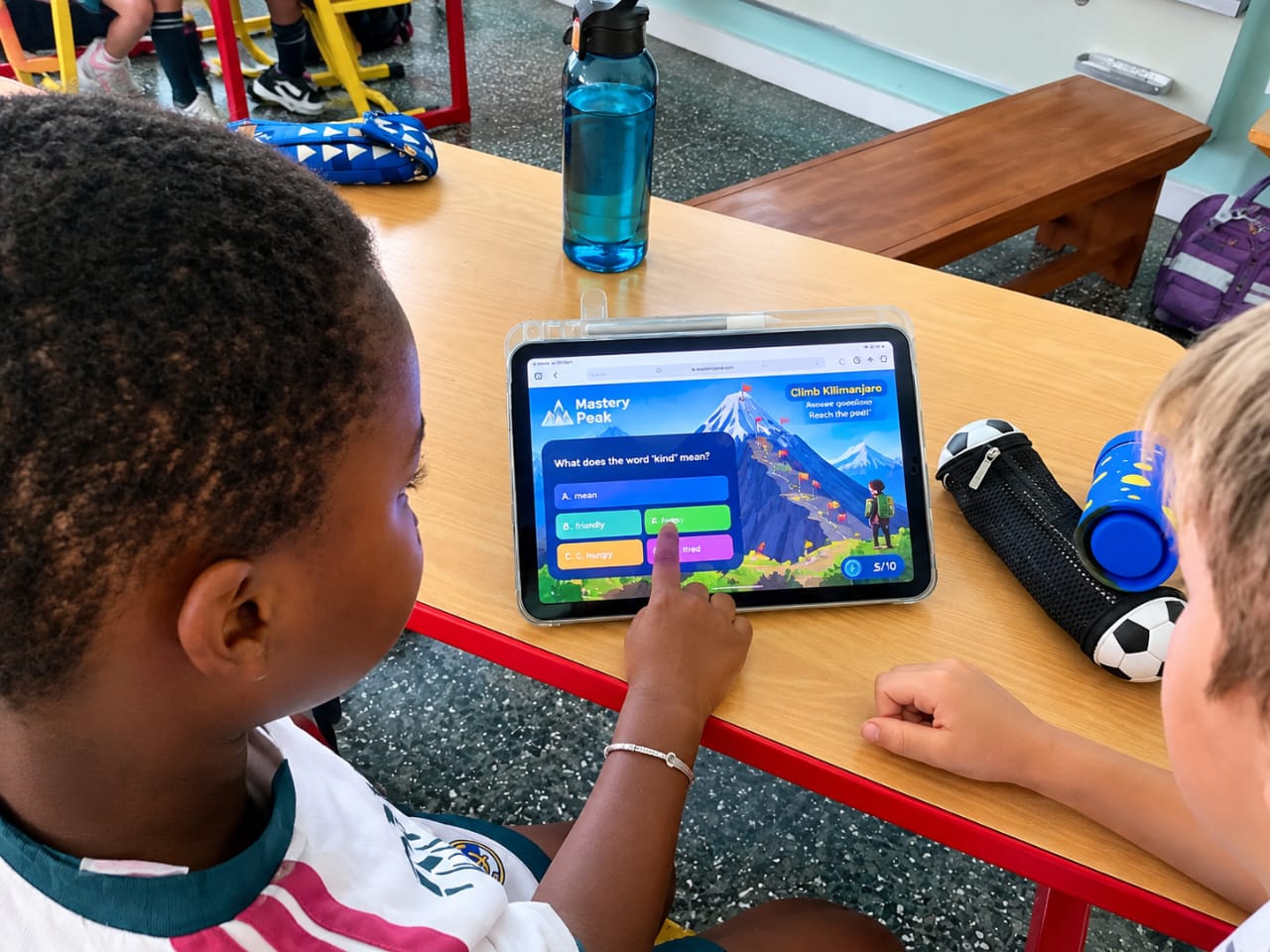
To make the learning even more engaging, we complemented the lesson with an interactive Wayground activity in which the students could test their understanding in a playful way. Sometimes the smallest words really do make the biggest difference! Grade 3 continues to build a strong foundation in English – word by word.
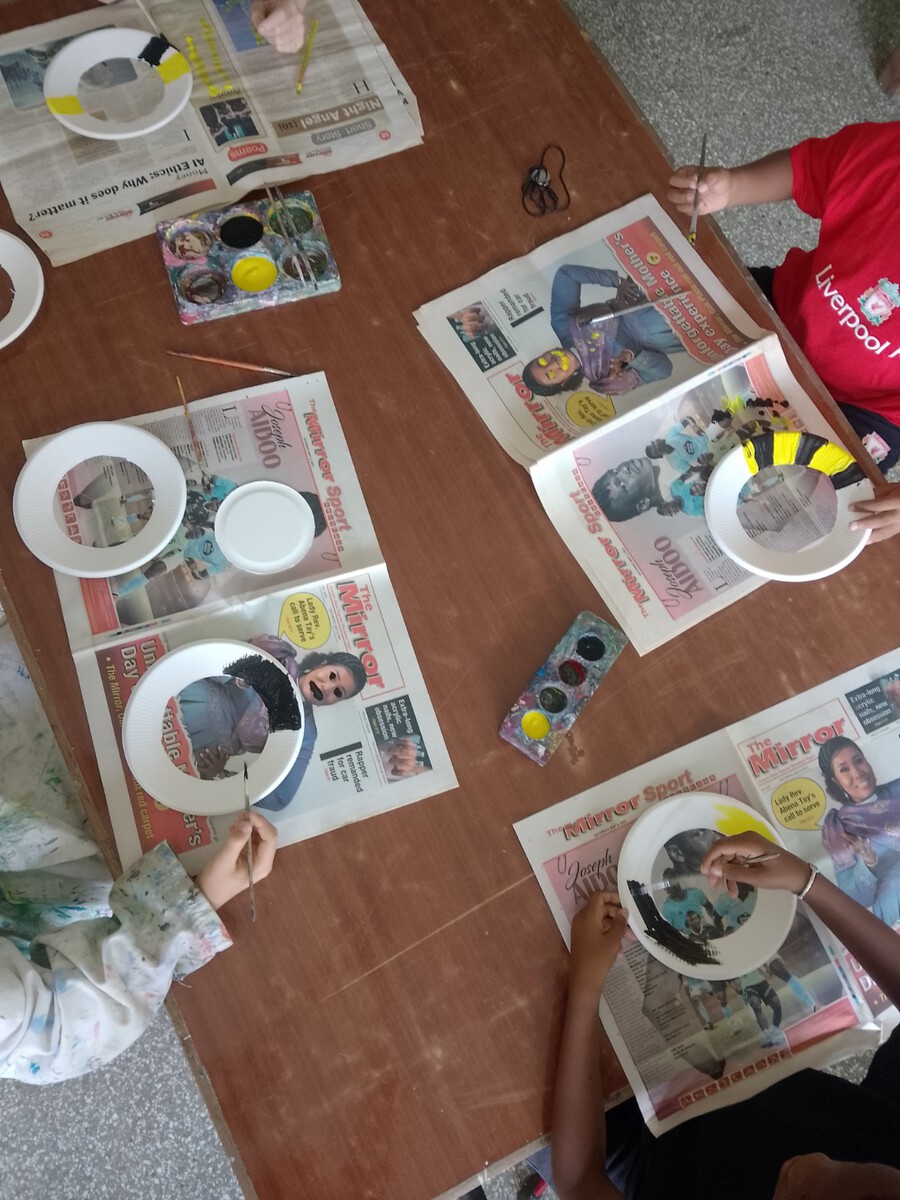
In Art, things looked rather mysterious at first this week: What are these circles? Why is there a hole in the middle? And why are we painting everything black and yellow?
But there is a clear plan behind the striped circles: we are making our bee lanterns! There was plenty of painting, drawing and cutting, and little by little the individual parts of our glowing insects began to emerge.
For now, they are still lying somewhat scattered across the tables – our bees are, so to speak, still at the assembly-kit stage. Over the next few lessons, however, we will put everything together. Then the circles, wings and other individual parts will become our bee lanterns for the Lantern Festival.
Luckily, they do not need to fly – glowing will be quite enough!
Grade 4 – Writing, Big Numbers, Children's Rights and Creative Dinosaurs
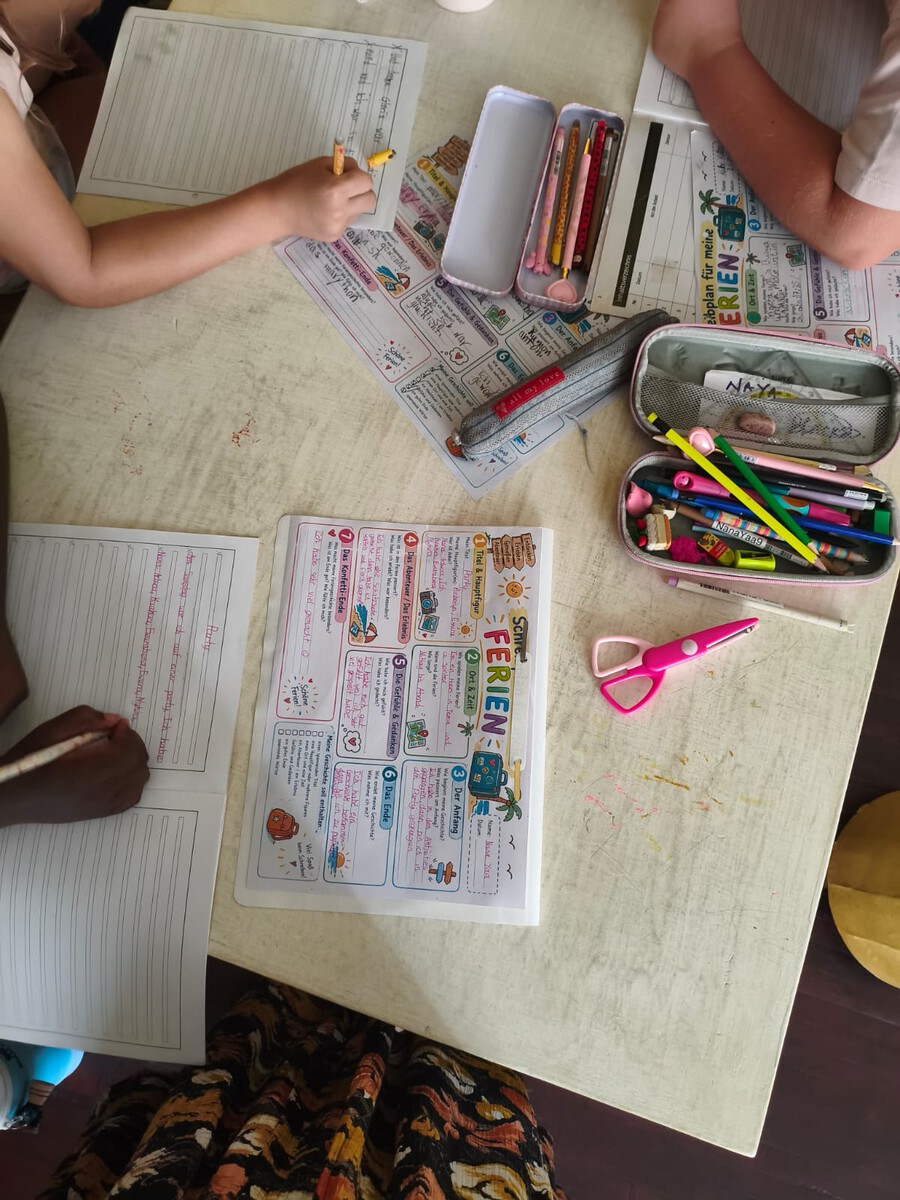
In German, the main focus this week was on our jointly written story for the writing competition. First, the children worked together to identify what makes a successful introduction and then put their ideas down on paper.
We then turned our attention to the main part of the story. The children explored how to build suspense, develop a plot, use adjectives purposefully and vary sentence openings. With lots of creativity and great ideas, they continued working on their story. By the end of the week, the main section was complete – a major step towards finishing our shared competition story!
In our language work, our familiar characters continued to accompany us: Norman for the nominative, Gerda for the genitive, Daniel for the dative and Aki for the accusative.
Through varied learning stations, the children explored the four German noun cases in depth. They examined challenging examples, solved different tasks and consolidated their knowledge.
In Mathematics, the children completed their work on extending the number range to 100,000 and started solving their first calculations within this larger number range.
They practised finding their way confidently within the number range and applying different calculation strategies. We worked with the principle "small calculation – big calculation" and explored how tasks can be solved step by step or efficiently using place value. The aim is for the children to understand numbers and calculations more deeply and to choose suitable strategies.
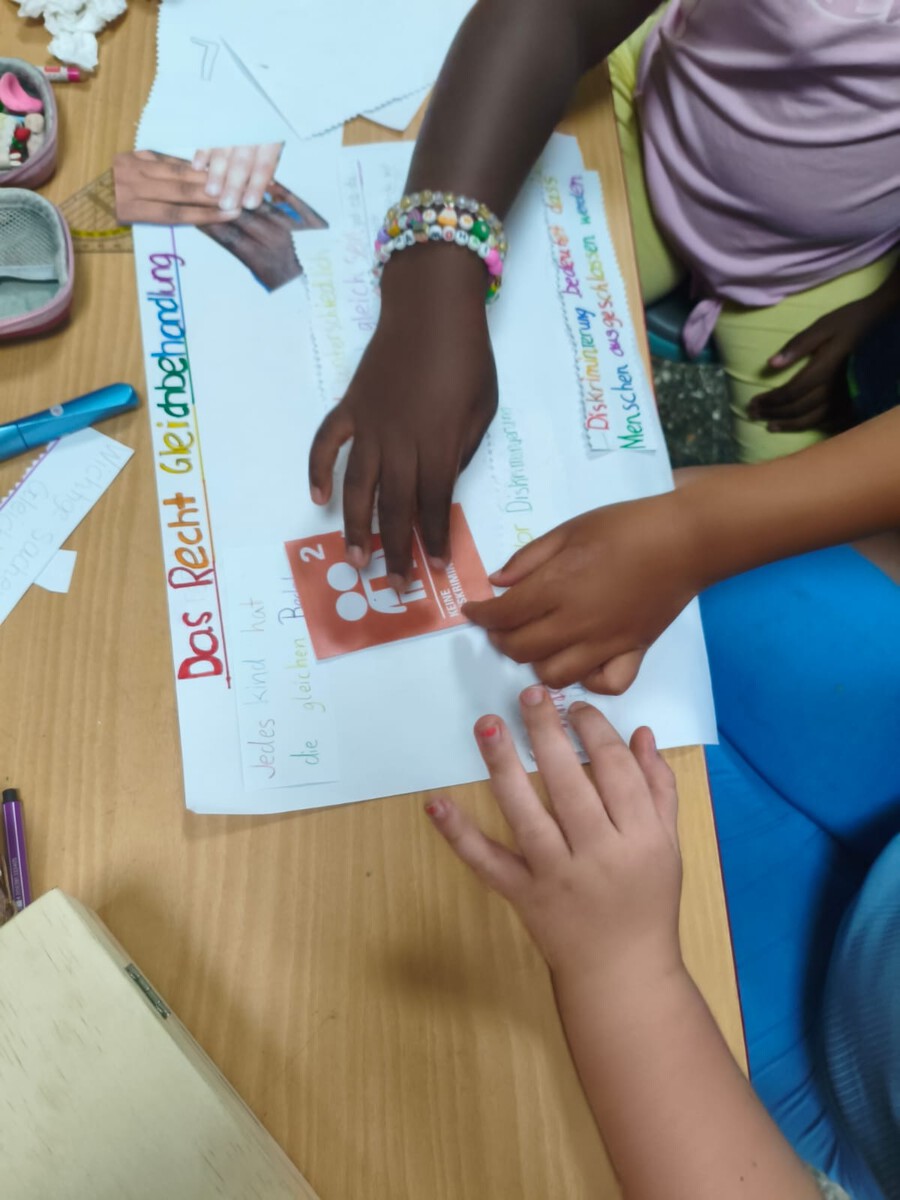
In General Studies, the children continued working together with Grade 3 on their posters about children's rights. The first posters are already in the final stages and are gradually being completed.
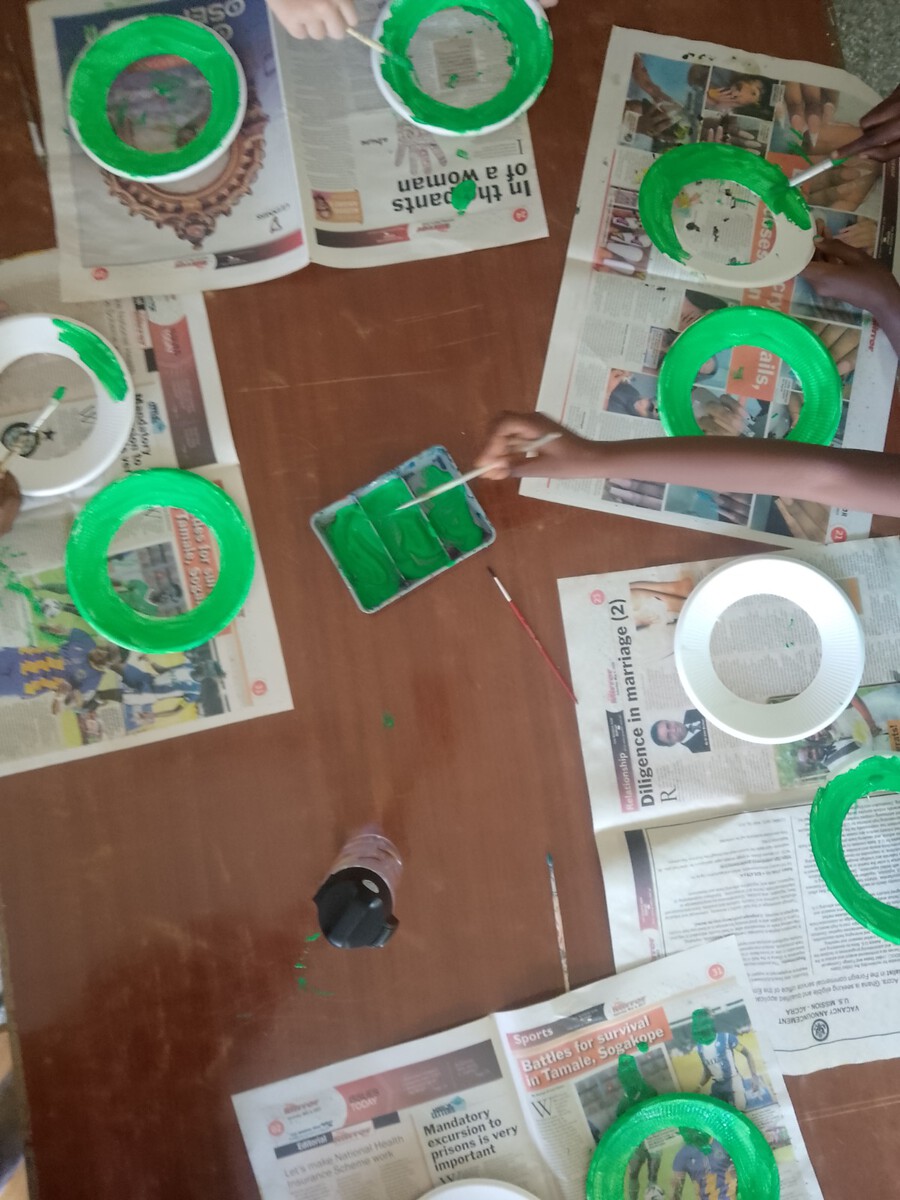
In Art, green circles with a hole in the middle appeared on the tables this week – not exactly what you would immediately associate with dangerous prehistoric giants. But we have a plan: these individual pieces will become our dinosaur lanterns.
There was plenty of painting, drawing and cutting. Alongside the green lantern bodies, heads, legs, back spikes and tails are also beginning to take shape. For now, our dinosaurs are still waiting in pieces for their big appearance – they need just a little more assembly before they can come back to life.
Over the next few lessons, we will put everything together and get our dinosaurs ready for the Lantern Festival. After millions of years away, they will finally return to Earth. Luckily, they will be in handy lantern size – otherwise things might become rather crowded on the school grounds.
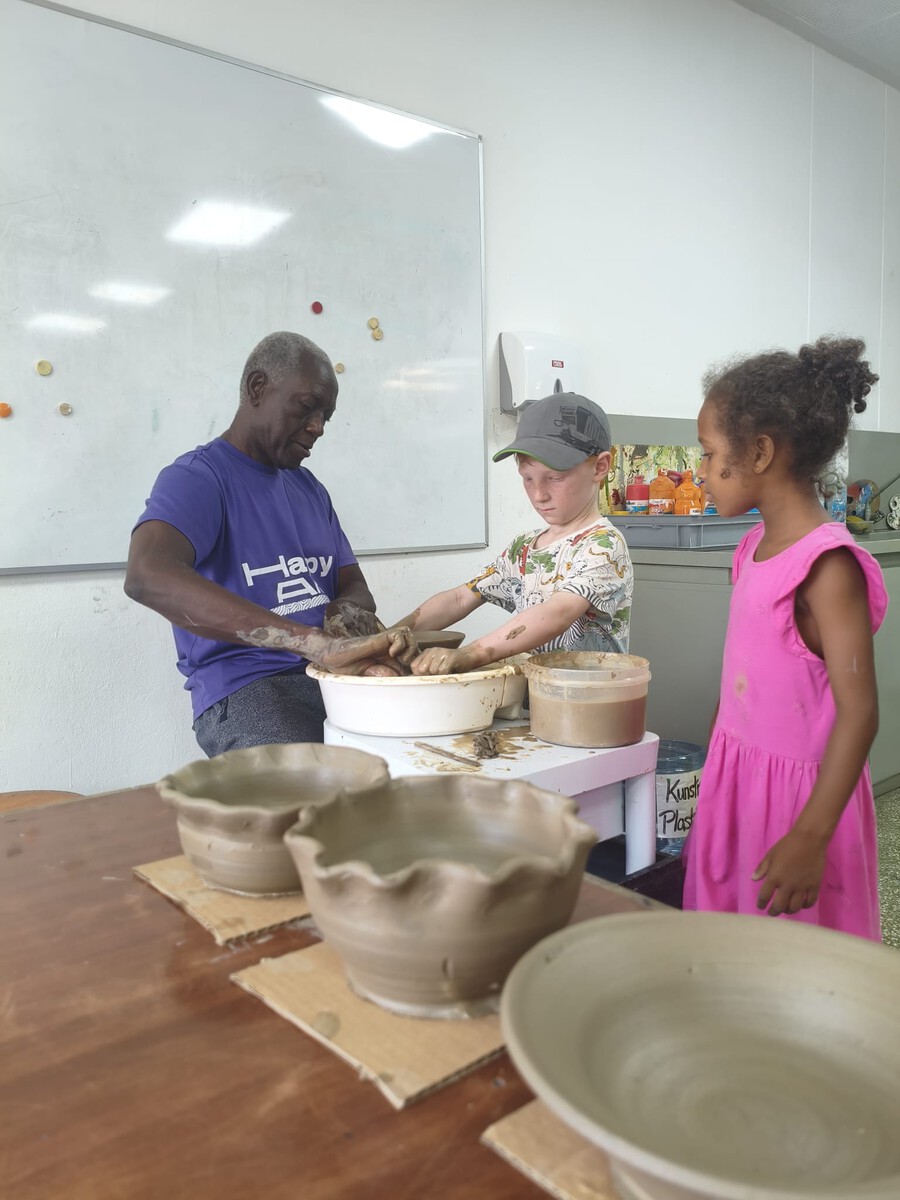
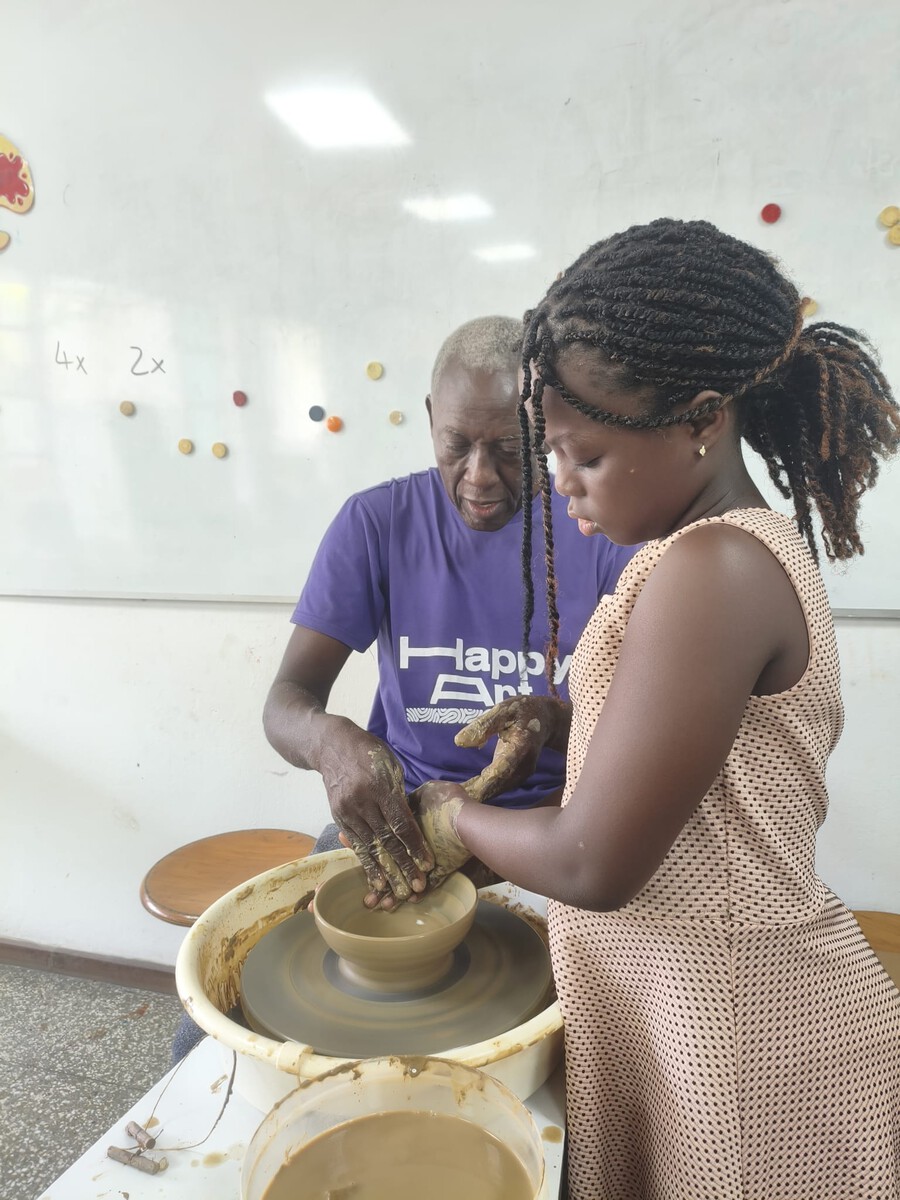
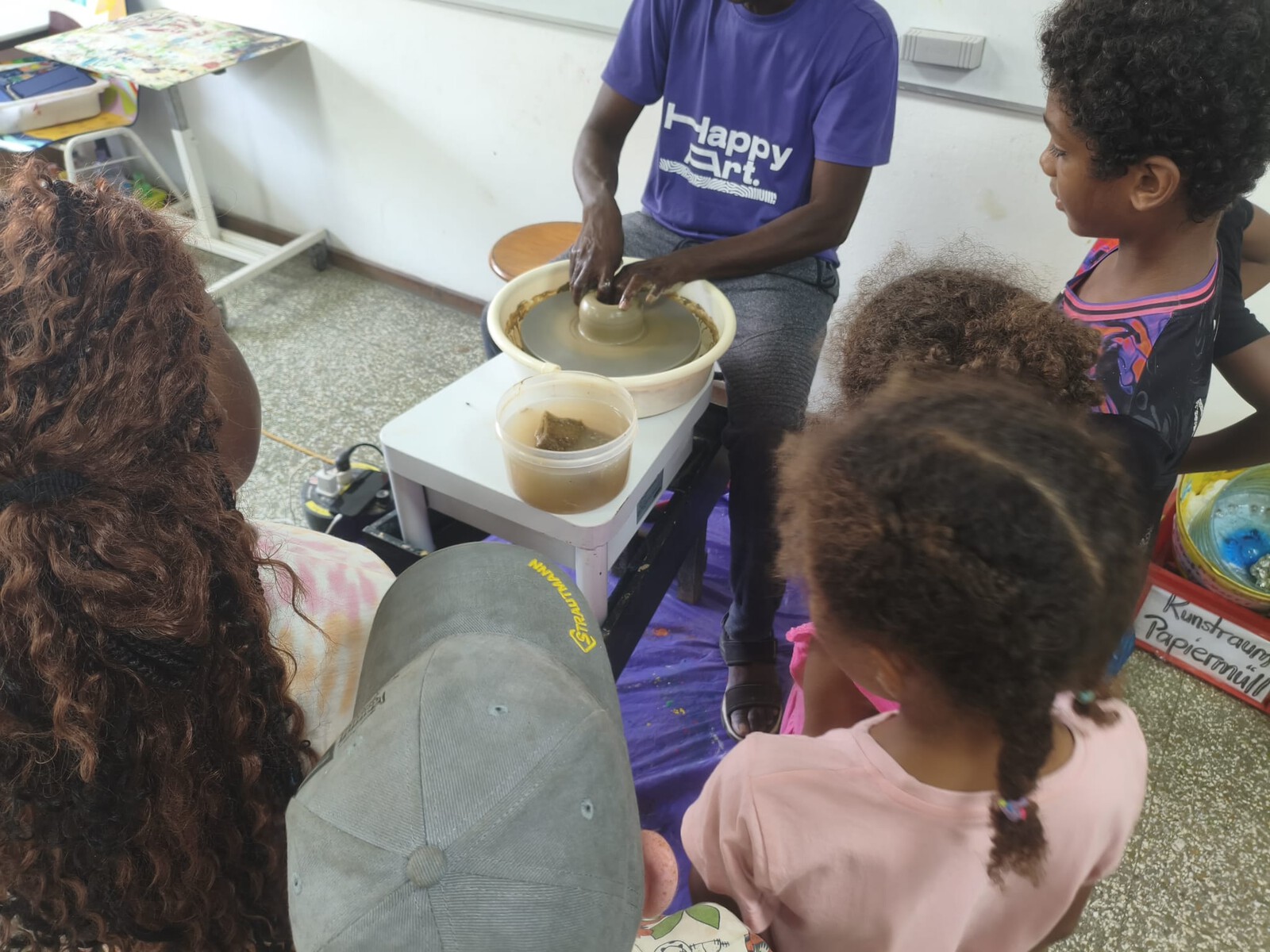
Our "Fun with Clay" project also featured a special highlight this week: during a workshop with Happy Art, the children had the opportunity to work creatively on a pottery wheel themselves.
First, they watched with fascination as a simple lump of clay gradually became a bowl on the spinning wheel. Then it was the children's turn to have a go themselves. With great curiosity, enthusiasm and skill, they gained their first experience of this special craft.
By the end, eight individual bowls had been created – each one completely unique! The children can be very proud of their creative results.
A heartfelt thank-you to Happy Art for this wonderful and inspiring workshop!
Secondary School
Grade 5 – Learning Independently, Finding Our Way and Presenting Art
In Mathematics, Grade 5 introduced a weekly learning plan to support individual and self-organised learning. The students are currently working on multiplication and practising mental arithmetic as well as semi-written and written multiplication methods. With the help of the weekly plan, they can work through the tasks at their own pace and increasingly take responsibility for their learning.
In Geography, working with the atlas was the main focus. The students completed a variety of tasks in which they had to identify coordinates and locate cities, rivers, islands, mountain ranges and countries. In doing so, they practised using maps confidently and improved their geographical orientation skills.
In Physical Education, the students took part in a variety of running games that gave them plenty of opportunity to burn off some energy. At the class's request, they also played basketball.
In Ethics, the students explored Aristotle's three types of friendship: friendships of utility, friendships of pleasure and perfect friendship. Together, they discussed the differences between these forms of friendship and matched different everyday situations to the three categories. Afterwards, they came up with their own examples to connect what they had learned to their own lives.
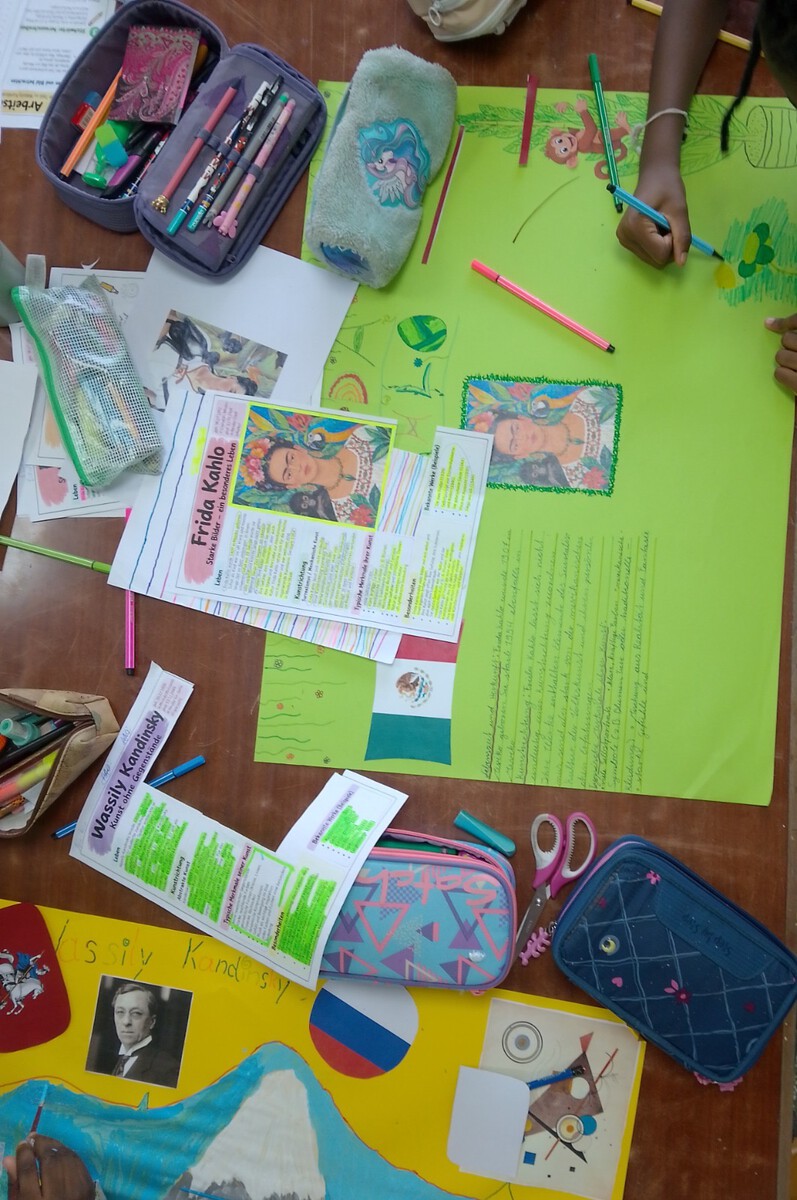 In Art, we continued working on our artist posters. Our famous artists are gradually getting their big moment – although first they have to compete for space on the paper with headings, pictures and text.
Alongside designing the posters, we also prepared our presentations. After all, our posters are not only meant to look good: we also want to share interesting information about the people behind the artworks. Our art class is quickly becoming a team of art experts.
After School Trip Week, the big moment will arrive: we will present our results and learn more from one another about the many famous artists. Our small exhibition is therefore already waiting in the wings – only the grand opening will have to wait until we return.
In Biology, Grades 5 and 6 reviewed the structure of a flower and completed a test on the topic. We also looked at photographs to check the progress of the cacao seeds that were planted before the holidays.
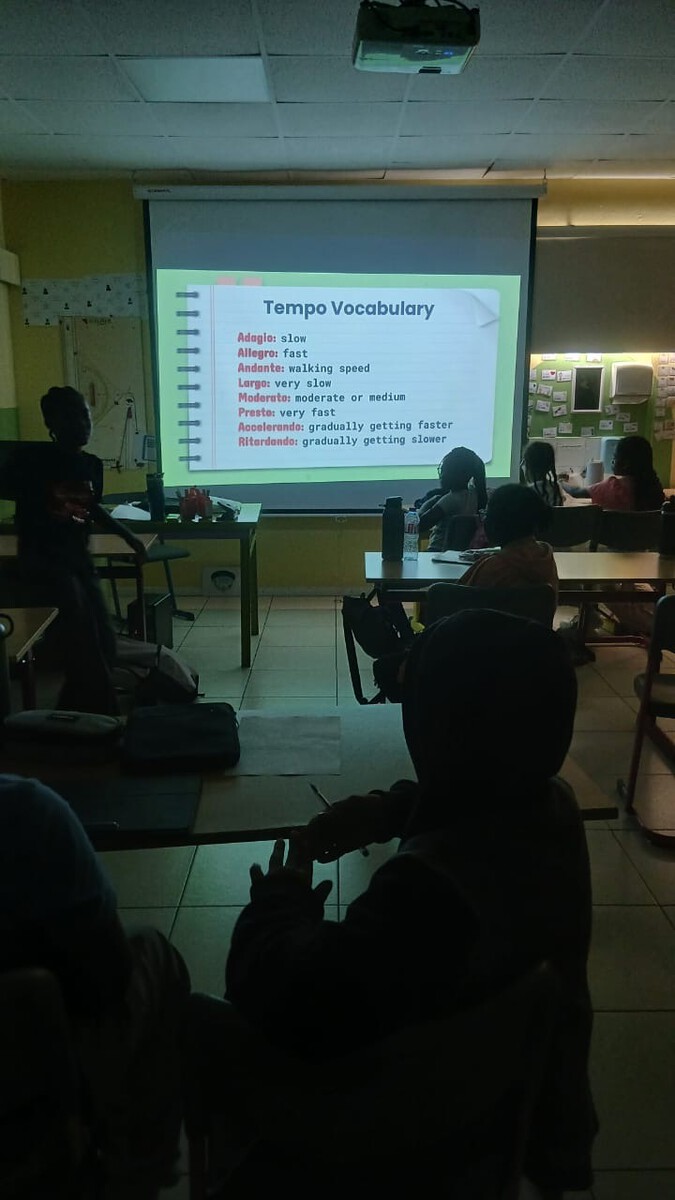 In Music, we explored the topic of tempo. We also learned several commonly used musical terms relating to different tempi and changes in tempo.
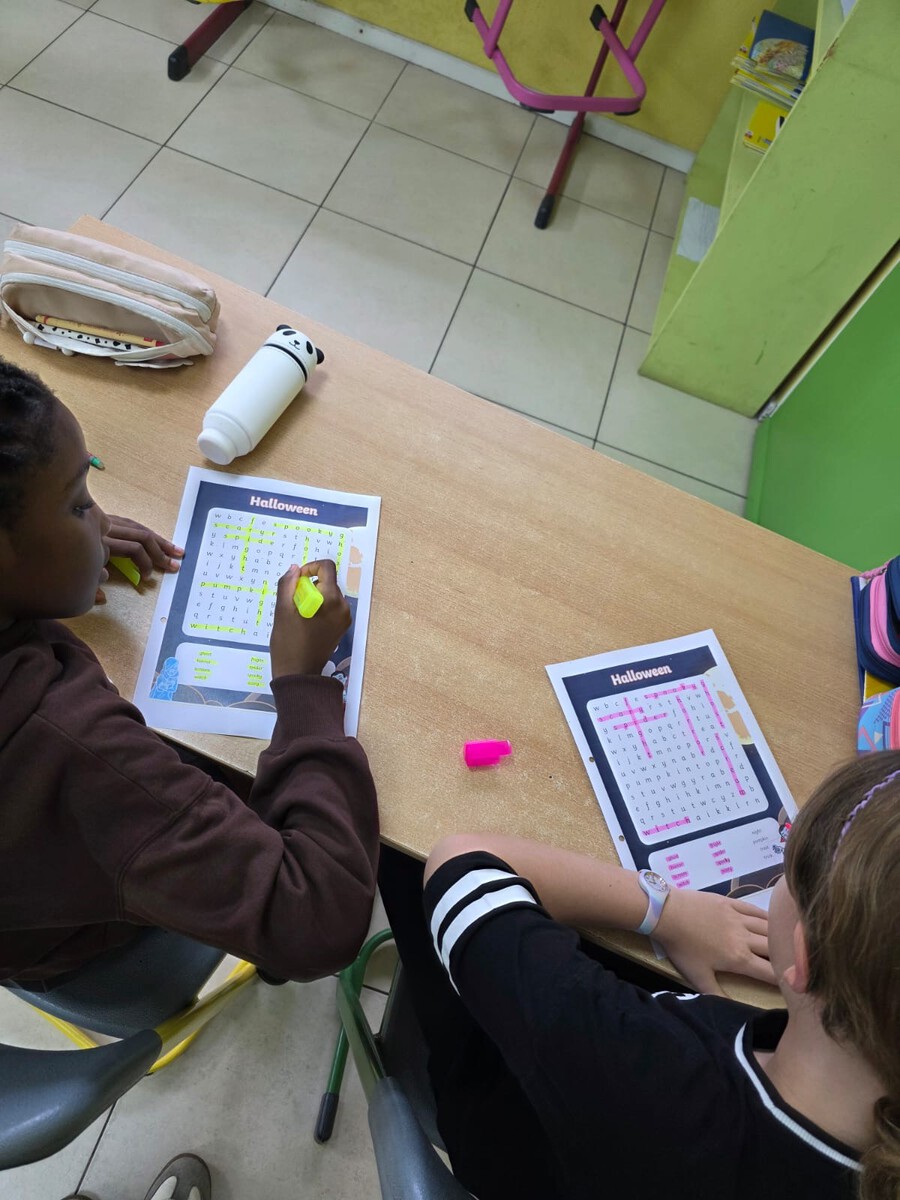
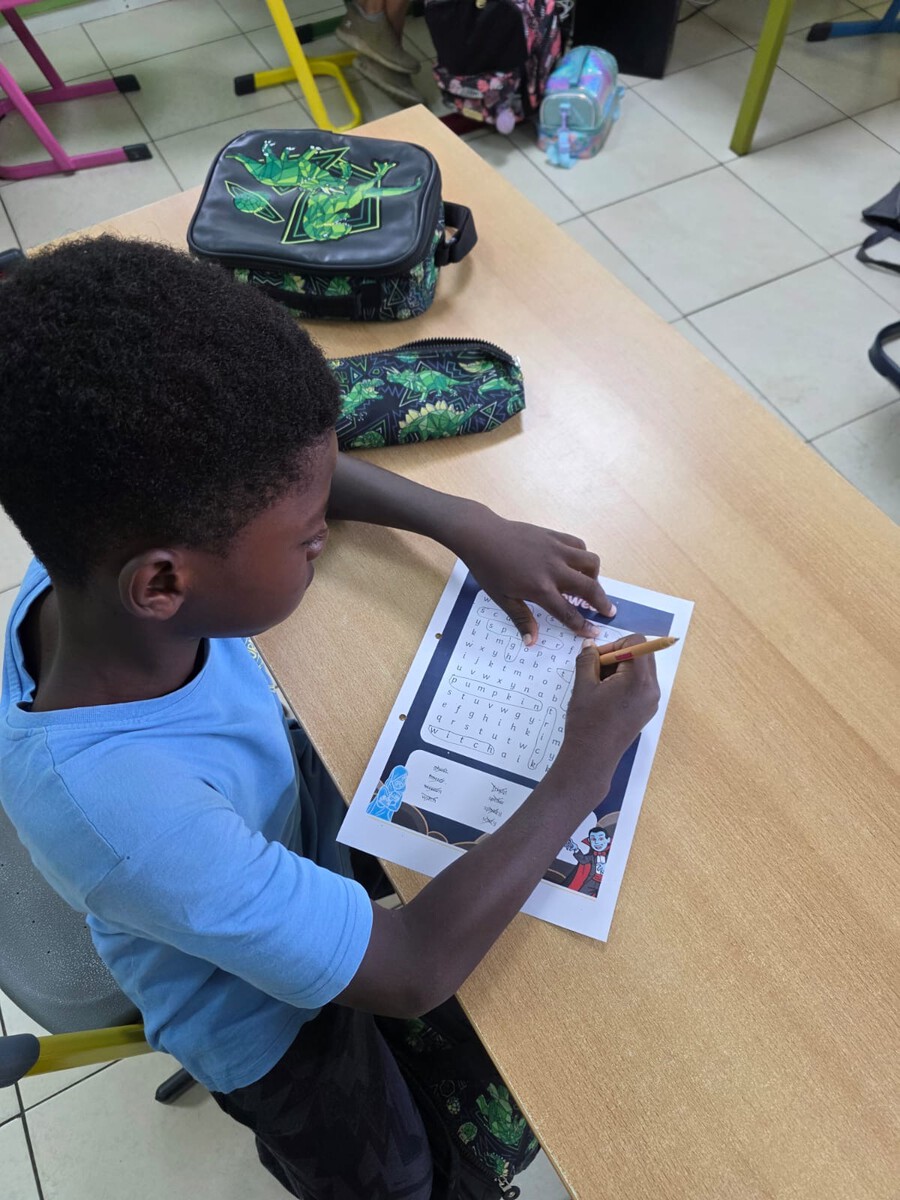 In English, the students completed a listening comprehension test in which they had to listen carefully and answer questions to demonstrate their understanding. To finish the lesson, they also enjoyed a Halloween vocabulary word search, which helped them recognise and remember topic-related words in a playful way.
Grade 6 – Opinion Writing, Fractions, Artist Posters and Conscious Writing Choices
In German, we continued working on opinion writing. Our main focus was on the introduction. Together, we developed a clear structure that gives the students guidance when writing.
In Biology, Grades 5 and 6 reviewed the structure of a flower and completed a test on the topic. We also looked at photographs to check the progress of the cacao seeds that were planted before the holidays.
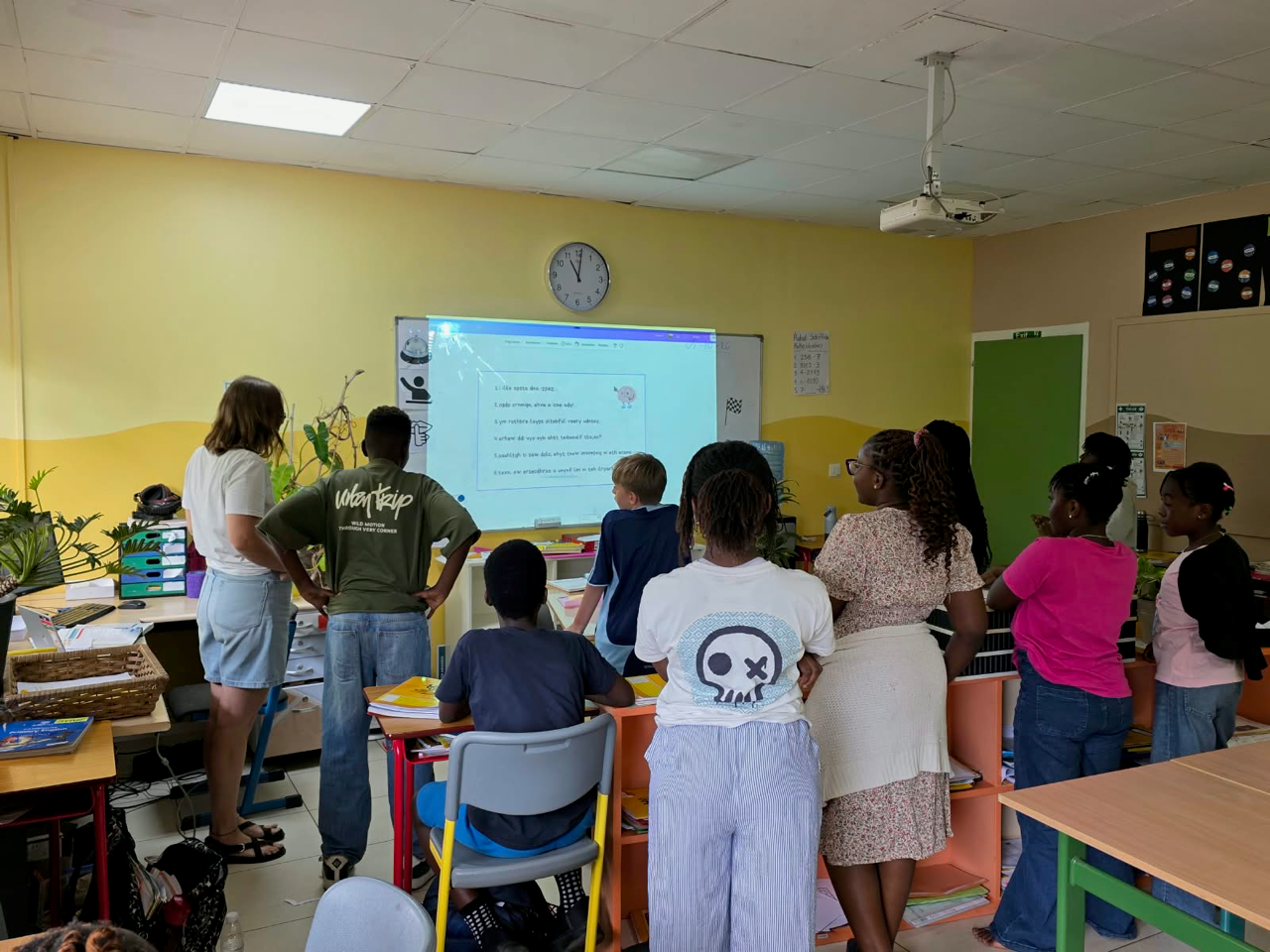 In English, the students continued their work on narrative paragraph writing. They explored the features of long and short sentences, the effect they can have in writing and what a phrase is. This helped them understand how conscious sentence choices can make their writing more varied and interesting.
In Mathematics, this week was all about fractions. The main focus was on expanding and simplifying fractions – and, above all, understanding what actually happens when we do this. We moved from hands-on activities to visual representations and finally to calculations with numbers.
Using "paper cake slices", the students could experience the idea themselves. When expanding a fraction, each piece is divided into smaller parts. When simplifying, several smaller pieces are joined together into larger ones – figuratively speaking, "glued back together". The amount of cake stays exactly the same; only the way it is divided changes. In this way, the students could see and explain why, for example, one half is the same amount as two quarters.
We also practised mental multiplication and division. The students learned how to break calculations down strategically: 154 ÷ 7, for example, can be solved using 140 ÷ 7 + 14 ÷ 7, while 17 × 5 can be solved using 10 × 5 + 7 × 5. The aim is for students to use such calculation strategies increasingly confidently and independently.
In Art, our artist posters are continuing to take shape. We are refining the arrangement of images and text and giving our work the final touches. One thing is becoming clear: even a large poster eventually runs out of space – so thoughtful design is itself a small art form.
At the same time, we are preparing our presentations. Soon, not only the posters should be convincing, but also our knowledge about the famous artists. Selecting information, explaining it clearly and making the audience curious: there is much more to a successful presentation than simply reading aloud.
After School Trip Week, the time will finally come: we will present our results and introduce one another to the different artists and their works. The art world can hardly wait!
Clapping Rhymes and Poetry in German as a Foreign Language
Creativity and enjoyment of language shaped this week's German as a Foreign Language lessons. The students created posters and explanatory videos about traditional German clapping rhymes so that the wider school community can discover these games too.
At the same time, they put the finishing touches to their self-written poems for the Cultural Festival at the Goethe-Institut Accra. Once again, it became clear just how lively, varied and creative learning German can be.
➡️ Read more: Clapping Rhymes, Word Art and Plenty of Joy in Language Learning
Grade 7 – Lots of Learning and Plenty of Excitement for Our School Trip
Despite all the excitement about our upcoming school trip, we worked and learned a great deal this week. Our suitcases may not be packed yet, but our heads are already very well filled.
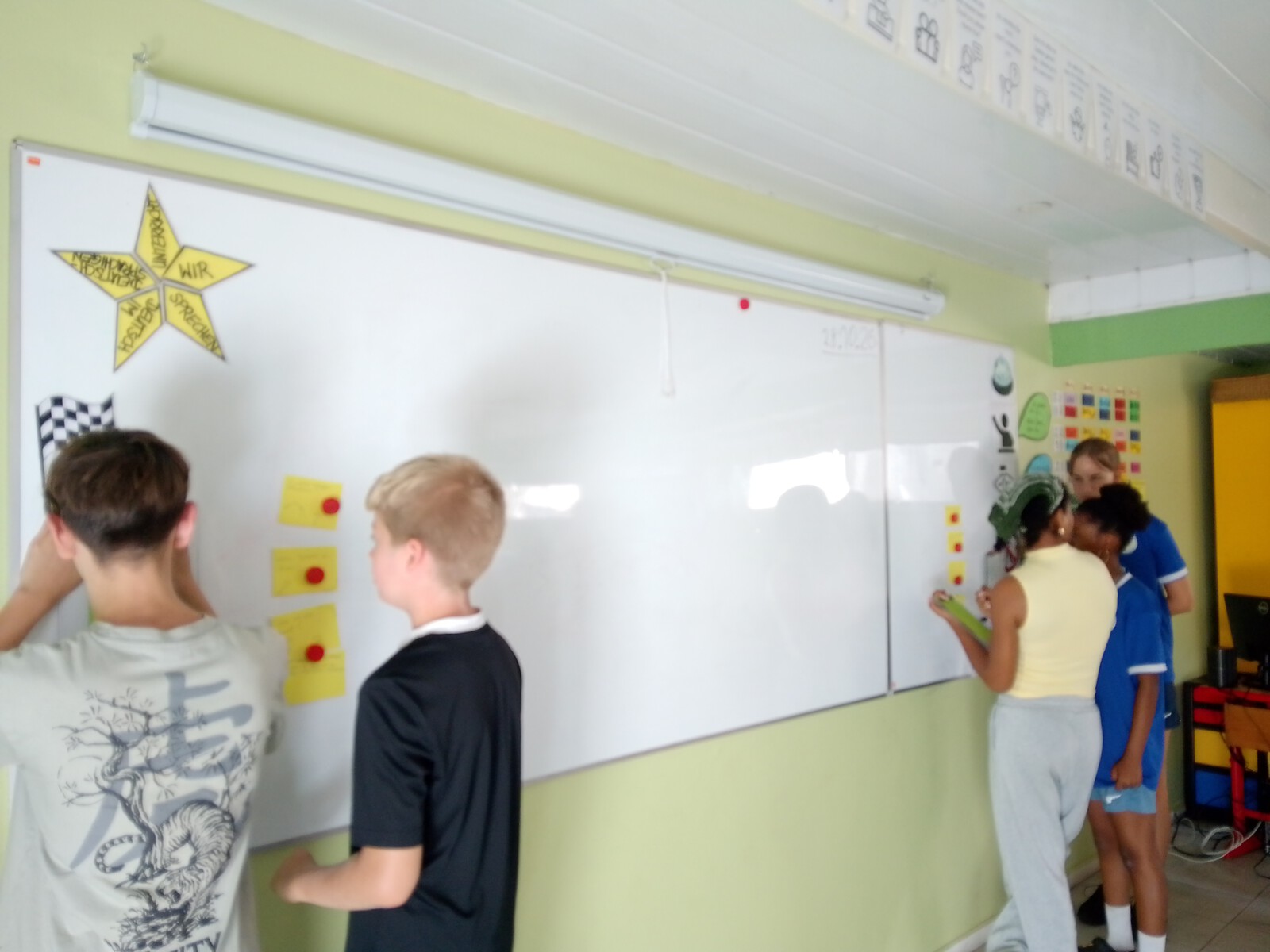 In German, we explored a rather different kind of journey. In Ulrich Hub's play "An der Arche um acht", we met three penguins who want to board Noah's Ark with only two tickets. Along the way, we discovered that a suitcase can take on some rather unusual transport duties.
While reading the scenes, we paid close attention to the stage directions and examined the solutions the feathered friends came up with. Alongside the humorous complications, we explored friendship, solidarity and responsibility. We supported our ideas with suitable passages from the text – even a suspiciously large dove was not allowed to escape without textual evidence.
We also used an explanatory video to explore different types of texts. We distinguished between fictional and non-fictional texts and examined their characteristics and purposes. Afterwards, we developed challenging questions to test one another's knowledge. While creating them, we quickly realised that if you want to ask good questions, it helps to know the answers rather well too.
With our new weekly plan in Mathematics, we practised working independently and increasingly organising our own learning. In terms of content, we worked on simplifying, adding, subtracting and multiplying algebraic expressions as well as using plus and minus brackets. We also translated sentences into mathematical expressions. Between letters, numbers and signs, we hopefully managed to keep track not only of the weekly plan, but of the mathematics too!
In English, we prepared intensively for our listening comprehension test. We listened carefully, identified important information and wrote down our answers. We practised paying attention to detail and persevering even when we did not immediately understand every word. After so much training, we were well prepared for the final test – our ears had certainly had enough warm-up time.
In French, we applied the knowledge gained over the past few weeks. After the test, we looked closely at our results: we identified our strengths, discussed difficulties and clarified misunderstandings.
Through shared feedback, we consolidated challenging content and reflected on what we would like to continue working on. After all, learning does not stop once a test has been handed in – especially when we understand our mistakes and recognise our progress.
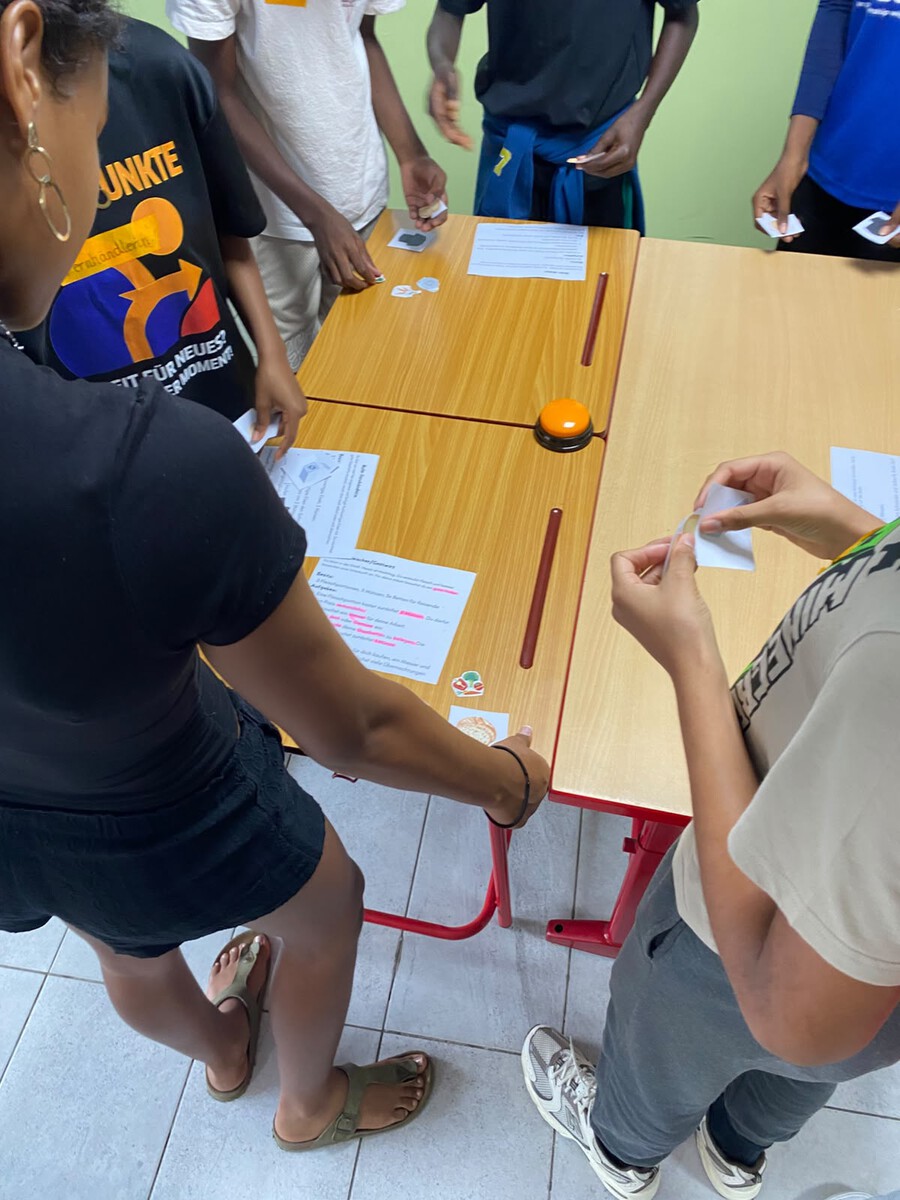
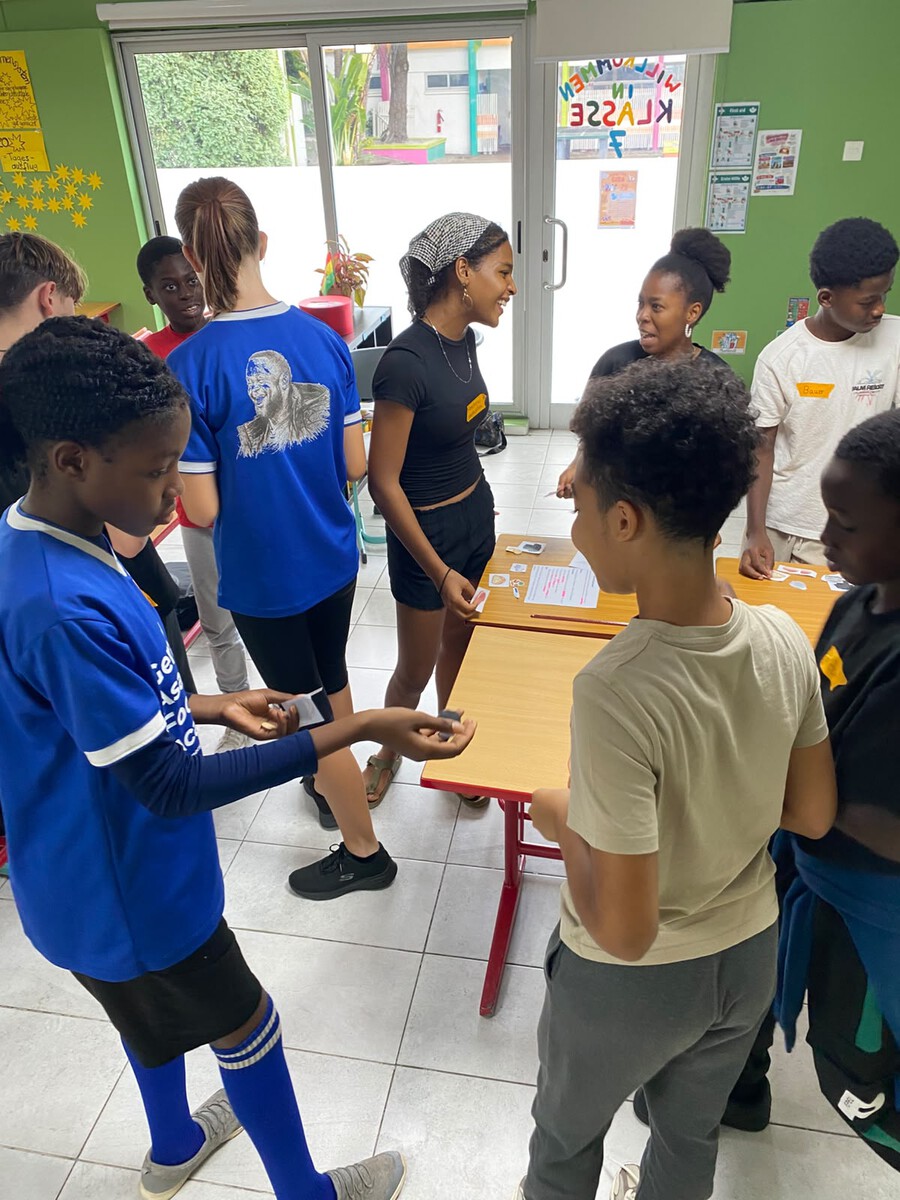 After a two-week break from History, we refreshed our knowledge together with Grade 8 through a medieval vocabulary game. Afterwards, we transformed our classroom into a marketplace. With our own roles, possessions, tasks and goals, we traded and negotiated enthusiastically. In the process, we discovered how closely trade and urban life were connected and how dependent our different roles were on one another. Medieval business apparently required neither the internet nor shopping trolleys – convincing negotiation skills were far more useful.
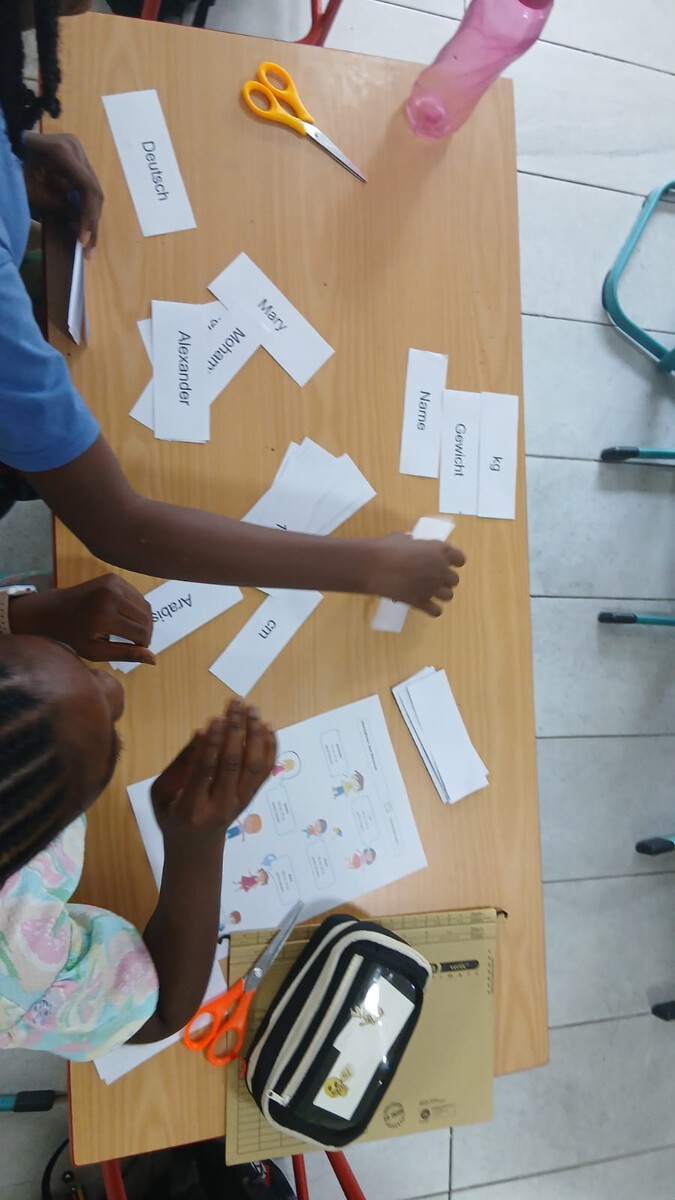
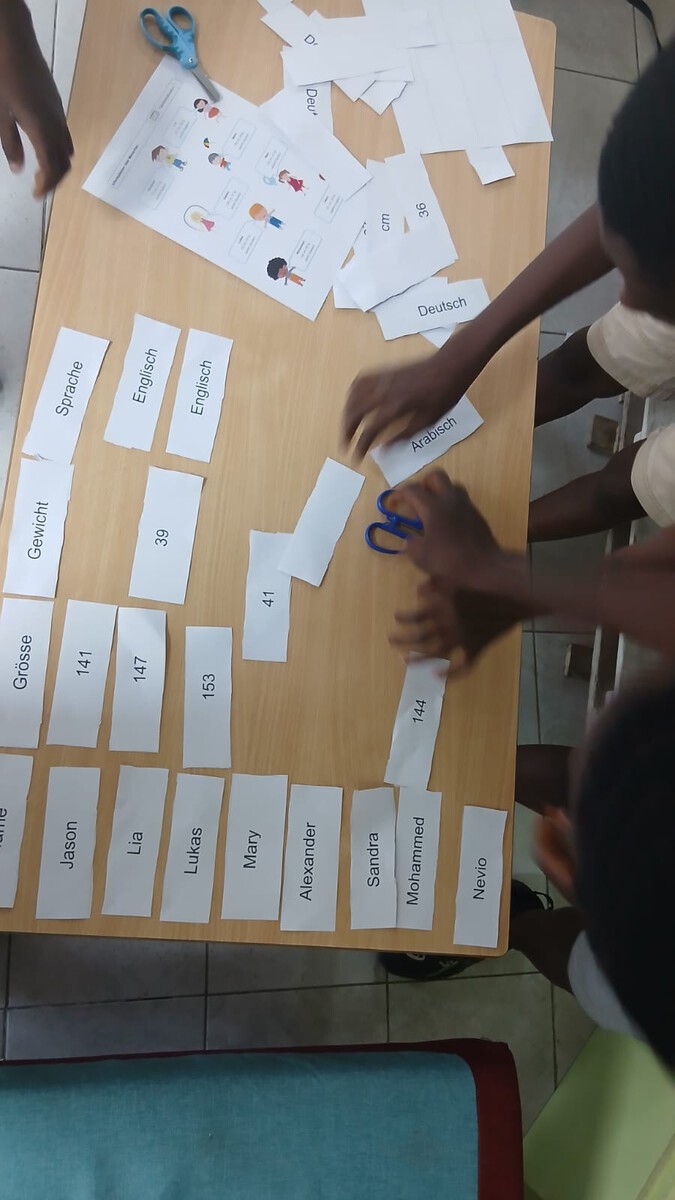
In our German as a Foreign Language group, we collected familiar medieval terms, explored their meanings and added the correct articles to our own vocabulary bank. With the help of an information video, we reviewed what we already knew and discovered something new. We then created a quiz and asked each other questions ranging from easy to challenging. In this way, we tested just how confident we already are when navigating the Middle Ages.
Together with Grade 8 in Geography, we explored why Africa has such different landscapes. Using the trade wind circulation system, we explained why moist air rises at the equator and brings heavy rainfall, while dry air sinks around the tropics. This helped us understand the relationship between tropical rainforests and subtropical deserts – giving us a much clearer overview of rainfall distribution without even needing a weather forecast.
In Biology, together with Grade 8, we continued exploring the diversity of invertebrates. This week, two further presentations introduced us to crabs and corals. Alongside developing our subject knowledge, we continued improving our presentation skills. We also practised giving helpful, well-founded feedback and explaining more precisely what had worked well and what could still be improved.
In Physics, we continued investigating forces and their effects. We focused in particular on Hooke's Law and learned that, within its valid range, the extension of a spring is proportional to the force acting on it. Double the force therefore produces double the extension – although we cannot continue this game indefinitely!
Using examples such as spring scales and vehicle suspension systems, we identified where this principle appears in everyday life.
In Chemistry, we deepened our understanding of homogeneous and heterogeneous mixtures. We explored why some mixtures appear uniform while in others we can identify different components.
We also made connections to environmental protection. Using examples such as polluted water, waste separation and recycling, we saw how knowledge of material properties helps us understand separation techniques. In this way, we explored how pollutants can be removed and valuable raw materials recovered.
 In IT, we began a new unit on tables and charts in Excel. First, we reviewed the structure of tables and practised extracting information from them. Next, we will transfer data into Excel, try out different functions and create various charts. This will not only help us organise numbers, but also make them visually meaningful.
In Physical Education with Grade 8, we also had a say in what we did. During a student-choice lesson, we got plenty of exercise through different running games and had lots of fun together. We also added football to our wish list – after so much thinking, it was time to let our feet have a say too!
Now we are looking forward to our school trip and to many shared experiences. After such a busy week, we are certainly taking plenty of excitement with us.
Grade 8 – Literary Detectives, Laboratory Research and Responsibility from the Heart
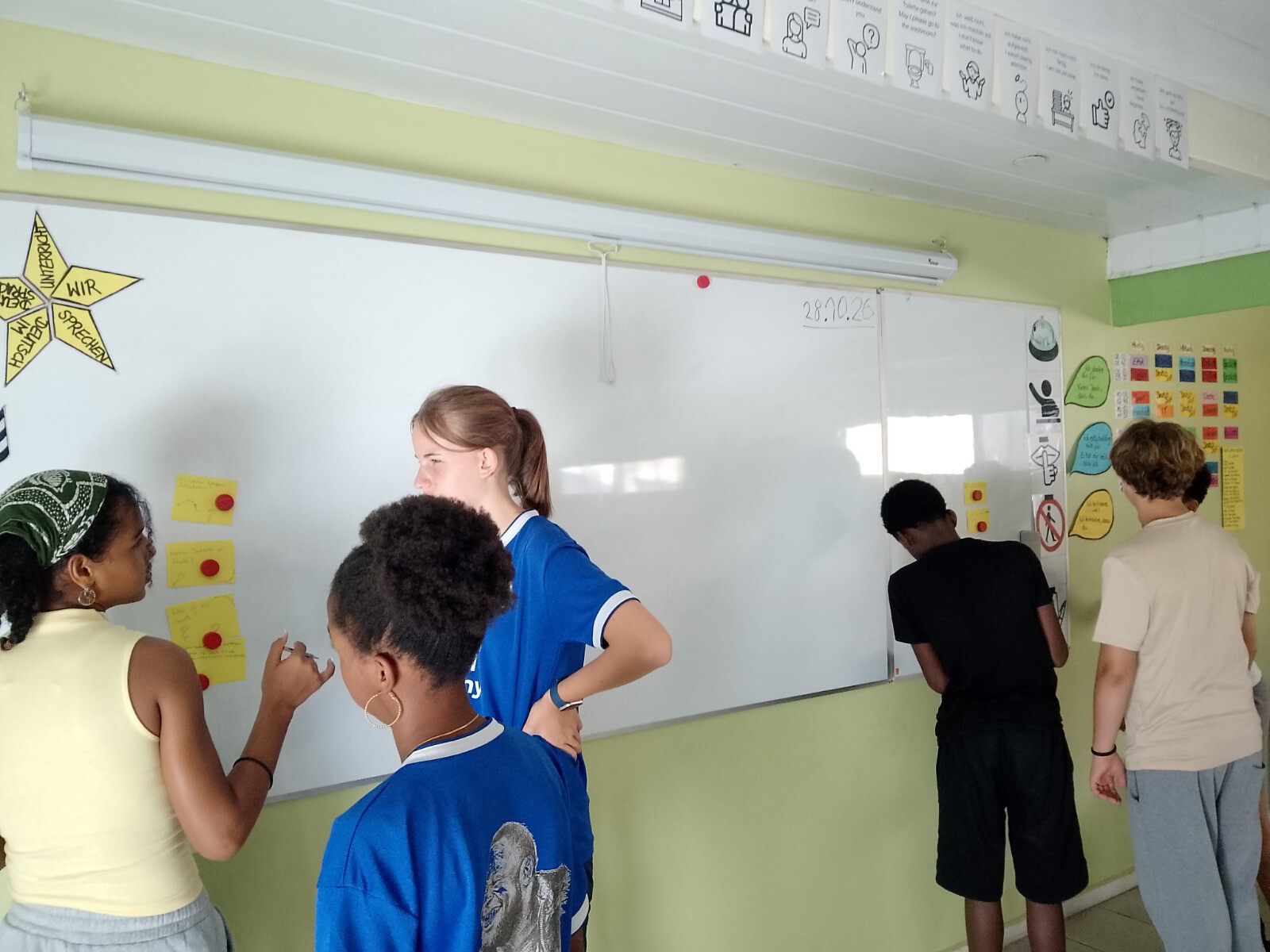 In German this week, detective skills were required. In Uri Orlev's novel "Run, Boy, Run!", we explored the story of Srulik, a Jewish boy fleeing during the Second World War.
We answered key questions, summarised passages and examined Srulik's situation as well as his relationships with other characters. We also had to track down a flashback – after all, stories do not always follow chronological order.
When characterising Srulik, every detail became a piece of evidence: Which characteristics are stated directly, and which can be inferred from his actions, thoughts and speech? We recorded our results in bullet points and in a visual diagram.
Using an explanatory video, we also explored the jungle of different text types. We distinguished between fictional and non-fictional texts and examined their features and purposes. Fairy tales and instruction manuals may both consist of words – but when assembling a shelf, it is probably best not to confuse the two.
We then developed challenging questions ourselves to test both one another's knowledge and our own. After all, anyone who asks difficult questions should probably know the answers too.
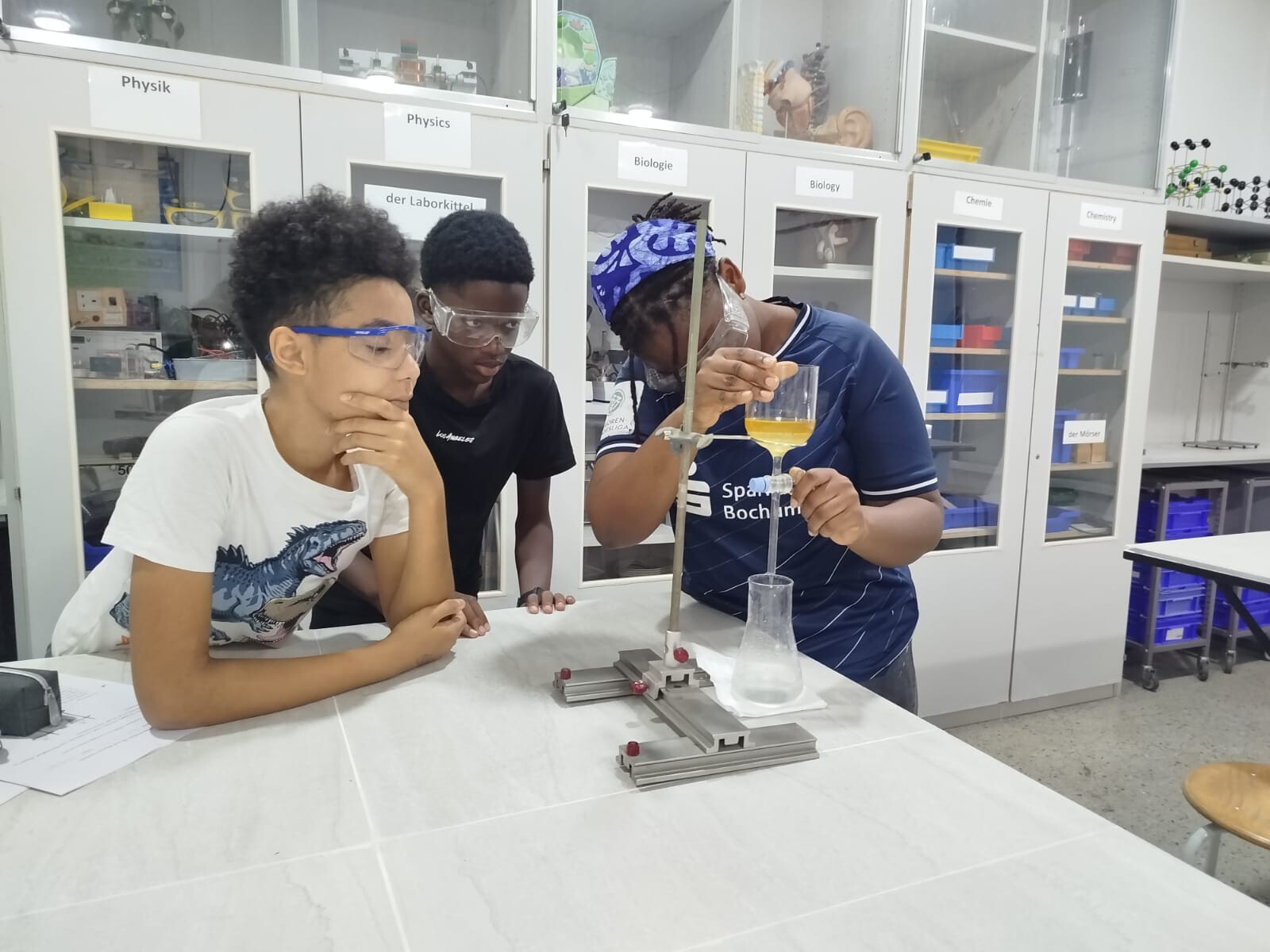 In Chemistry, the focus this week was on separating complex mixtures. Our students became young researchers themselves: in the laboratory, they examined mixtures of different organic and inorganic substances and explored how these can be separated using various techniques, especially extraction and phase separation.
The connection to environmental protection was particularly exciting: how, for example, can oil and other contaminants be removed from water? The experiments demonstrated impressively how chemical knowledge can contribute to water purification and environmental protection.
In French, the class strengthened its listening comprehension skills. The students practised listening carefully, identifying familiar words and important information, and using context to understand meaning even when some expressions were unfamiliar. Step by step, they are becoming more confident in dealing with spoken French.
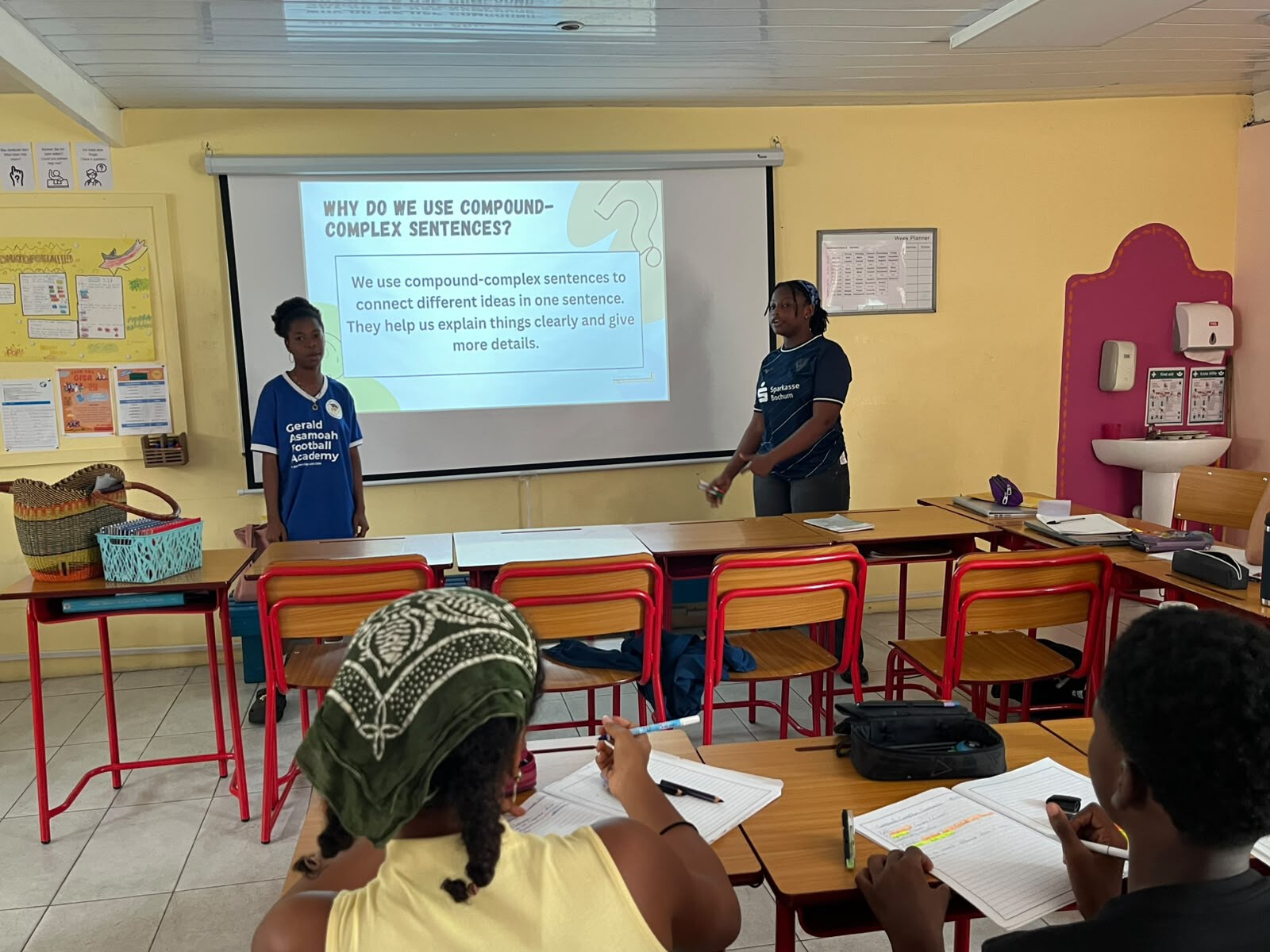 In English, the students worked on compound-complex sentences. With support from their classmates, they explored the rules behind this demanding sentence structure and practised using it in different examples. The topic was challenging, but also brought many new insights.
In Biology, the young scientists of Grades 7 and 8 continued exploring the fascinating diversity of invertebrates. This week, we enjoyed two more presentations about the diversity of crabs and corals.
It is particularly rewarding to see how the students continue to improve their presentation skills while also becoming increasingly confident in giving constructive and well-informed feedback on one another's presentations.
In Ethics and Social Studies, planning for our project supporting children with heart conditions entered its final phase. The lists for snack and food donations are now displayed on the noticeboard outside the library and are updated daily by the students using the online list.
For our participation in the DIHK competition, the students filmed short video sequences that will later be edited into a one-minute video.
Support from the parents is also taking concrete shape: many Grade 8 parents have already added their names to the online list for providing drinks. We are also very grateful that Grade 4 will take over the catering support on Wednesday and Thursday. We are still looking for supporters or organisers to help purchase cutlery and cups.
The appeal for financial donations is currently being prepared. It has now been confirmed that donations can be made through a betterplace account belonging to the Gerald Asamoah Foundation.
In the week after the school trip, the project will finally begin: on Monday, the first group will travel to the hospital to support the medical team with catering while also gaining many impressions from this very special project. The remaining students will follow on Tuesday, Wednesday and Thursday.
We are very grateful for the support of the entire school community and would like to thank everyone involved. A special thank-you also goes to the committed Grade 8 parents, whose willingness to help and generous spirit have impressed us greatly.
In Mathematics, the students briefly reviewed the binomial formulas and factorisation before completing their class test on these topics.
Grade 9 – Back with New Energy, Big Plans and Plenty of Initiative
After the well-deserved break, our Grade 9 students returned to school with renewed energy, lots of motivation and ambitious goals. Alongside exciting classroom topics, one particularly special project is becoming increasingly concrete: our trip to Germany in April 2027!
Planning with our partner school and other cooperation partners in Germany is progressing rapidly. The first programme items and destinations have already been confirmed. Both the students and their parents are actively involved in the preparations.
We are particularly proud of the initiative shown by our Grade 9 students: they have founded their own student company and are planning to operate a school kiosk during break times. They would like to use the proceeds to contribute towards the cost of their Germany trip themselves.
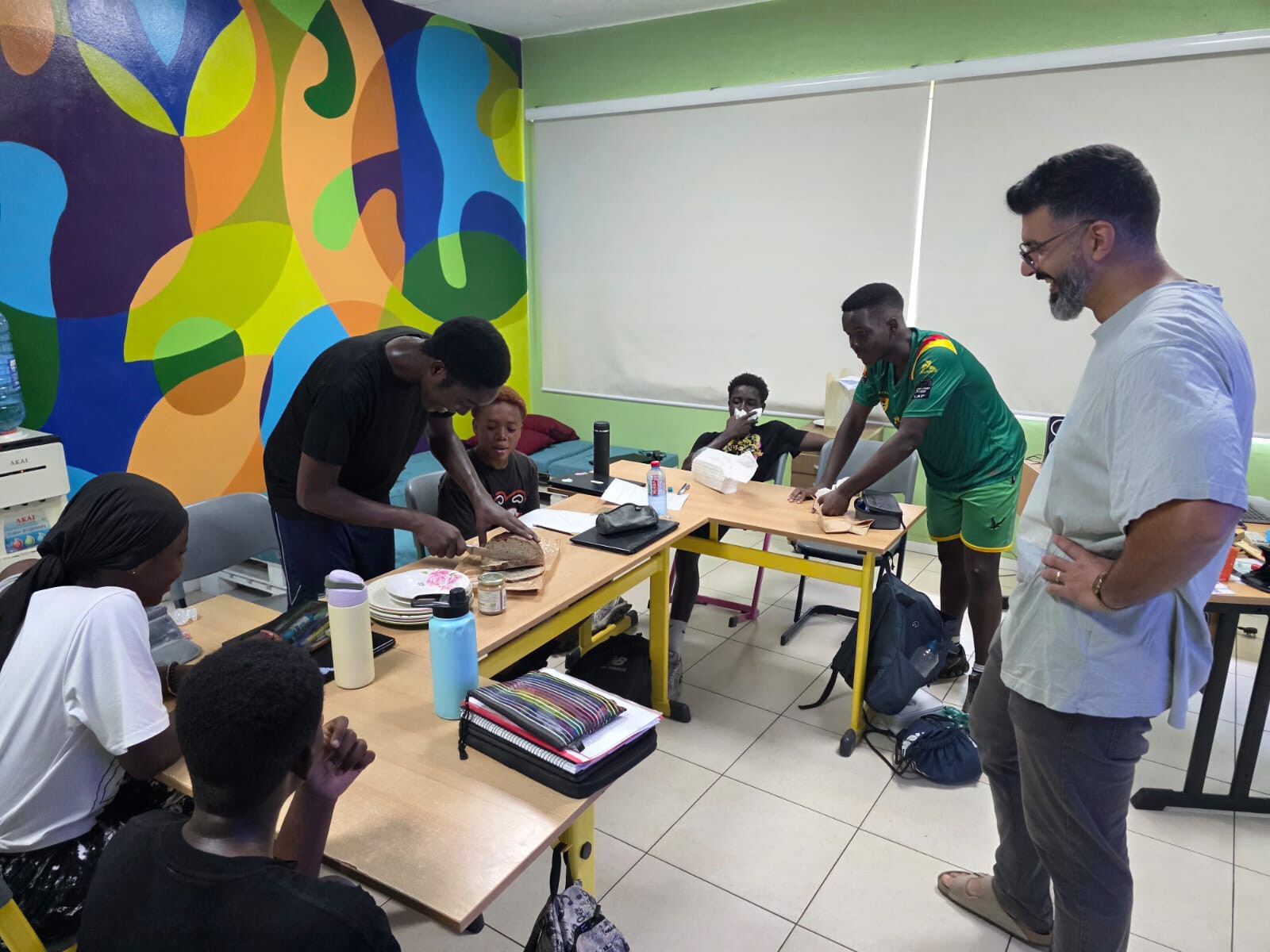
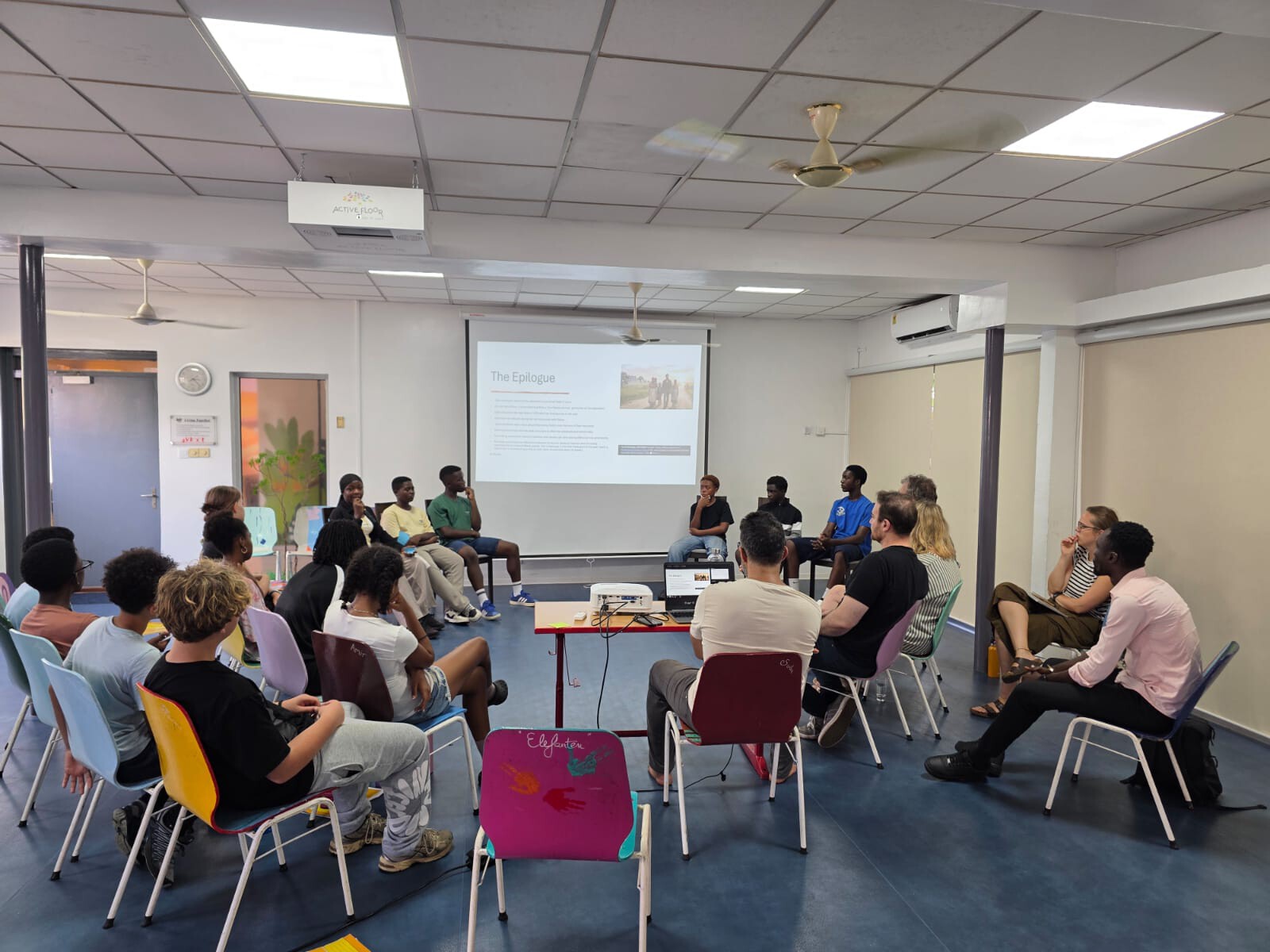
What may at first sound like a simple sales activity is actually a valuable educational project. The students learn to think entrepreneurially, make decisions together, divide responsibilities and take ownership. Along the way, they develop important skills such as teamwork, independence and economic thinking.
In Mathematics, the students worked intensively on systems of linear equations and graphical methods for solving them. They explored how two linear equations can be represented in the same coordinate system and what the intersection point of two lines means.
Alongside traditional mathematical methods, interactive digital tools were also used. These allowed the students to visualise lines, observe changes immediately and check their results independently.
With the upcoming class test in mind, the students also used the week to consolidate their knowledge through targeted practice, train solution strategies and work through any remaining uncertainties.
In Chemistry, the periodic table of elements was at the centre of our work. But instead of focusing only on chemical symbols and atomic numbers, our students were able to step into the role of researchers themselves.
Under the motto "My Favourite Element", each student selected a chemical element and prepared a digital presentation about it.
The task was not only to explore atomic structure and the properties of the element, but also to investigate exciting everyday questions: Where do we encounter this element? What role does it play in modern technologies, our health or the environment?
Through independent research and digital presentation of their findings, the students combined scientific knowledge with media literacy, creativity and presentation skills.
In English, the week began with a small surprise: our intern Maimon brought back some treats after his short trip to Germany, which the class greatly appreciated.
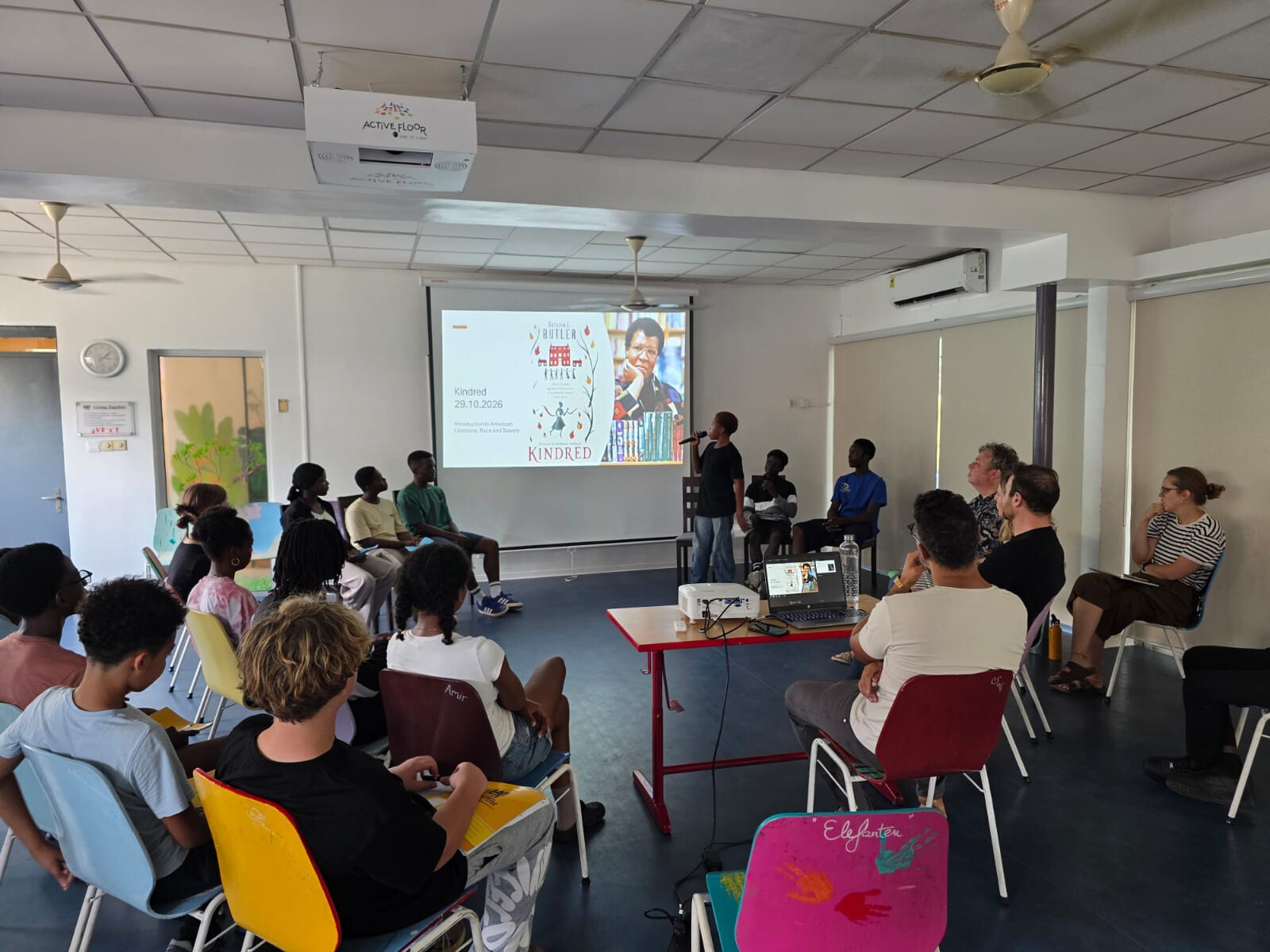
As the week continued, the students prepared for their Book Forum on Octavia Butler's "Kindred". Grade 8 formed the audience, while teachers also joined as guests. During the forum, the students shared their thoughts on the novel, discussed key themes and responded to questions. This required them to deepen their understanding of the text, speak confidently and communicate their literary impressions clearly.
In French, the class deepened its understanding of the plus-que-parfait. The students learned how French can express events that had already taken place before another event in the past.
They explored how the tense is formed using the imperfect forms of avoir or être together with the past participle. Through examples and exercises, they practised placing past events in the correct chronological order and describing experiences in greater detail. After all, every good story has a past – and sometimes even the past has a past!
In Biology, Grade 9 checked their learning progress on photosynthesis and cellular respiration through a Kahoot competition. As always, the quiz generated plenty of enthusiasm and lively reactions to both successes and setbacks.
We then began our new topic of ecosystems. The students learned the key concepts of habitat, biotic community and ecosystem. Over the coming weeks, we will continue exploring different ecosystems and how they change.
In Social Studies, the class first explored current political developments in Serbia and linked these to the characteristics of democracy discussed over the previous weeks. Afterwards, the students learned several fundamental concepts relating to German parliamentary democracy and politics.
In Ethics, the focus was on the three major traditions of Buddhism: Buddhism in the tropical countries of Southeast Asia, Buddhism in China, Korea and Japan, and Tibetan Buddhism. The students explored similarities and differences between these traditions.
In German, we entered the world of work this week. Choosing a career may not be tomorrow's task just yet, but a little orientation between homework and weekend plans certainly cannot hurt.
What jobs are out there? What do people actually do all day in these professions, and what skills are needed? Together, we explored where to find inspiration for our professional future and how to research different occupations. One thing quickly became clear: an exciting job title does not necessarily tell you what Monday morning will actually look like.
Next, we took a close look at a job advertisement. We analysed responsibilities, requirements and expectations and considered how these might fit with our own interests and strengths. Careful reading therefore turned out to be our first professional key skill.
We also explored what belongs in a complete job application and how to write an effective application letter. After all, enthusiasm alone is not enough: an employer also wants to know why we are the right choice. Good arguments were therefore just as important as suitable wording.
Dates & Outlook
🧳 2–6 November 2026 – School Trip Week
🗳️ 4 November 2026, 6:00 p.m. – GISA Annual General Meeting (AGM)
❤️ 7–14 November 2026 – Gerald Asamoah Foundation Heart Surgery Week in Ghana
🏮 12 November 2026 – GISA Lantern Festival
🤝 12 November 2026, 9:30 a.m.–1:00 p.m. – Visit by Tobias Vetter (Ministry of School and Education of North Rhine-Westphalia) and Yolande Yayra Gake (Ghana) to GISA – exchange on school development, cooperation and digitalisation
🎭 13 November 2026 – Cultural Festival at the Goethe-Institut Accra
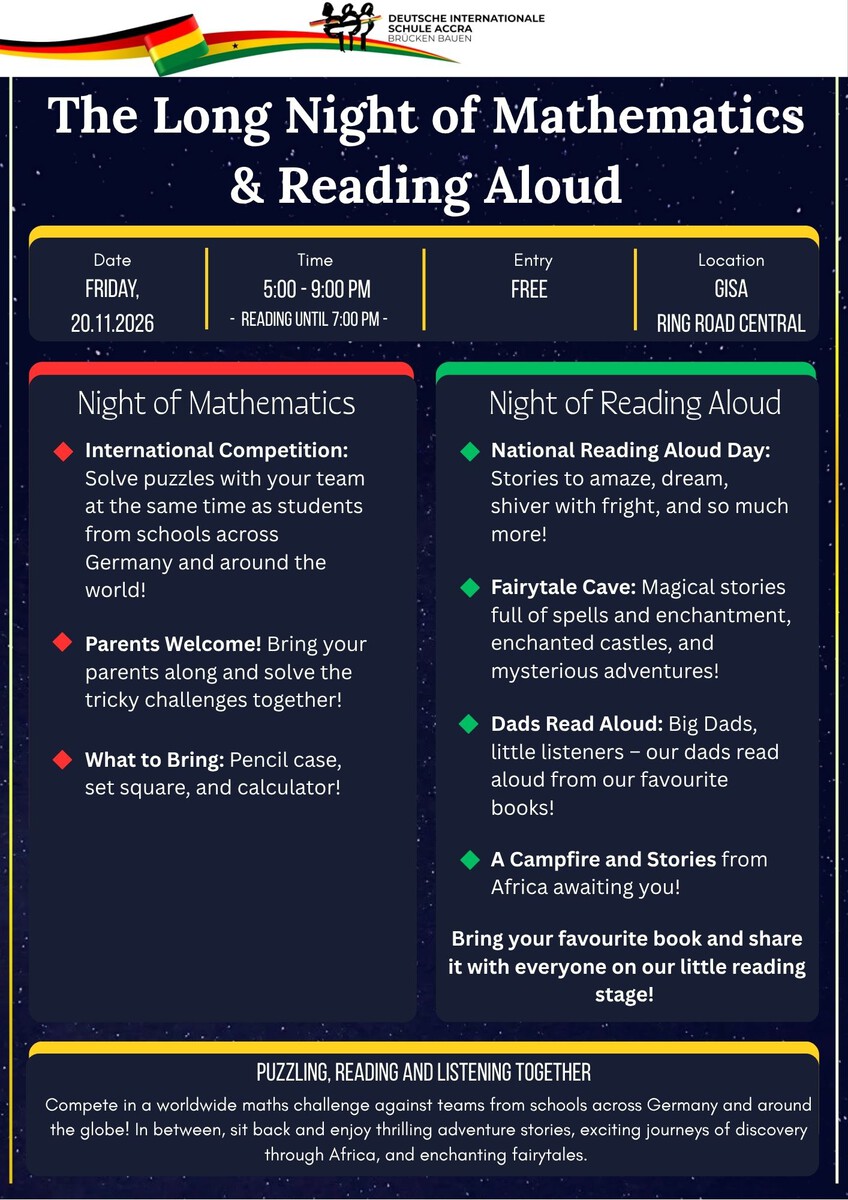
📚➗ 20 November 2026 – National Reading Aloud Day & Long Night of Mathematics
🤝 23–25 November 2026 – GABS 2026 / GISA at the Team Germany Lounge
🎬 25 November 2026 – EducataGhana Pre-Evening / Content Creator Contest
🎄 28 November 2026 – GISA Christmas Market
⛪ 29 November 2026 – First Advent Church Service
🇬🇭 4 December 2026 – Farmers' Day, no school
🎒 18 December 2026 – Last school day before the Christmas holidays
🎄 21 December 2026–8 January 2027 – Christmas Holidays
⛪ 24 December 2026 – Christmas Eve Church Service
🏫 11 January 2027 – First school day after the Christmas holidays
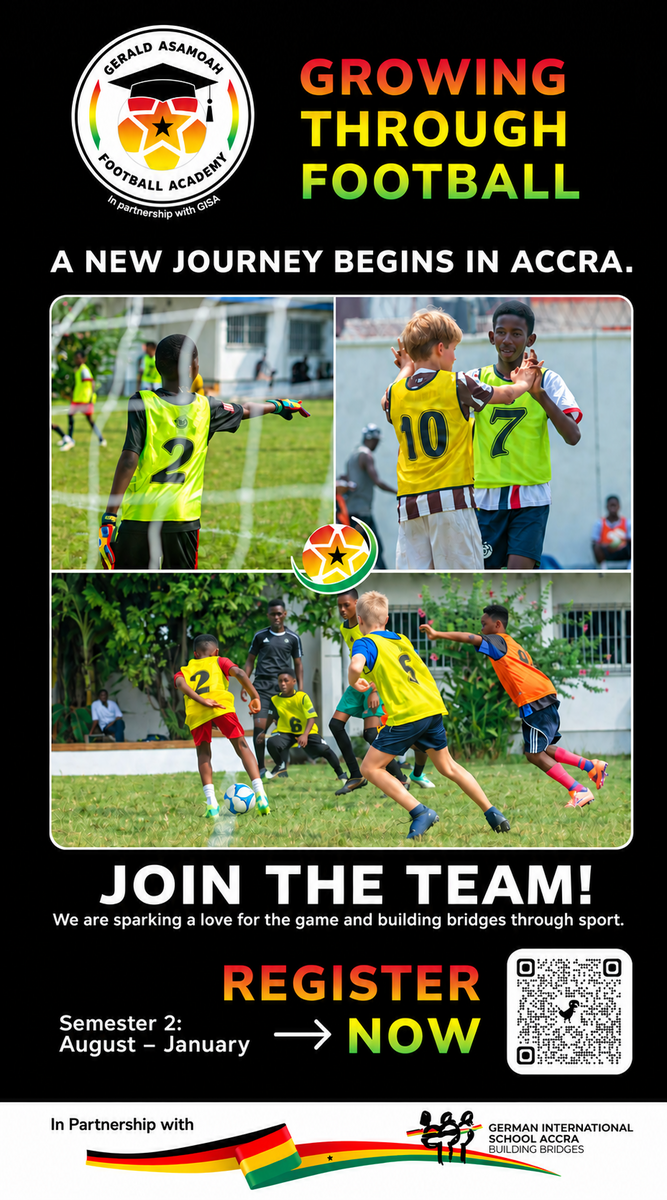
⚽Gerald Asamoah Football Academy
Lantern Festival
The Long Night of Mathematics & Reading Aloud
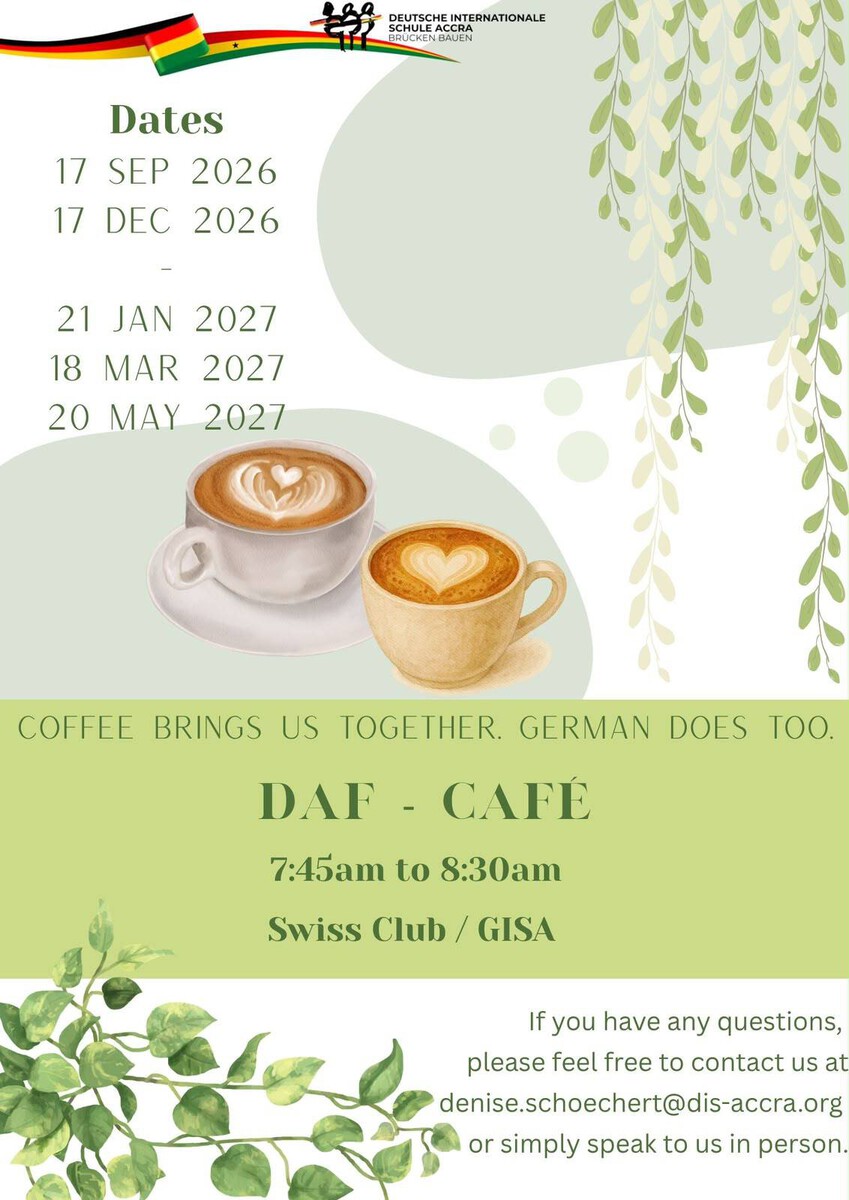
☕ DaF Café: Speaking German and Connecting Through Conversation
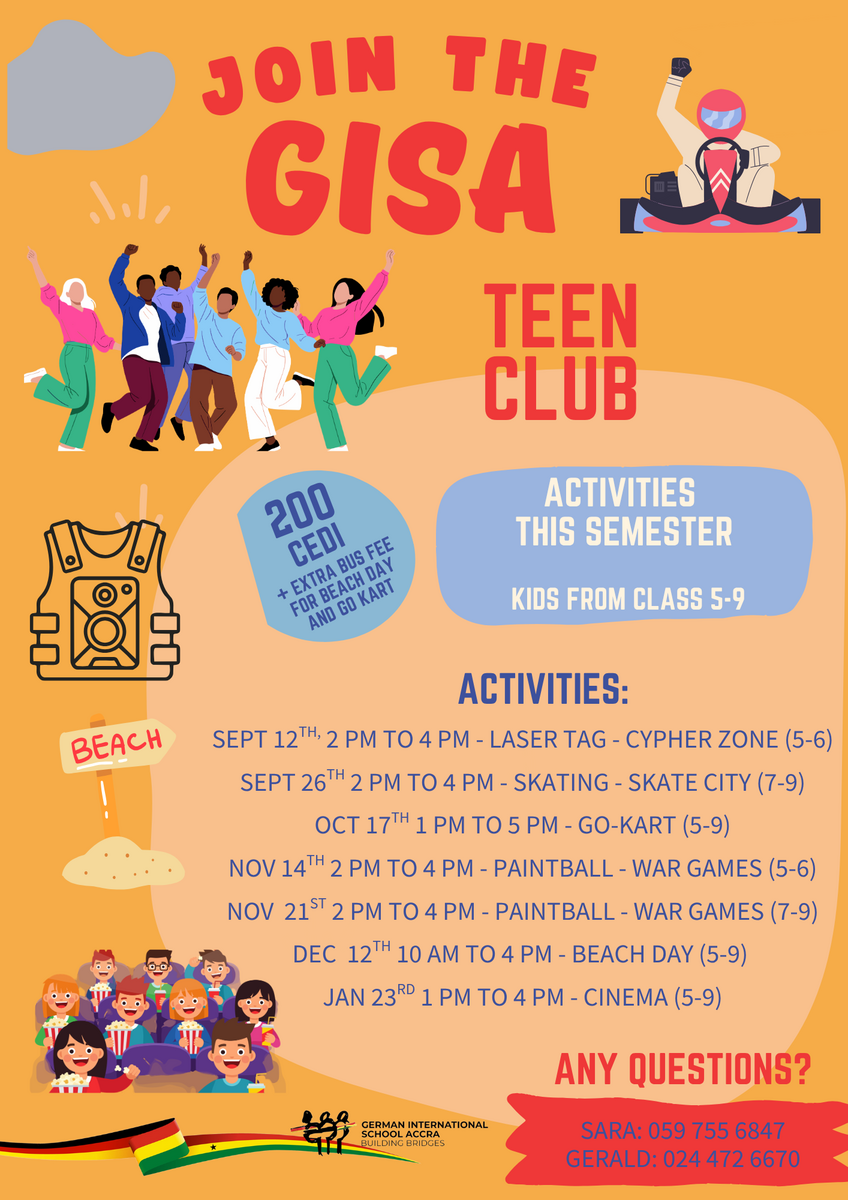
GISA Teen Club