Grade 5: Mathematical Laws, Friendship, Biodiversity and Ancient Greece


From mathematical laws and friendship to plant species, art history and Ancient Greece: this week, Grade 5 explored a wide range of questions and repeatedly discovered that careful observation, reflection and reasoning play an important role across all subjects.
Mathematics – calculating efficiently and using mathematical language with confidence
In Mathematics, the students worked with the commutative law and the associative law of multiplication.
Using different examples, they discovered that factors can be rearranged or grouped differently without changing the result. These mathematical laws help students simplify calculations and find efficient strategies.
At the same time, important technical terms from the four basic operations were revised and consolidated. Sum, difference, product and quotient should not only be familiar words, but should also be used correctly and confidently.
Ethics – friendship also means dealing with conflict
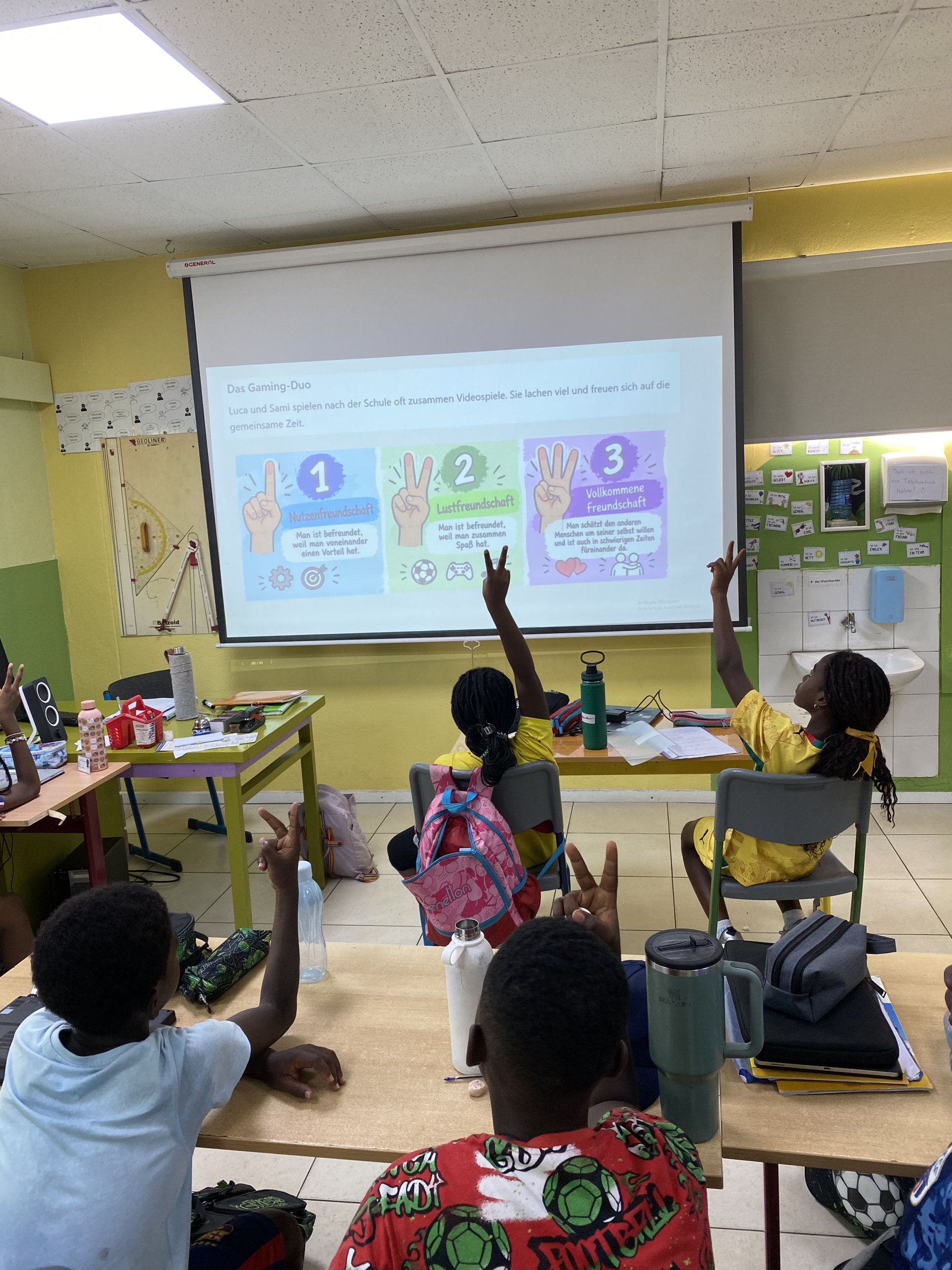
In Ethics, the class continued working on the topics of friendship and reconciliation. To begin with, the students revised Aristotle’s three types of friendship in a short quiz: friendships of utility, friendships of pleasure and friendships of virtue.
The focus then shifted to conflict. What happens when friends argue? How can people approach one another again? And what makes an apology sincere?
The students wrote their own reconciliation dialogues and practised expressing feelings, understanding another person’s perspective, apologising honestly and accepting an apology. It became clear that good friendships are not only about positive shared experiences, but also about being willing to resolve conflicts and forgive one another.
Biology – why identifying plants matters
In Biology, the class began with a seemingly simple question: why is it important to be able to identify plants?
This quickly led to the broader topic of biodiversity. The students explored what biological diversity means and why preserving different plant and animal species is also important for us as human beings.
At the same time, the lesson connected directly to the work of previous weeks. The class had previously studied the structure and characteristics of flowers in detail. Now it became clear why this knowledge matters: the form, structure and characteristics of flower parts can provide important clues when distinguishing between different plant species.
From the close observation of a single flower, the students therefore moved towards a much bigger topic: the diversity of life and our responsibility to help preserve it.
Art – the stage is set for our art experts
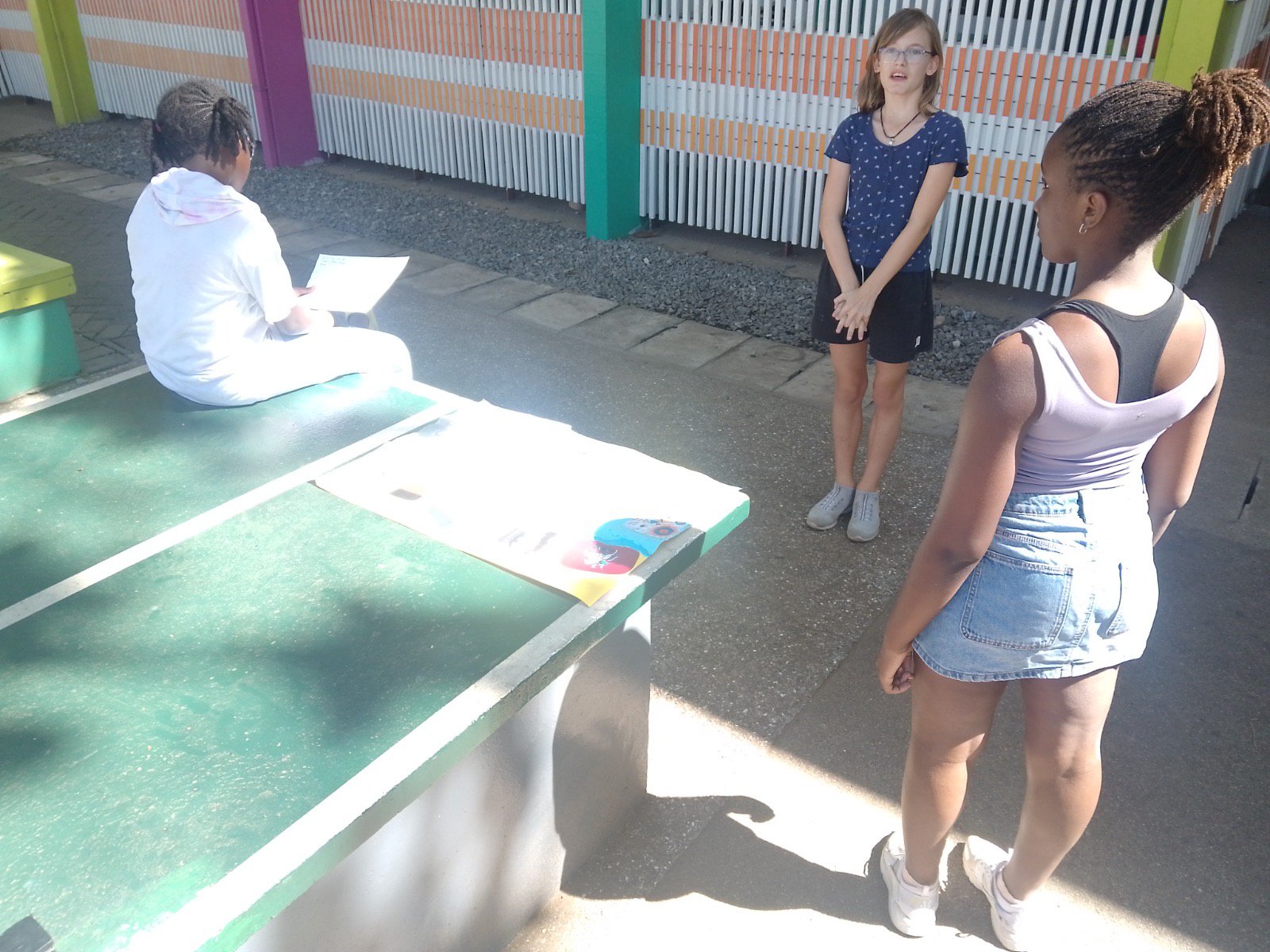
After intensive research, creative work and plenty of preparation, it was finally time for the first art history presentations.
Before beginning, the groups used the remaining time to make final improvements, add missing information and practise their presentations. After all, the aim was not only to present accurate information, but also to make it clear and engaging – ideally without suddenly forgetting a complicated artist’s name.
The first groups introduced artists and works that were previously unfamiliar to many students. The class learned about biographies, special techniques and remarkable works of art and quickly discovered that art history can be surprising, exciting and sometimes even rather unusual.
Each presentation was followed by questions and constructive feedback. In this way, the students practised not only presenting, but also attentive listening and giving fair and helpful feedback.
History – Athens, Sparta and the struggle for power in Ancient Greece
In History, the journey continued through Ancient Greece. After the Persian Wars, the balance of power within the Greek world began to change significantly.
The students explored the growing influence of Athens and the development of the Delian League. In doing so, they examined how an alliance originally created for mutual protection increasingly became an instrument of Athenian power.
At the same time, Sparta emerged as Athens’ major rival. Different political systems, different ideas about society and competing interests increasingly shaped the relationship between the two poleis.
The lesson made one thing clear: history is rarely just about dates and names. Historical developments are driven by interests, decisions, conflicts and the recurring question of how power is created and how it is used.
It was therefore a week in which Grade 5 moved between numbers, friendships, flower characteristics, artworks and ancient power struggles – and across all subjects practised the same essential skills: looking closely, recognising connections and explaining their own ideas.
⚽Gerald Asamoah Football Academy

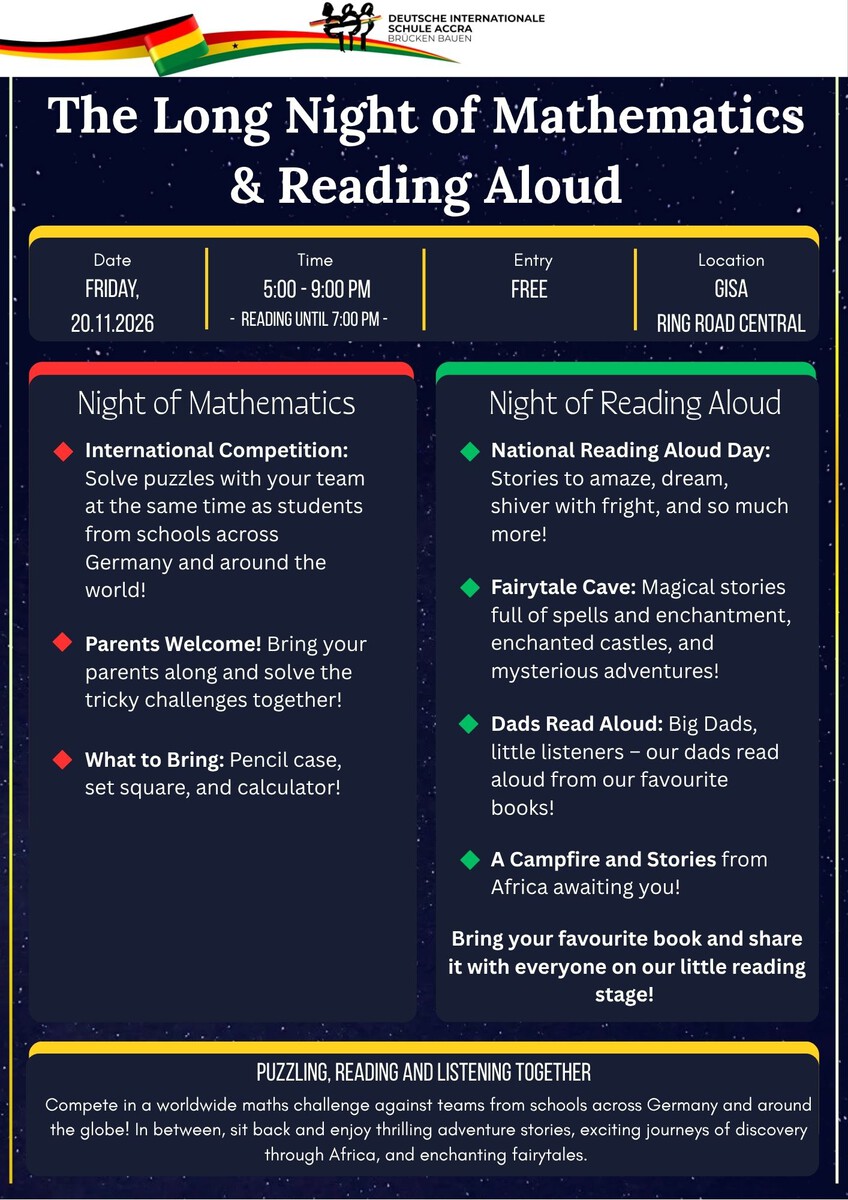
The Long Night of Mathematics & Reading Aloud
Christmas Market

☕ DaF Café: Speaking German and Connecting Through Conversation

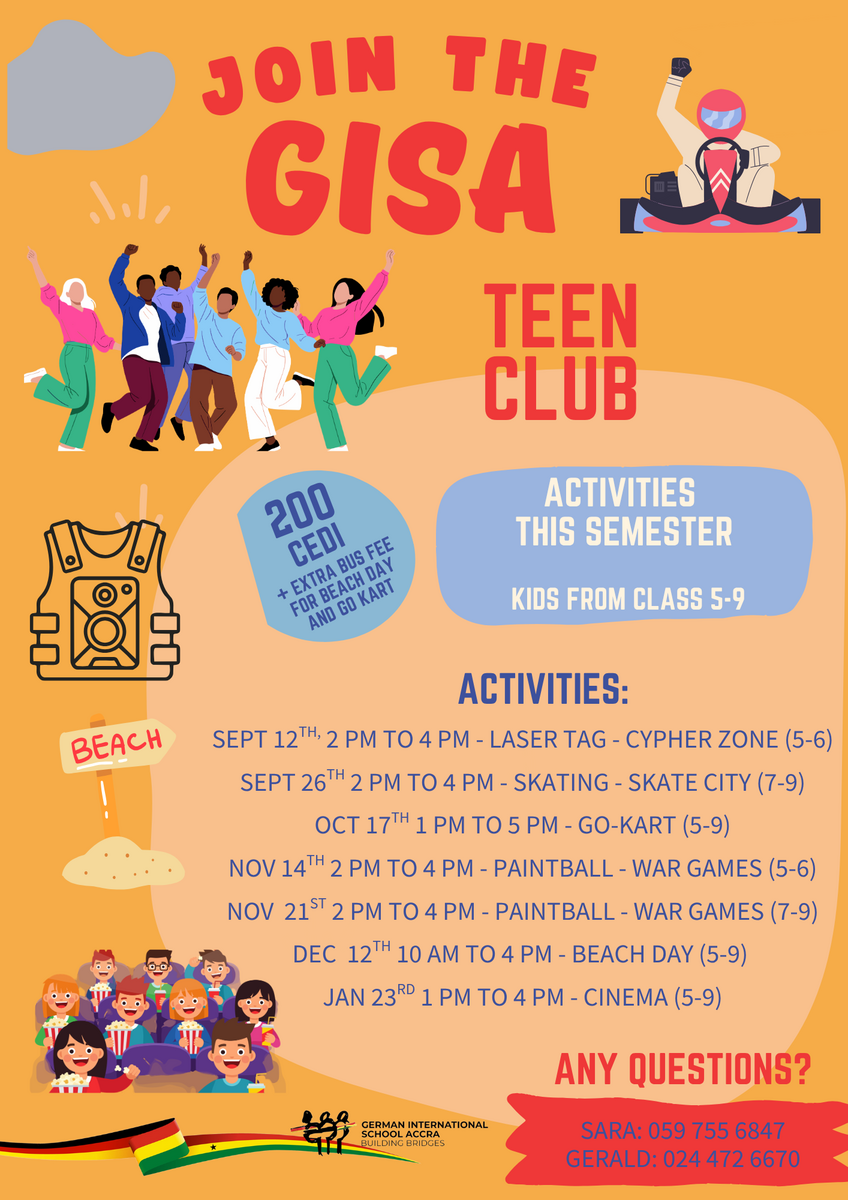
GISA Teen Club