Grade 6 – Precise Instructions, Great Conquerors and the Secrets of Plants


How can we describe an object without mentioning its name? Can we actually make pancakes by following our own written instructions? And was Alexander the Great not only a conqueror but also a bridge builder between different cultures? This week, Grade 6 explored a wide range of fascinating questions while discovering new opportunities for independent learning.
German – Turning Words into Actions
In German, the students began exploring a new topic: describing objects and processes.
During a guessing game, they described various classroom objects so precisely that their classmates could identify them. They quickly discovered the importance of accurate vocabulary, suitable adjectives and detailed descriptions.
The class then explored how to describe everyday processes: How do we wash clothes? How do we bake a pizza? And what steps are needed to prepare pancake batter?
Particular attention was paid to the correct sequence, complete instructions and clear language.
Next week, the students will put their instructions to the test by following them step by step. Will their carefully written descriptions result in delicious pancakes?
History – Alexander the Great: Conqueror and Bridge Builder?
In History, Grade 6 is exploring one of the most fascinating figures of the ancient world: Alexander the Great.
How did he manage to conquer a vast empire within just a few years? What impact did his military campaigns have on the conquered territories? And what role did encounters between different cultures play?
Through a differentiated historical mosaic project, the students investigate various aspects of Alexander's rule, his military achievements and the cultural transformations resulting from his conquests.
Historical maps, visual sources, individually tailored tasks and guiding questions provide different approaches to a shared topic. The individual findings gradually come together to create a multifaceted historical picture.
The students also explore a controversial question: Was Alexander primarily a power-driven conqueror, or was he also a pioneer of cultural exchange between East and West?
A fascinating historical exploration of the concept of “Building Bridges”, which continues to shape our school community today.
Mathematics – Independent Learning and Personal Goals
In Mathematics, the students revised topics from previous weeks and began preparing for their upcoming assessment in December.
They independently selected suitable exercises from a list, reflecting on their individual learning progress: What can I already do confidently? Where do I still need practice? And which mathematical skills would I like to master next?
Taking a temporary break from the usual weekly learning plan provided additional space for focused and individual practice.
Next week, the class will return to its familiar learning routines. Developing the ability to assess and manage one's own learning process remains an important objective.
Biology – Stinging Nettle or Dead-Nettle? A Closer Look Pays Off!
In Biology, the students deepened their understanding of the characteristics used to identify flowering plants.
Using stinging nettles and dead-nettles as examples, they discovered why accurate plant identification can be particularly useful in everyday life. Looking closely might even help avoid an unpleasant encounter with stinging hairs!
The class then explored the basic principles of identification keys and was introduced to taxonomy, the scientific classification of living organisms.
Several important plant families were examined to identify their characteristic features, similarities and differences.
In the coming lessons, the students will become young botanical experts themselves, researching selected plant families and presenting their findings to the class.
English – Using Word Classes to Build Longer and More Engaging Sentences
In English, Grade 6 continued exploring different word classes and worked on their related presentations.
Throughout the activities, the students demonstrated creativity, mutual support and strong teamwork.
Another important focus was applying their grammatical knowledge. By using different word classes effectively, the students learned to construct longer and more varied English sentences and express their ideas in greater detail.
Understanding grammatical categories thus became a practical tool for increasingly confident and versatile communication.
Whether writing cooking instructions, exploring historical connections or identifying plants, careful observation, structured thinking and independent learning were essential skills in Grade 6 this week.
⚽Gerald Asamoah Football Academy
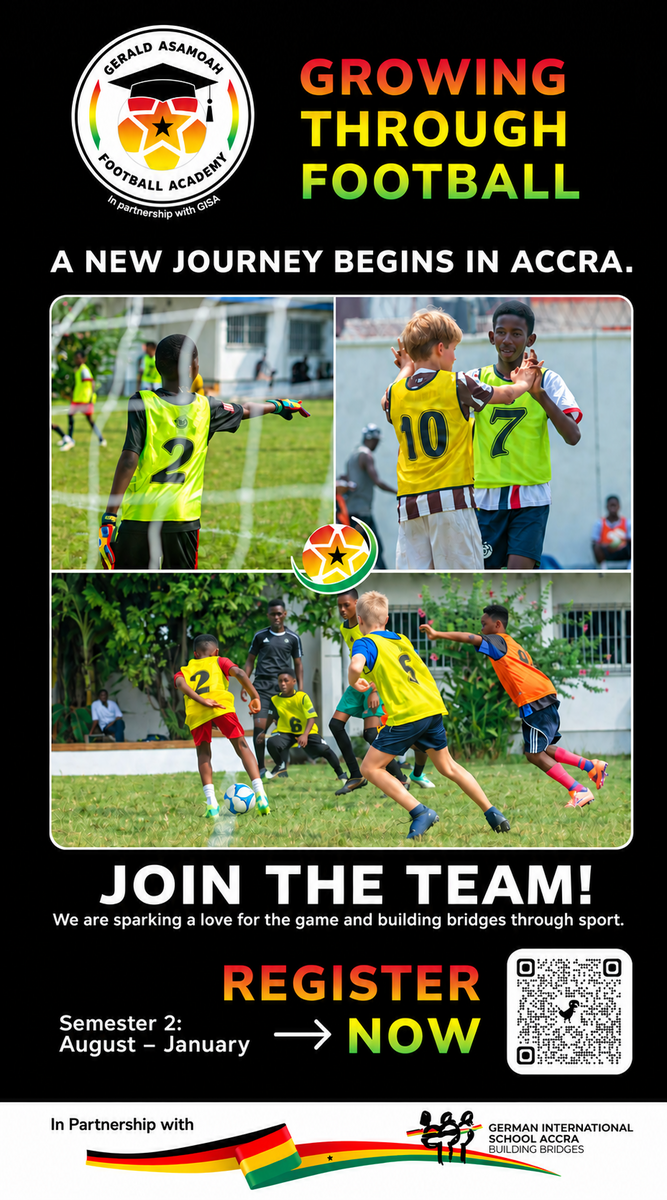
⚽🏆 Gerald Asamoah Cup

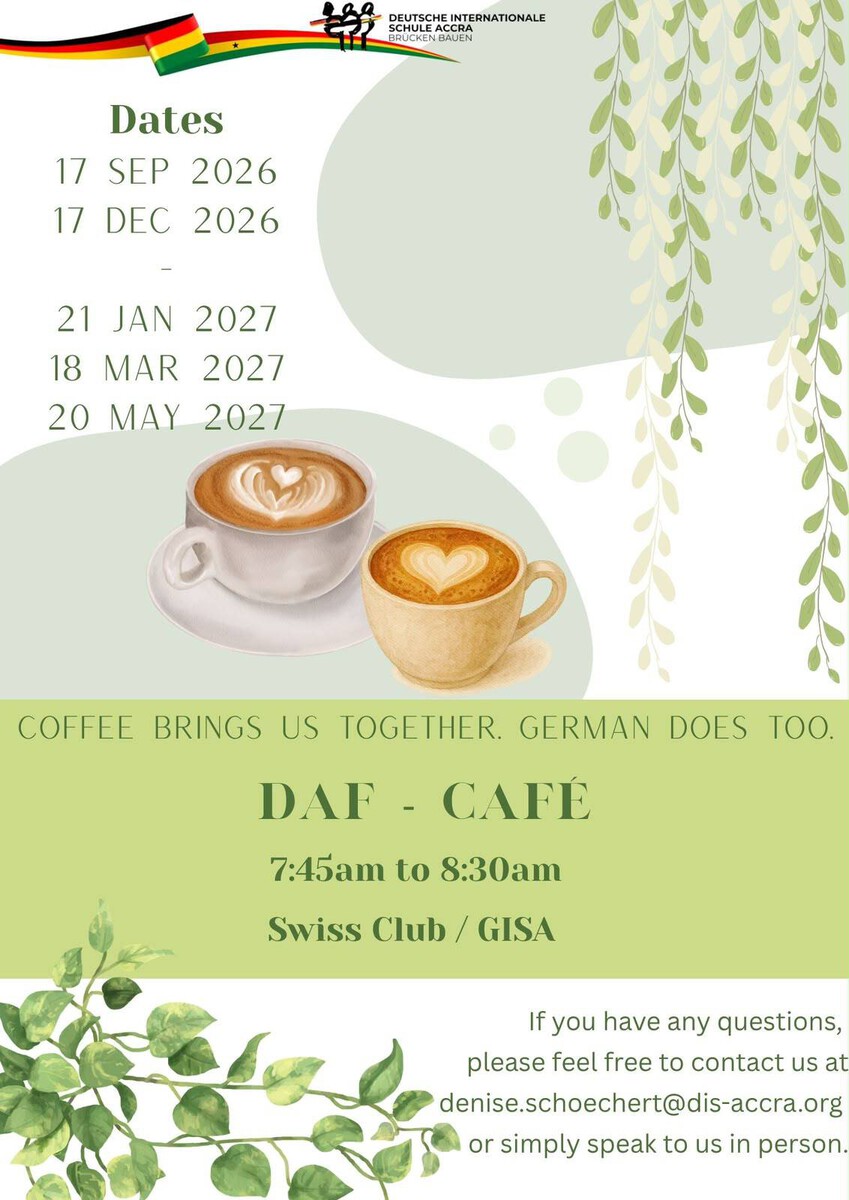
☕ DaF Café: Speaking German and Connecting Through Conversation
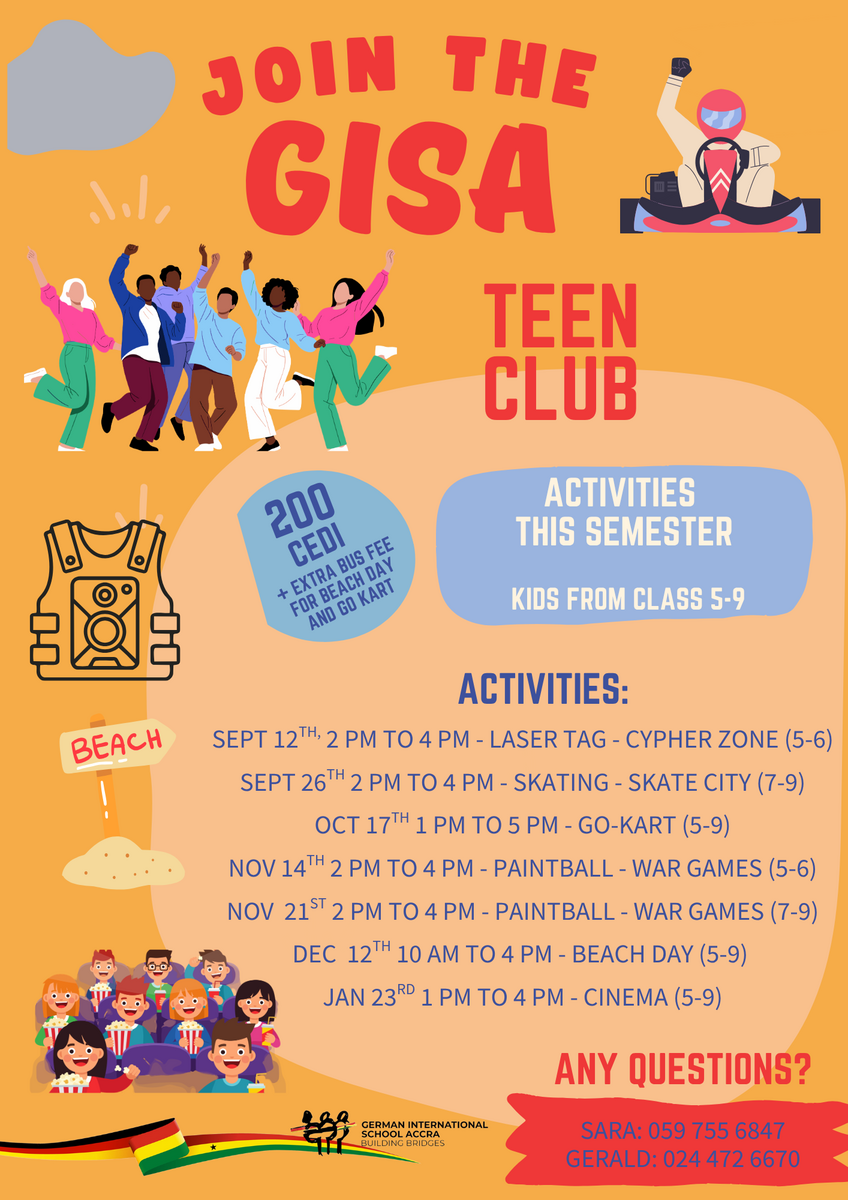
GISA Teen Club