Grade 8 – Team Spirit, Crusades and Literature with Depth


From binomial formulas and remarkable teamwork to different historical perspectives on the Crusades, butterflies, reflexive verbs, poetry and an in-depth literary analysis: Grade 8 once again had a varied and challenging week.
Mathematics – Working Through Binomial Formulas Together
In Mathematics, the focus was on binomial formulas. The students expanded and factorised expressions, took out common factors and simplified terms – all in preparation for the class test written on Friday.
What stood out in particular was the way the class worked together. Students who were still struggling were supported naturally and without being asked by classmates who were happy to explain, correct and help.
They even reminded one another to stay focused and disciplined.
The intensive preparation phase showed just how strong the sense of community in the class can be when it really matters. It was also impressive to see how much potential some students reveal when they take on the role of explaining something to others.
Biology – From Apple Snails to Butterflies
In Biology, our presentation series on invertebrates came to an end. The final presentation focused on apple snails.
The students listened very attentively, answered content-related questions confidently and gave the presenter thoughtful and well-founded feedback.
We then moved on to butterflies. Using them as an example, the class examined key characteristics of insects and followed the different stages of development from egg to caterpillar, pupa and adult butterfly.
A short test will soon show how much the students have retained from the presentation series on invertebrates.
French – Reflexive Verbs in Everyday Life
In French, the focus was on les verbes pronominaux, or reflexive verbs.
The students learned how these verbs are used to describe everyday routines and actions people do to or for themselves.
They practised using the correct reflexive pronouns – me, te, se, nous, vous and se – and combining them with the correct verb forms in the present tense.
Through practical examples and exercises, the new structures were applied and reinforced.
English – Poetry as a New Language
In English, poetry is currently taking centre stage.
The class is exploring different types of poetry, key features and formal conventions. At the same time, the students are increasingly focusing on deeper meaning and the voice that can be heard within a poem.
At the moment, they are working with a prose poem. The text is discussed together in class before the students develop their own scripts based on the audio version.
This combines close listening, language analysis and creative work with text.
History – The Crusades from Different Perspectives
In History, Grade 8 took a closer look at the beginnings of the Crusades.
The class worked with different historical perspectives and explored not only religious and political motives, but also the consequences of the call to crusade.
A particular focus was placed on the violence against Jewish communities in 1096.
This helped students understand that historical events should not only be viewed from the perspective of rulers and religious leaders, but also from the perspective of those who were affected by the consequences of their decisions.
The lessons therefore developed into a more differentiated examination of motives, interests and the consequences of historical actions.
German – A Close Reading of “Die Küchenuhr”
In German, Grade 8 worked intensively with Wolfgang Borchert’s short story “Die Küchenuhr”.
The work had already become rather challenging the previous week. We answered key questions, wrote short summaries and examined the different time levels in the story.
The shift between present and past required particularly careful reading. Rather fittingly, in a story about a broken clock, keeping track of time turned out to be especially important.
We also explored four different narrative perspectives and asked: Who is actually telling the story? Whose thoughts do we know? And what do we have to infer ourselves from the behaviour of the characters?
The class then went even deeper into the text. Why does the young man laugh despite his terrible loss? How do the other people on the bench react? And why is this particular kitchen clock so important to him?
Working in pairs and groups, the students examined striking phrases and discussed what the clock might symbolise. The conversation touched on memories of his mother, a sense of security and everything the war has taken away from him.
Finally, we checked the typical features of a short story and found evidence for them in the text.
The story itself was indeed short. Our notes on it became longer and longer.
The students then used their findings to write a complete literary analysis with an introduction, main body and conclusion. To finish, they also prepared a retelling for their classmates.
It was a week that showed once again how many different forms learning can take – mathematically precise, historically nuanced, linguistically creative and, above all, collaborative.
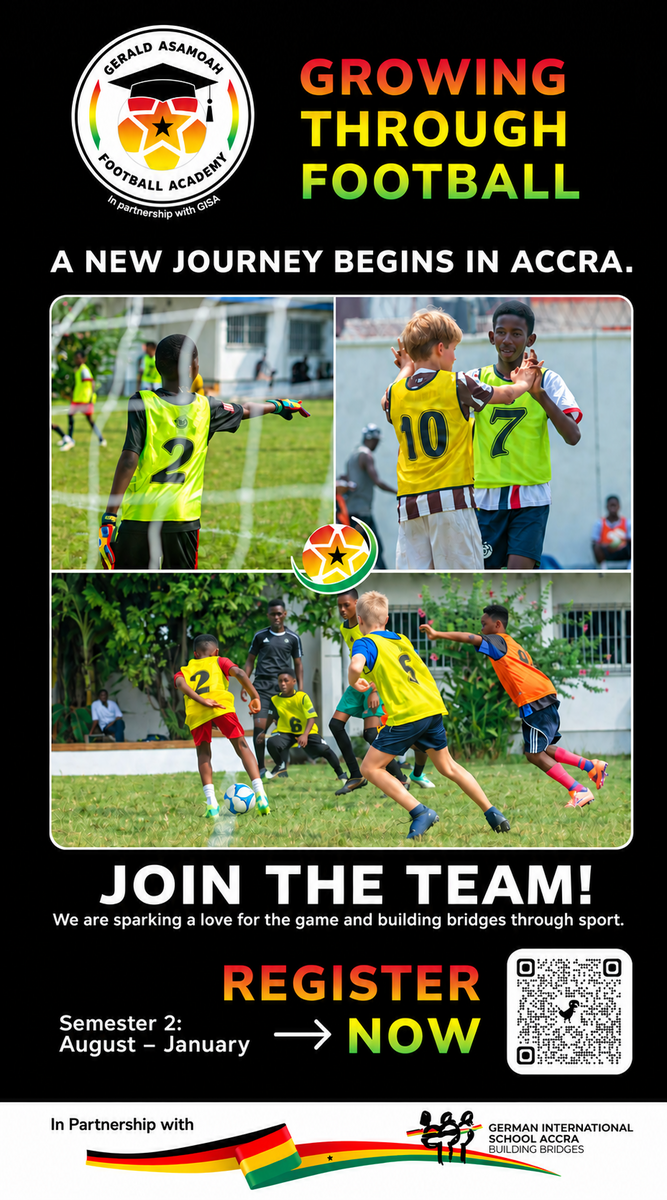
⚽Gerald Asamoah Football Academy
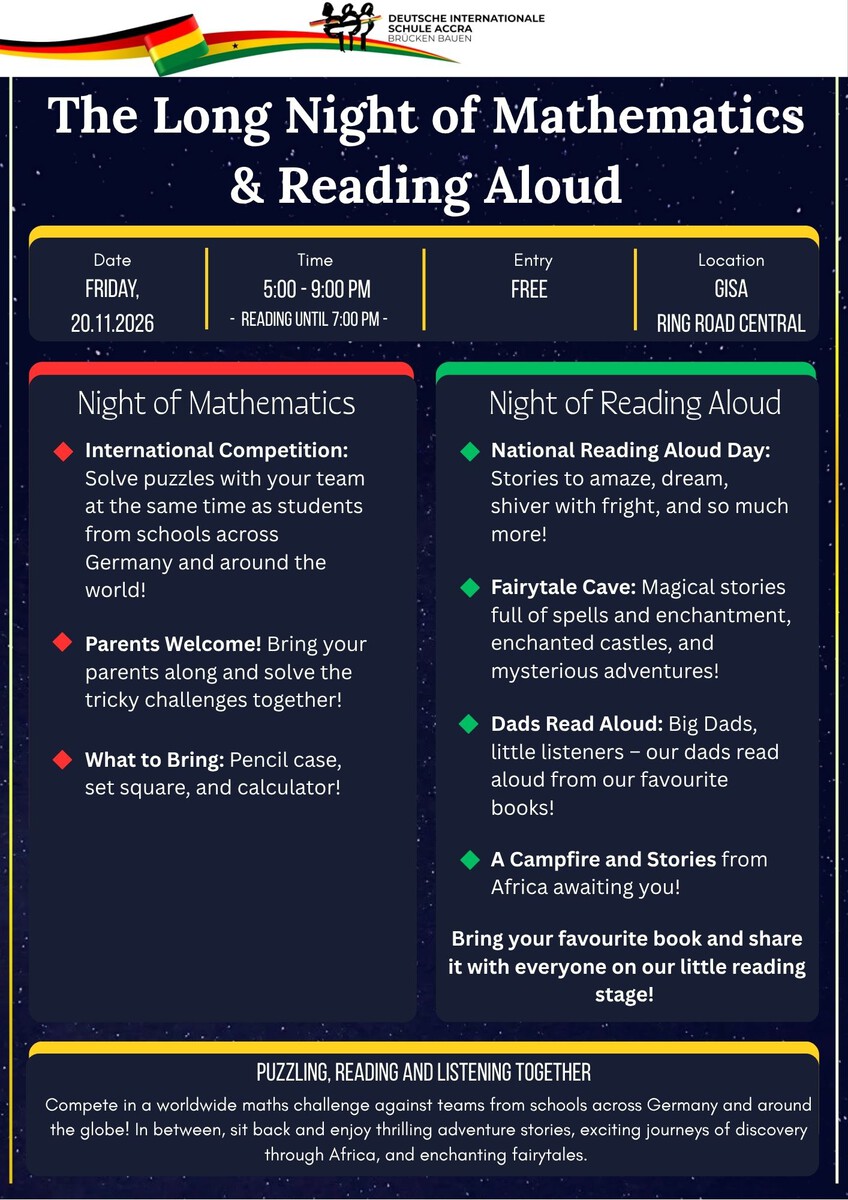
The Long Night of Mathematics & Reading Aloud
Christmas Market

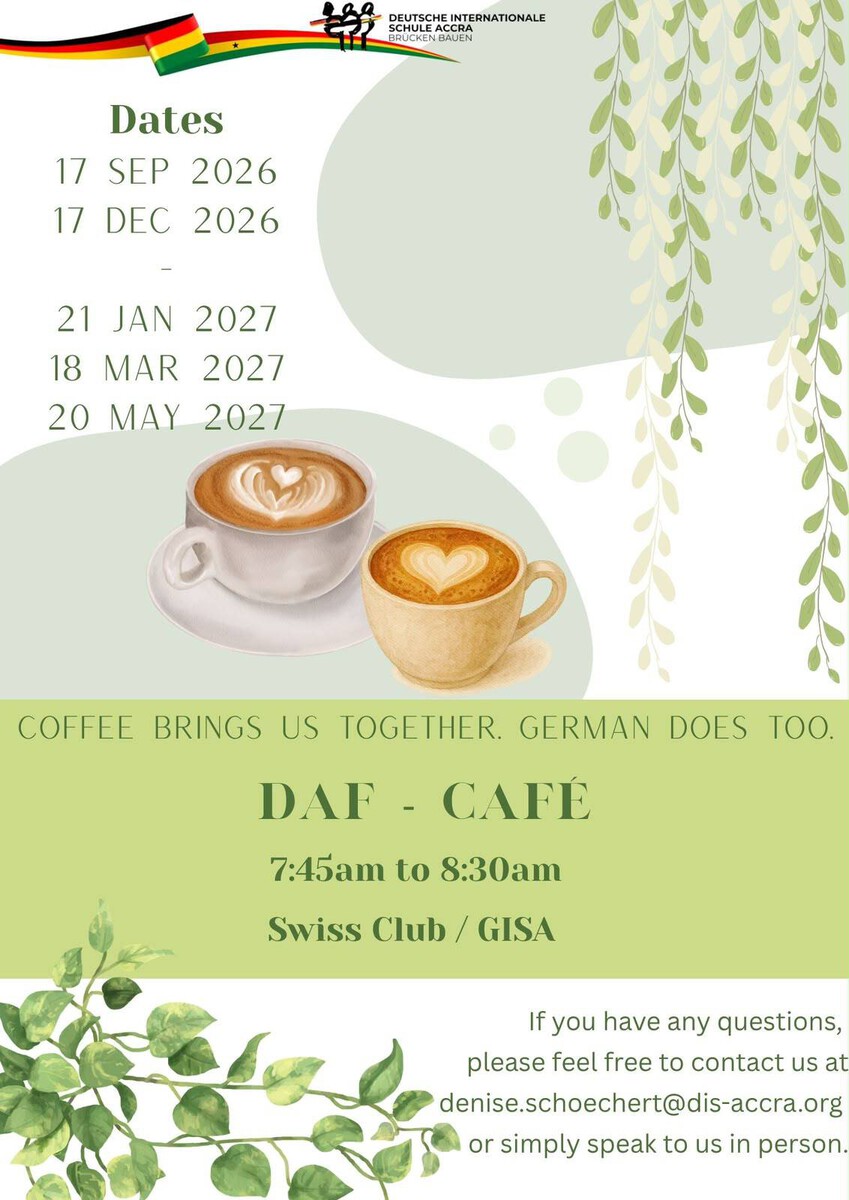
☕ DaF Café: Speaking German and Connecting Through Conversation
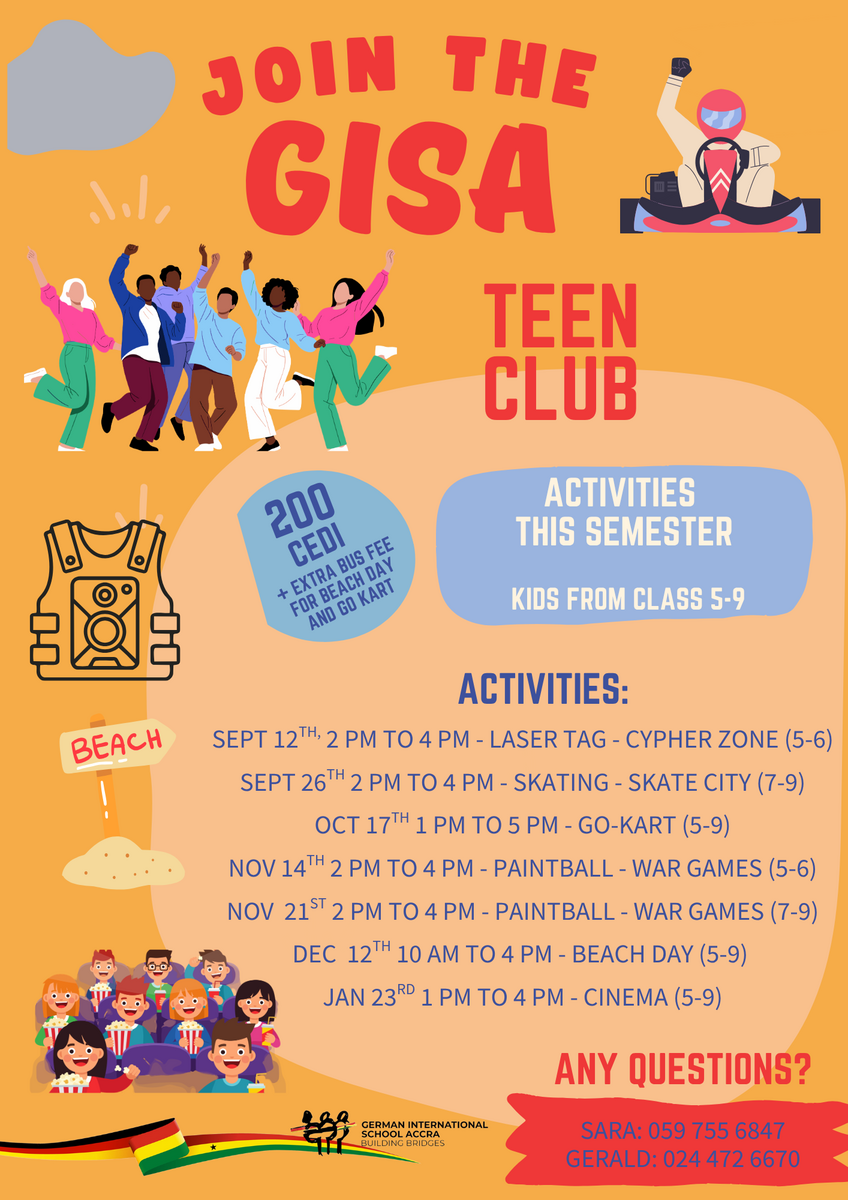
GISA Teen Club