Understanding History, Strengthening Language – Every Lesson Is Also a German Lesson


In Grade 9 History, this week’s lesson was not only about understanding historical developments, but also about expressing them clearly and precisely in German. At the German International School Accra, an important principle applies especially in language-sensitive subject teaching: every lesson is also a German lesson.
The students focused on the “home front” during the First World War. Key topics included food supply, changes in work and production, the wartime economy, and the social consequences of a prolonged conflict. It quickly became clear that these developments cannot be viewed in isolation. Shortages of raw materials affected production, the war changed the labour market, and supply problems had a direct impact on people’s everyday lives. Individual factors became part of a complex network of causes and consequences.
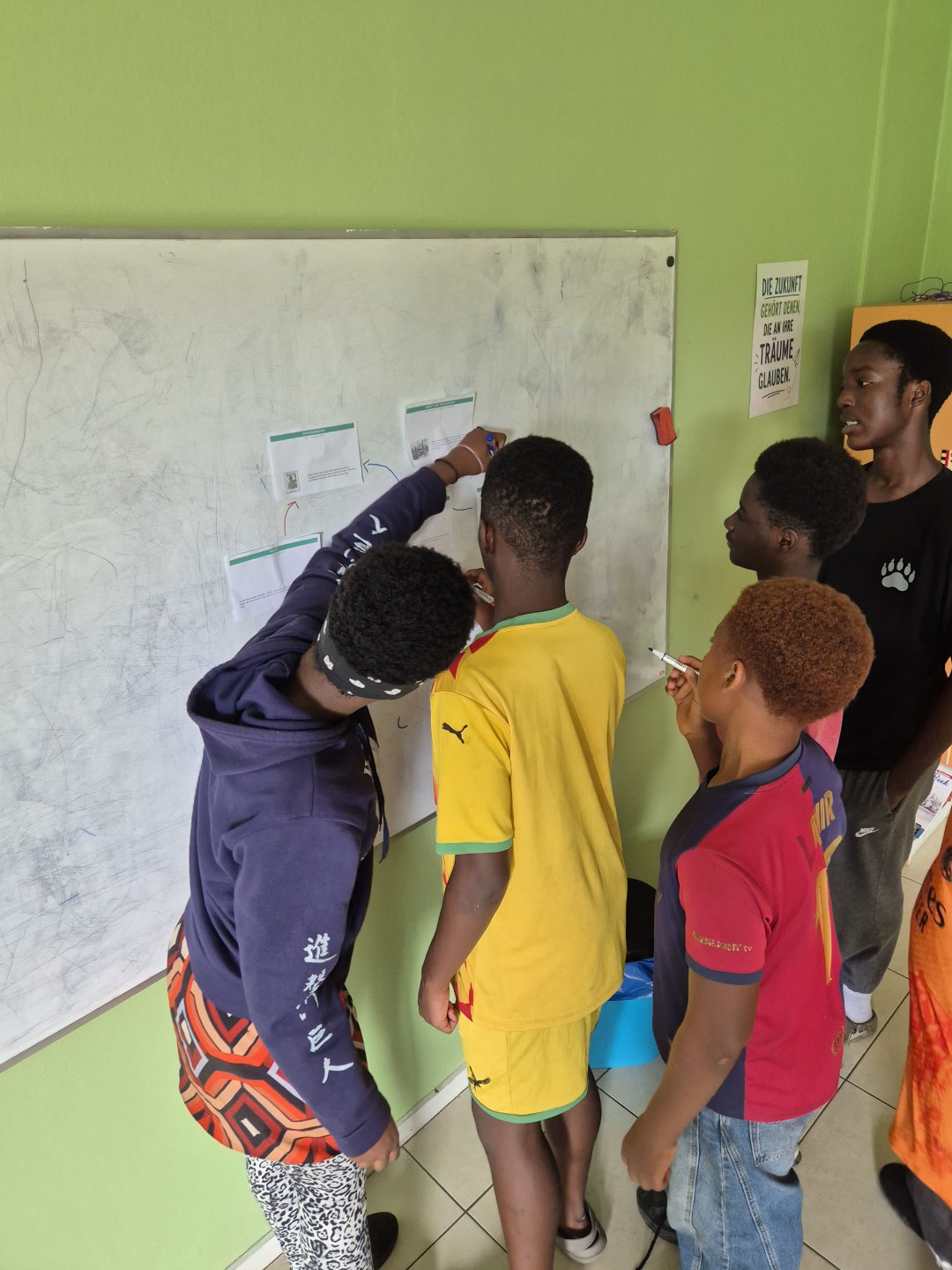
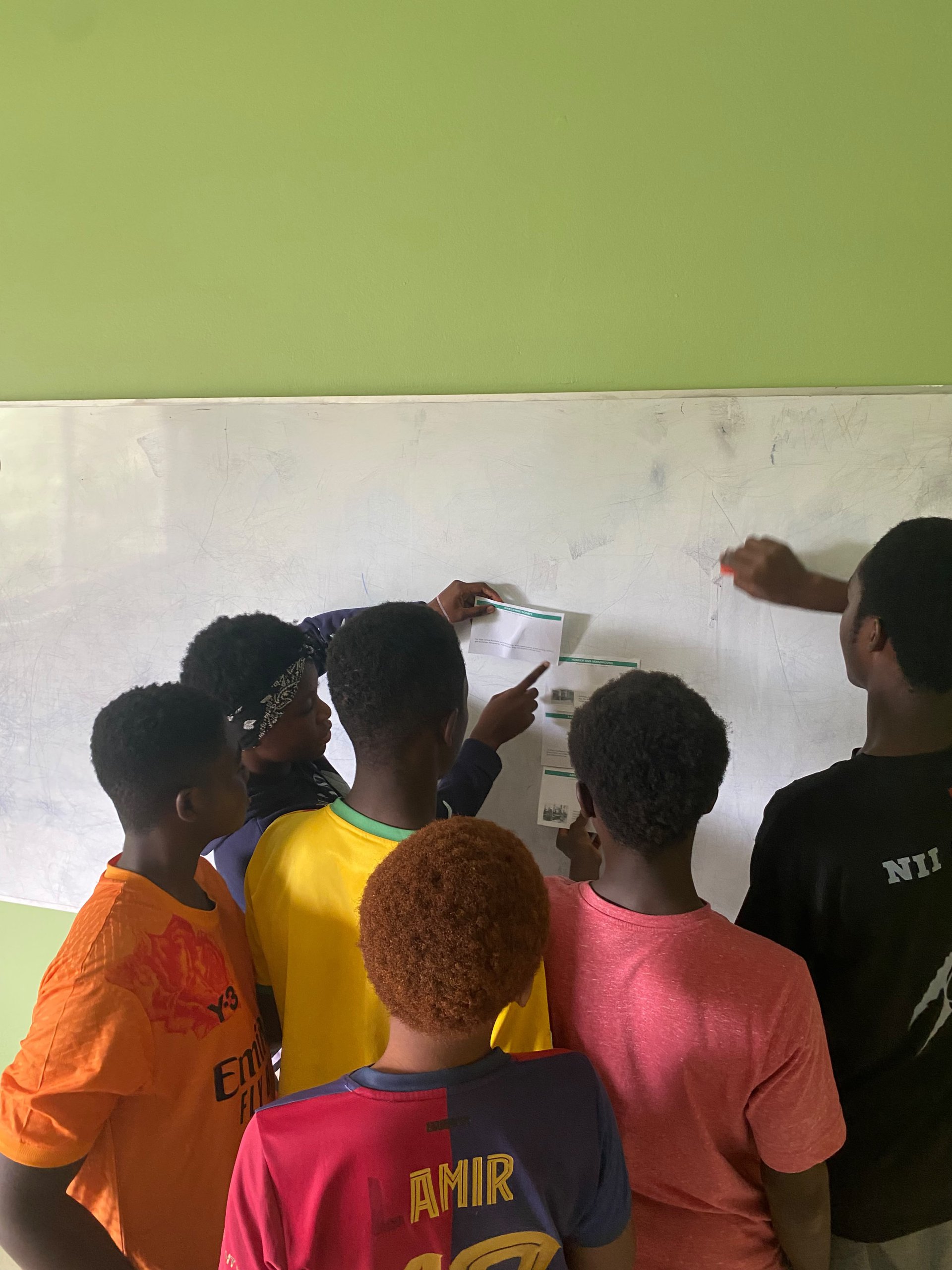
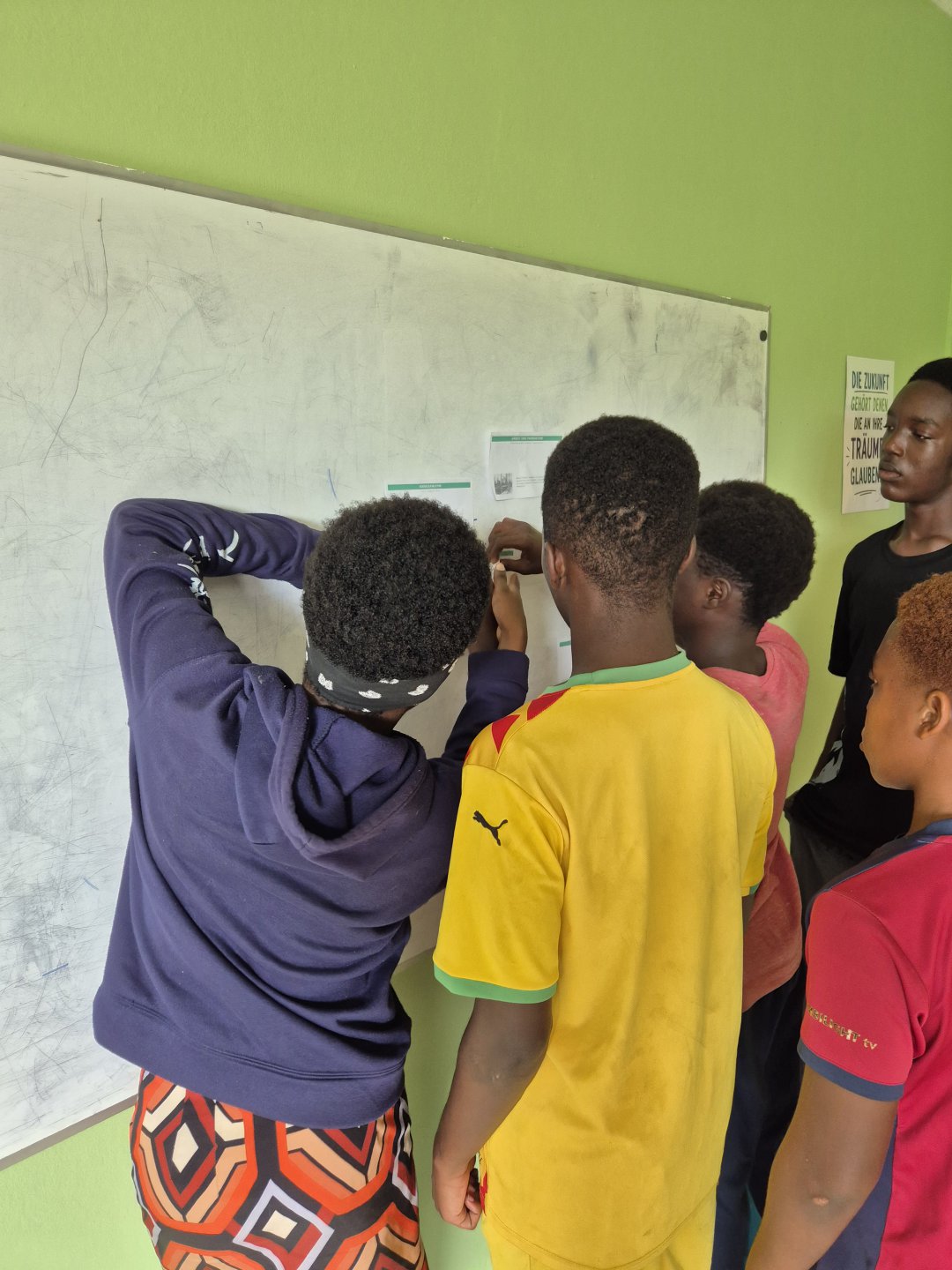
To make these connections visible while also supporting language development, the lesson used a tool from Josef Leisen’s approach to language-sensitive subject teaching: the block diagram.
The students first extracted key information from the lesson materials, grouped it by topic and then identified connections between different developments. Arrows and links in the block diagram helped to show what functioned as a cause, what was a consequence, and where developments influenced one another.
The crucial step came afterwards: the visual structure had to be transformed back into complete historical statements. For example, an arrow between “labour shortages” and “more women working in production” becomes a fully formulated explanation. Subject-specific vocabulary, suitable connectors and sentence patterns help students not only to name observations, but also to explain and justify them.
In this way, German language support does not become an additional task alongside subject learning. It takes place directly within the subject itself. Students learn history by reading, organising information, identifying connections, discussing and writing – while at the same time strengthening their academic and subject-specific language skills.
This approach is especially important in an international learning environment. Academic expectations are not reduced. Instead, students are given the linguistic tools they need to access and express increasingly complex content independently.
The block diagram was therefore much more than a method of recording results. It became a bridge between historical thinking and language learning – fully in line with our guiding principle:
Every History lesson is also a German lesson.
Excellence Scholarship Programme 2027

⚽Gerald Asamoah Football Academy

Faces of Football

🇩🇪 German Language Day

☕ DaF Café: Speaking German and Connecting Through Conversation

GISA Teen Club