Social Learning as Part of Our School Profile: Grade 7 Shapes the Partnership with Chance for Children


Starting Point and Objectives
Since the beginning of the 2026/27 school year, Grade 7 has been exploring social responsibility, social engagement and the question of how we ourselves can initiate change in Social Studies. At the heart of this work is our project workshop with the Ghanaian non-governmental organisation Chance for Children (CfC), with which our school already has strong ties through various encounters, joint events and sponsored runs.
Through our project workshop, we do not simply want to examine social challenges in theory. We want to identify real problems, develop our own possible solutions and, wherever possible, turn these into concrete projects together with CfC. We want to find out how we can take responsibility, help shape social processes and make a difference through collective action.
One fundamental principle has guided us from the very beginning: we want to develop projects with CfC, not simply about CfC or on its behalf. We therefore first want to understand what the actual needs are before considering what kind of support might be meaningful. Our own ideas are important, but so are the perspectives and experiences of the people with whom we hope to work.
August 2026 – Getting to Know CfC, Researching and Developing Our First Ideas
Already in the first week of lessons in August, we explored the concepts of community, responsibility and social engagement. We looked at our school’s existing partnerships and became more familiar with Chance for Children as a potential cooperation partner for our project work.
Using our first worksheet, “Getting to Know Chance for Children”, we began researching the organisation, its goals and its different areas of work. We focused in particular on street outreach, residential and care services for children and young people, support for families, cooperation with village communities, as well as vocational education and the future opportunities connected with it through TVET.
We examined the challenges CfC encounters in its daily work, the forms of support the organisation provides and the wider social issues behind these tasks. In doing so, we practised gathering information from different sources, identifying key points and summarising our findings in our own words.
During this initial research, we already began asking ourselves how we, as a class or even as an entire school community, might be able to contribute. At the end, we recorded our personal “idea spark”: a first thought about what we might be able to achieve together with CfC.
September 2026 – From Research to Our Own Project Ideas
In September, we deepened our research and began turning the information we had gathered into our own project ideas. Working in small teams, we explored CfC’s different areas of work in greater detail and considered possible areas where support might be needed.
Using our second worksheet, “From Research to a Project Idea”, we asked which specific challenges we had identified, who was affected by them and what kind of support might actually be useful.
We quickly realised that simply collecting as many ideas as possible was not enough. We also needed to examine our proposals critically: What can we realistically do? What resources are available to us? What can we organise ourselves? Which projects might make sense in the long term? And, most importantly, what kind of support is actually needed and wanted by CfC?
Within our teams, we shared our research findings, discussed different suggestions and developed initial ideas for possible cooperation projects. At the same time, we collected questions that we would like to ask during an exchange with CfC so that we can complement our own findings with the organisation’s experience and perspective.
One particularly important insight was that well-intentioned help does not automatically mean useful support. We do not want to develop solutions for other people without involving them. Instead, we want to work together to understand the challenges and explore how we might contribute meaningfully to addressing them.
As part of our further thinking, we also explored different forms of social engagement and initial approaches to social entrepreneurship – in other words, connecting social goals with entrepreneurial thinking and action.
Among the ideas that emerged were two possible project approaches: “Products with Purpose”, in which we could develop or produce our own products and connect them with a social purpose, and “Skills for Future”, which would focus on the shared development and exchange of knowledge and practical skills.
These ideas led us to further questions: What materials would we need? What might production cost? How could we finance a project? Which tasks would need to be shared? And how could we make sure that our ideas are not only interesting in the short term, but also meaningful and sustainable in the long term?
Late September and Early October – Structuring Our Findings and Preparing Presentations
Once we had completed our initial research and developed different ideas, the next step was to organise the information we had gathered and present our proposals clearly and convincingly.
Our third worksheet, “From Research to Presentation”, helped us select the most important content from our research and develop a clear presentation structure.
Using a guide, we planned presentations consisting of five slides. We wanted to begin by introducing our topic and project idea, then describe a social challenge or possible area of need and explain the solution we were considering. We also wanted to show what cooperation with CfC might look like and conclude our presentation with an outlook and open questions.
We did not focus only on the content, but also on the design of our presentations. We considered which information was particularly important, how images and other visual elements could be used effectively, and why clear language and proper source references matter.
In a short 60-second rehearsal, we also practised expressing the core message of our project idea as clearly and concisely as possible.
For the next stage of developing our ideas, we also have a planning sheet available. This will later help us define the target group we want to reach, the specific goals our project should pursue, the materials we need and how tasks can be distributed within our teams.
Possible costs, a realistic timeline and cooperation with additional partners will also play a role. With the help of an additional “CfC Check”, we want to assess whether our proposals really match the organisation’s needs and possibilities. A short 30-second project pitch will also help us learn how to present our ideas convincingly in just a few words.
Early October – Helping Others as a Link to Ethics
Alongside our project workshop, we explored the value of helping others in Ethics. We quickly realised that this topic is closely connected to our ideas about working with Chance for Children.
We first considered what it actually means to be helpful. In which situations do people need support? How can we recognise when someone needs help? How can we act helpfully in everyday life? And why might it sometimes be important to ask before helping?
We shared experiences from our own lives and explored why support should be offered respectfully and why well-intentioned help is not always automatically useful.
Using differentiated worksheets as well as suitable vocabulary and language support, we were able to express our thoughts on helping others, collect examples and connect the topic to our project workshop.
We realised that helping others goes far beyond individual acts of kindness. It also means listening to others, taking different needs seriously, accepting responsibility and looking for solutions together.
This is exactly the attitude we want to bring to our cooperation with CfC.
9 October 2026 – Presenting Our First Project Ideas
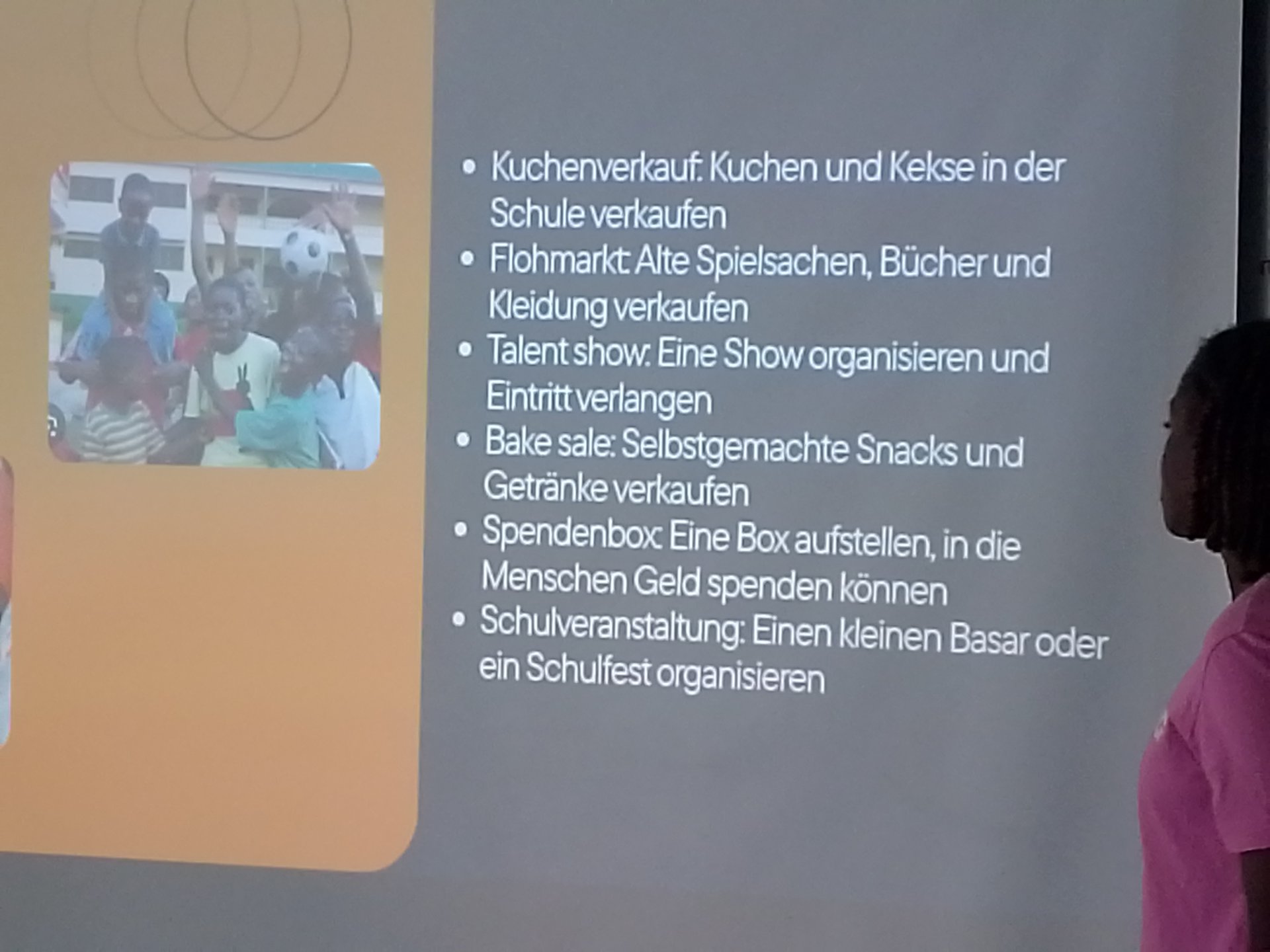
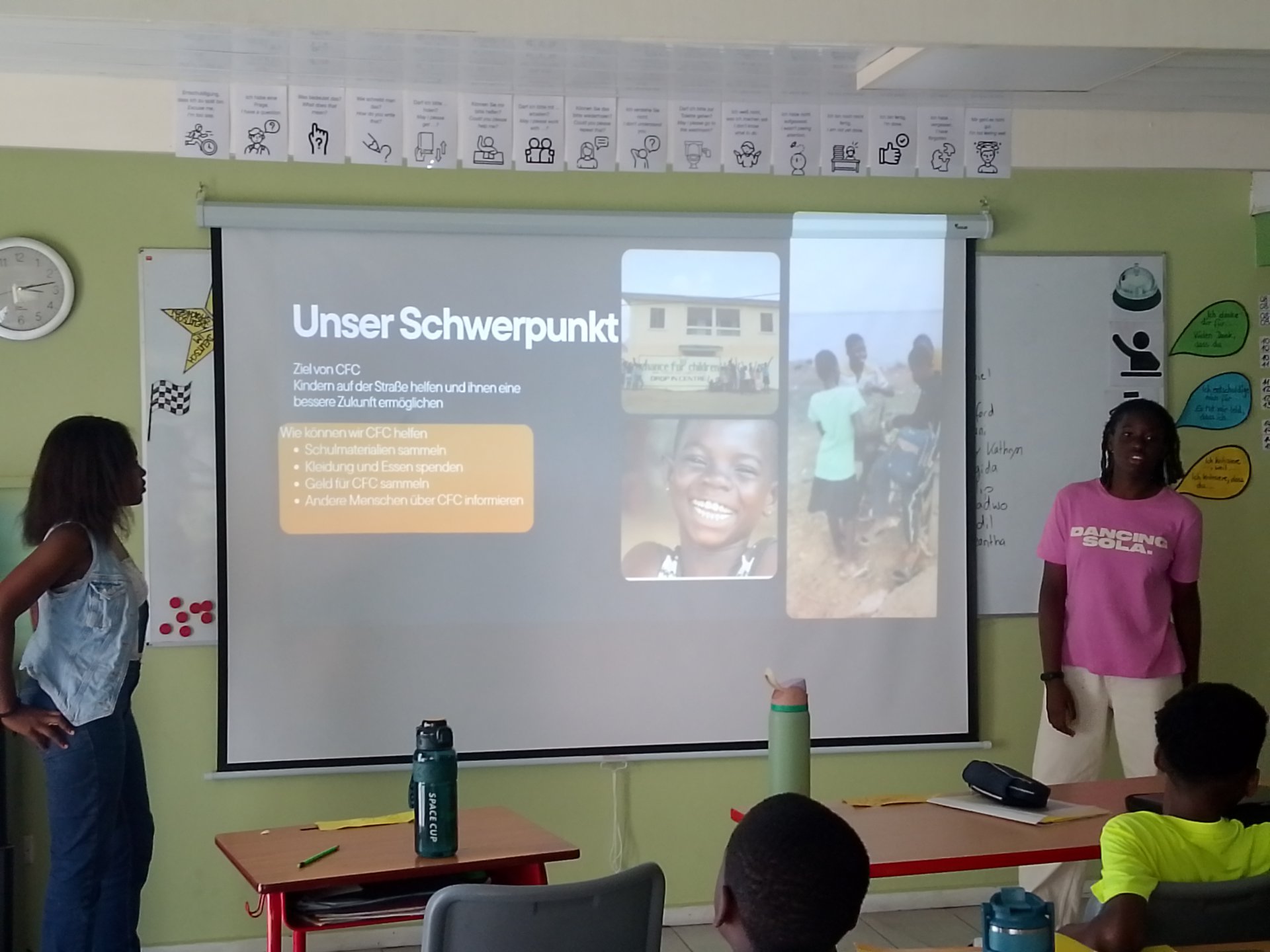
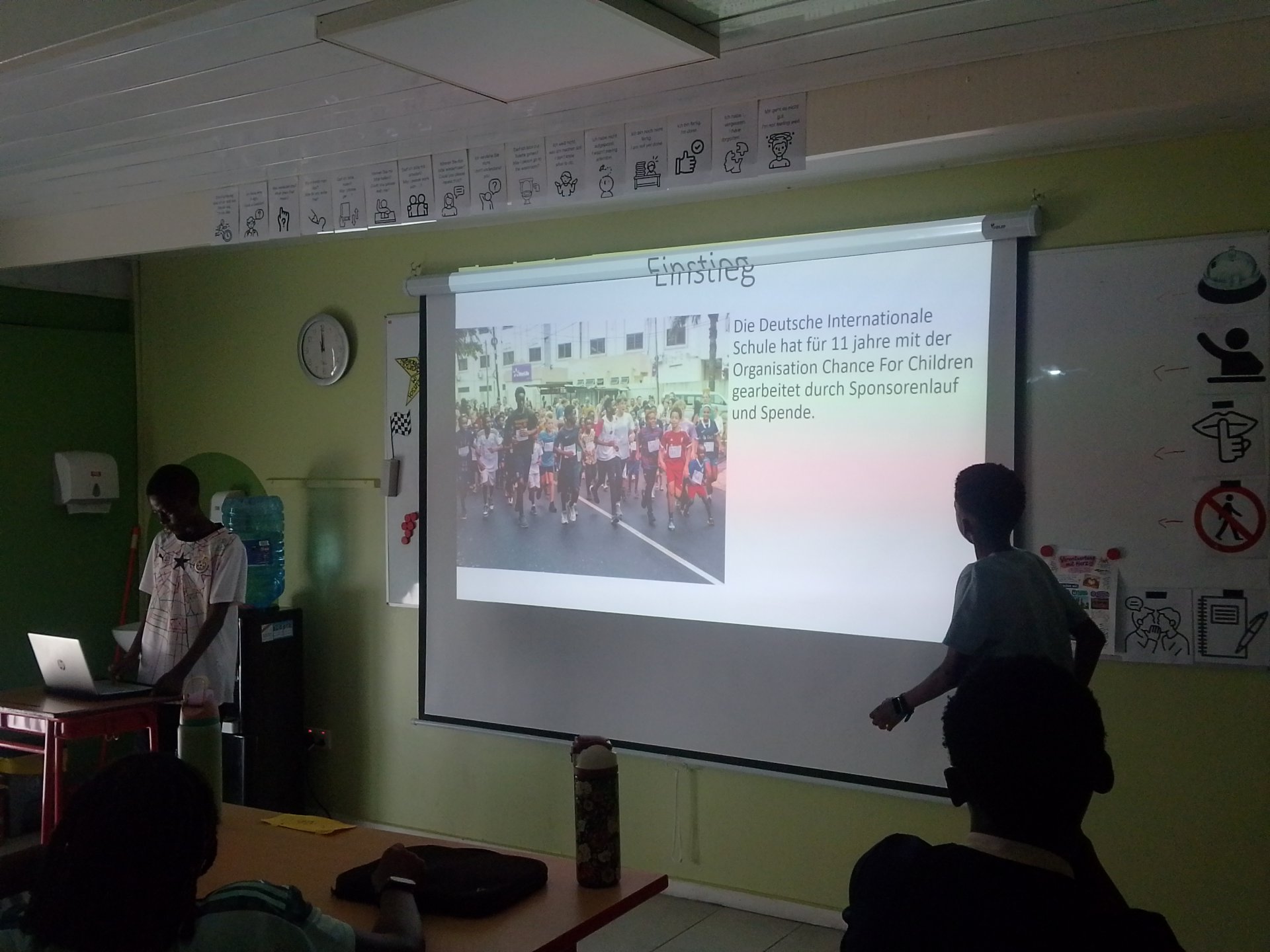
At the beginning of October, the time had finally come: we brought together the results of our research and the first teams presented their ideas for possible cooperation with Chance for Children.
After several weeks of intensive research, numerous discussions and the development of different proposals, we were now able to show what had grown out of our initial ideas.
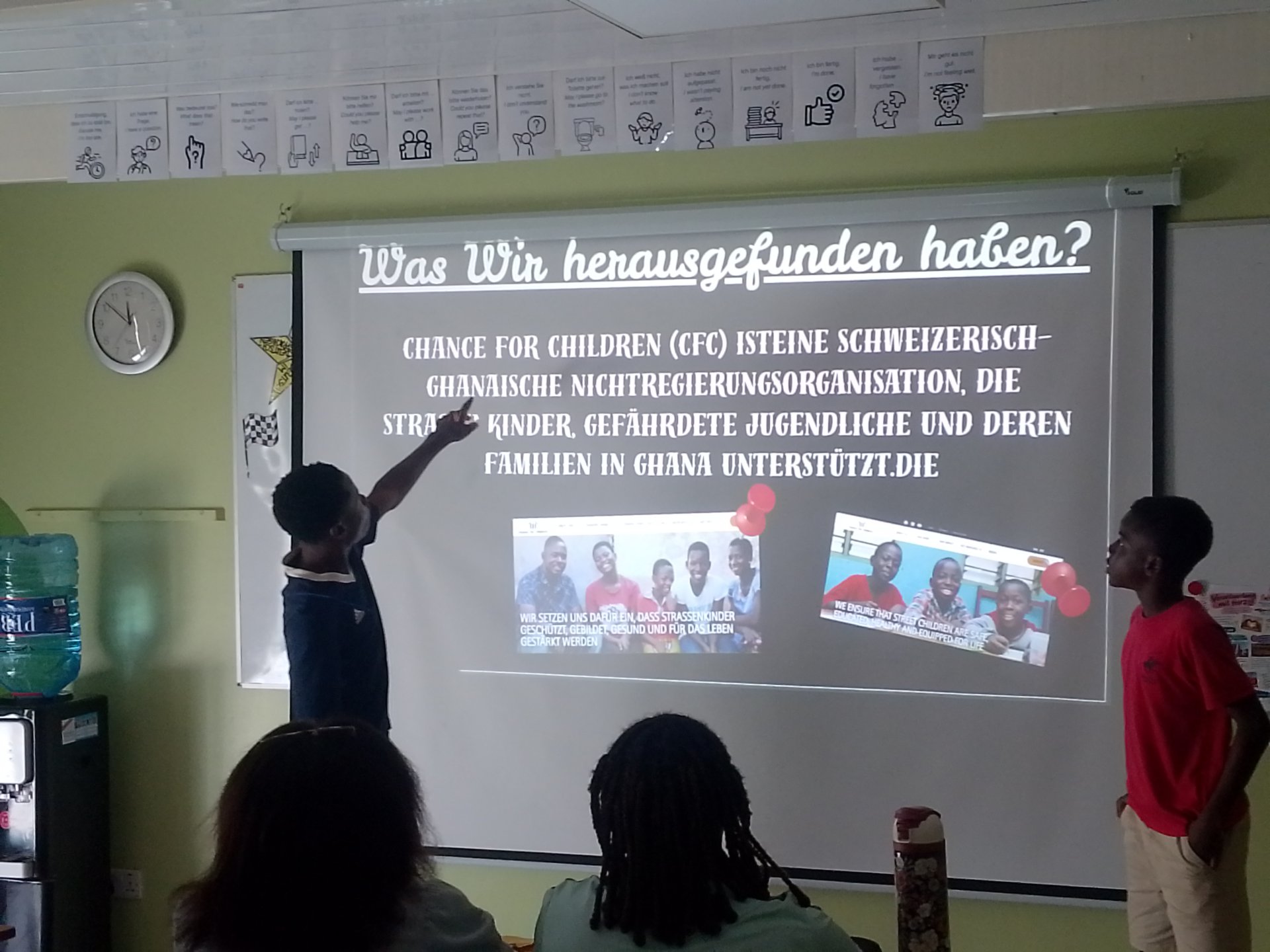
In our presentations, we introduced the social challenges we had explored, explained our project ideas and described why we believed they could be meaningful.
Afterwards, we had the opportunity to ask questions, compare our proposals and reflect together on possible opportunities and difficulties.
The aim was not simply to present as convincingly as possible. We also wanted to find out whether our ideas were understandable, realistic and potentially suitable for cooperation with CfC.
The first presentations showed us just how diverse our ideas were and how differently we had approached the same central question: What can we achieve together with CfC?
16 October 2026 – Further Presentations and Our First Steps into Public Communication
The following week, we continued our project workshop. More teams presented their ideas for possible cooperation with CfC. Together, we discussed the different proposals and considered which approaches might be particularly suitable for future joint projects.
At the same time, we began exploring a new question: How can we show others what we have been working on over the past few weeks?
This marked the beginning of another exciting part of our project workshop: public communication.
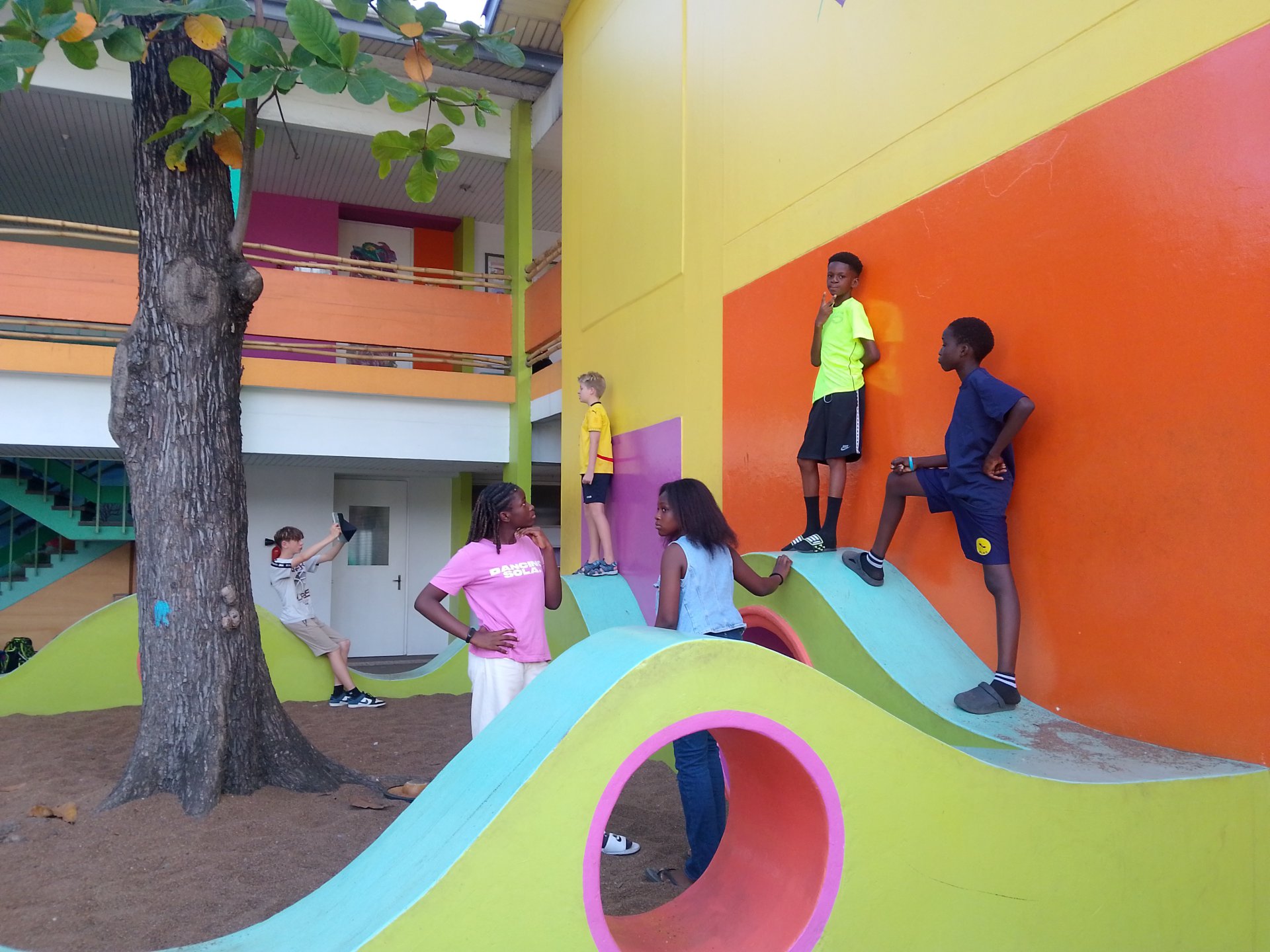
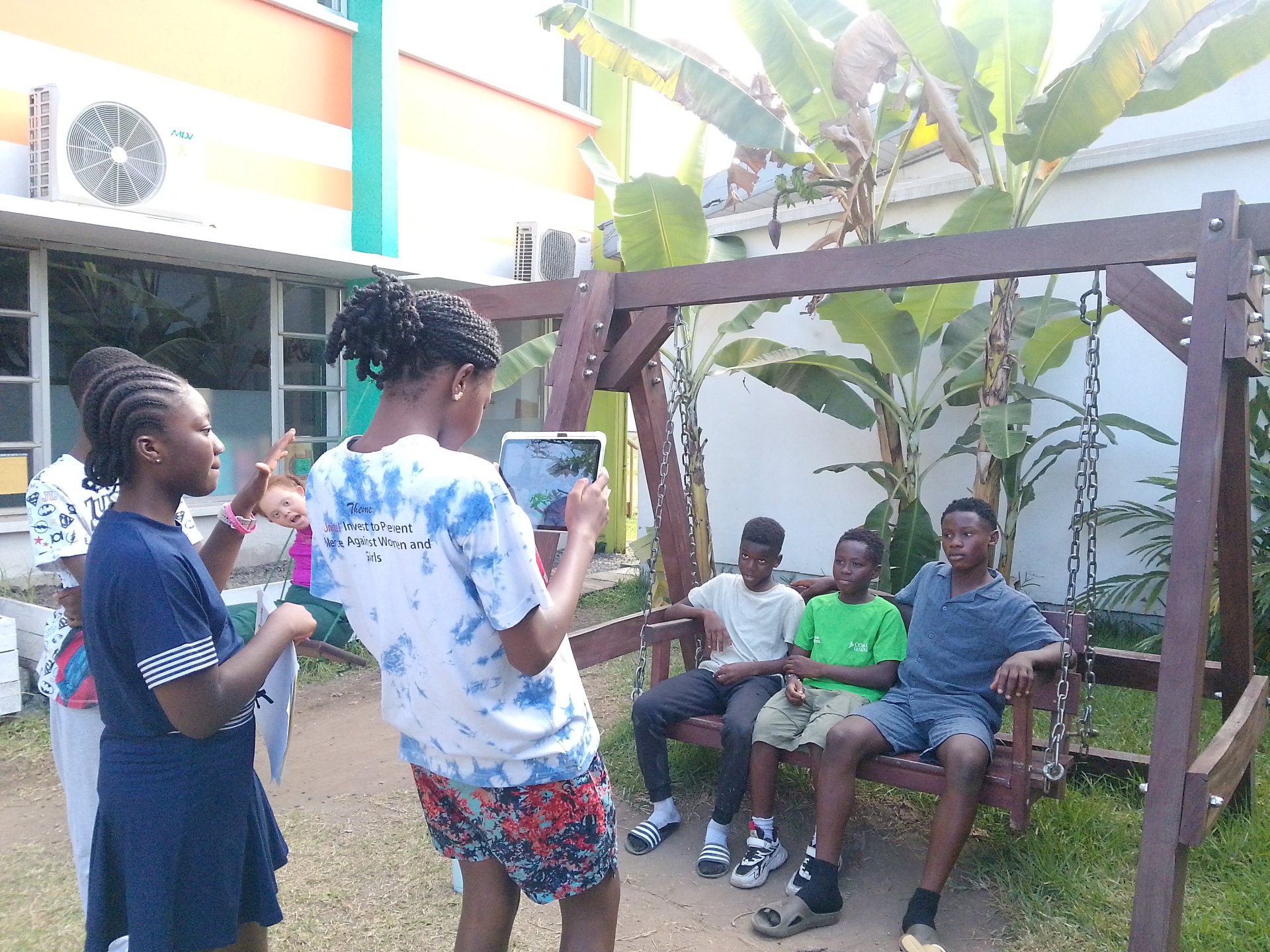
We started planning and creating short information videos for our school community and other interested audiences. In these videos, we want to show how our project workshop developed, what we have been working on so far, what we have learned about CfC and which ideas and goals we are pursuing together.
To do this, we need to review our previous steps and decide which information is especially important. What do we want to explain? Which images could support our message? How can we communicate our ideas clearly? And how can we spark other people’s interest in our project workshop?
Alongside the content itself, we are therefore also learning about the design and impact of digital media. We are learning to select information, formulate key messages and present our work in an engaging way for a wider audience.
Our videos are intended to make the project workshop better known within our school community and generate interest in our ideas and goals.
This represents another important step: we are no longer only researching, developing ideas and presenting them within our class. We are also beginning to make our work visible beyond the classroom.
Our Supporting Materials and Further Considerations
Throughout our project work so far, different worksheets, research tasks and presentation aids have supported us in developing and refining our ideas. Alongside this, we are creating a project portfolio in which we record our working steps, ideas and results, document our progress and plan the next stages of our projects.
Within this portfolio, we also reflect on the existing connection between our school and CfC and consider ways of further developing our own ideas.
For the next steps, we want to focus more closely on how an interesting idea can become a genuinely workable project.
This means defining our goals as precisely as possible, identifying the materials and resources we need, calculating possible costs, distributing tasks effectively and developing realistic timelines.
We also want to learn how to document our projects, present our results and later assess whether we have actually achieved the goals we set ourselves.
Criteria from an IHK-oriented project or competition format can also provide useful guidance. They offer ideas for how we can plan our projects systematically, take economic considerations into account and present our results in a clear and transparent way.
Which of these approaches we actually use will depend on which project ideas we are able to develop further together with CfC.
What We Have Achieved and Learned So Far
Since the beginning of our project workshop in August, we have already completed many different stages of work.
We have explored social responsibility, learned about Chance for Children and its different areas of activity, researched and evaluated information, examined possible needs for support and developed our own project ideas.
We have learned how to structure our findings, present our proposals clearly and discuss different ideas together. Along the way, we have had to make decisions, justify our thinking, find compromises and repeatedly examine whether our ideas are genuinely meaningful and realistic.
Through the planning and creation of our information videos, we are now also learning how to document our work and communicate our messages to a wider audience.
At the same time, we have been developing a wide range of skills: researching, discussing, arguing, presenting, organising, planning and working together to find solutions.
One insight, however, is particularly important to us: social responsibility is not only about recognising problems or talking about them. It also means asking what we ourselves can do and being willing to take action together with others.
We have also discovered that good ideas alone do not automatically make a successful project. We need to take the needs of other people into account, plan realistically, accept responsibility and be prepared to question and adapt our own assumptions.
Our Next Steps – From an Idea to a Shared Project
Over the coming weeks, we want to develop our existing proposals further and work together with Chance for Children to identify which ideas could actually be implemented.
Our first step will be to clarify what kind of support is needed and wanted. We will then consider which of our project proposals fit these needs and what possibilities we have as a class to turn them into reality.
Once we and CfC have agreed on suitable projects, we can define concrete goals, distribute responsibilities, organise materials, develop timelines and begin preparing our activities.
We also want to continue documenting our work and regularly reflect on what is already working well, which challenges arise and what we may need to change.
Our goal is not simply to carry out just any project. We want to develop something together with CfC that is meaningful, supported by everyone involved and, wherever possible, has a sustainable impact.
We are excited to see which of our ideas will develop further and what we can achieve together.
Because this is exactly what our project workshop is about:
“Real Problems. Our Ideas. Real Impact.”
We do not only want to talk about social responsibility. We want to experience what it means to take responsibility ourselves and to discover how joint action can make a difference.
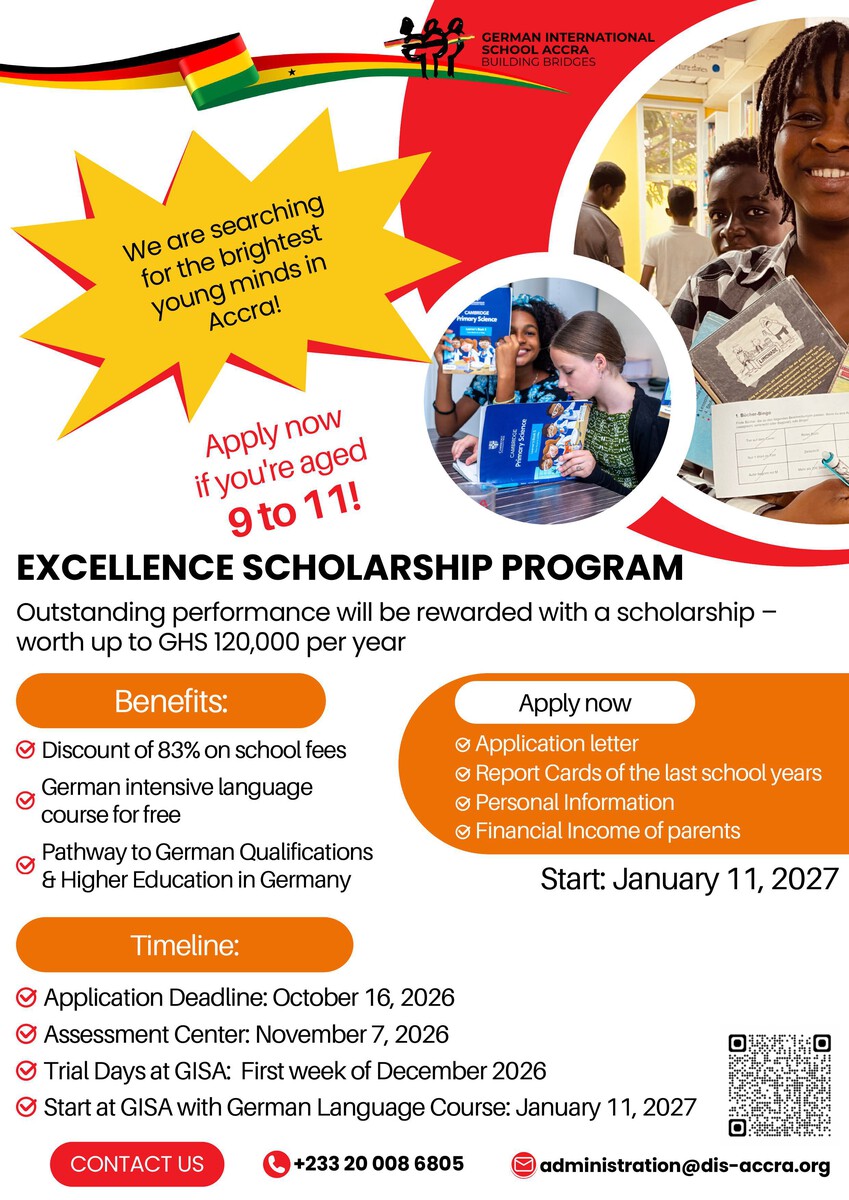
Excellence Scholarship Programme 2027
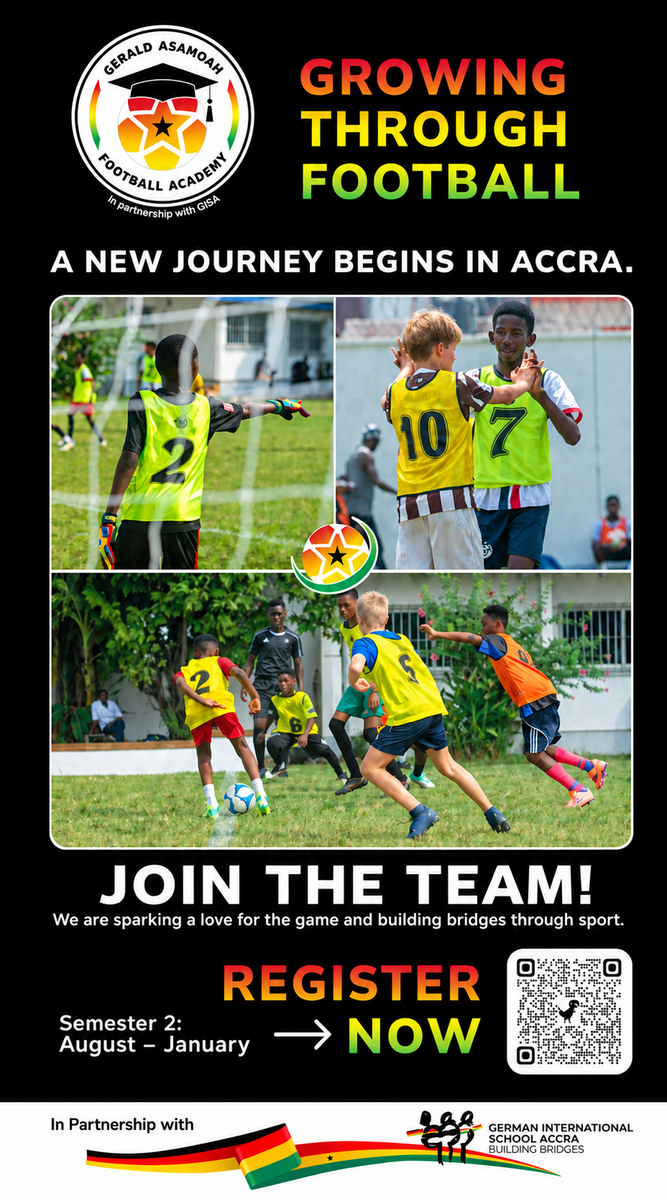
⚽Gerald Asamoah Football Academy
🇩🇪 German Language Day

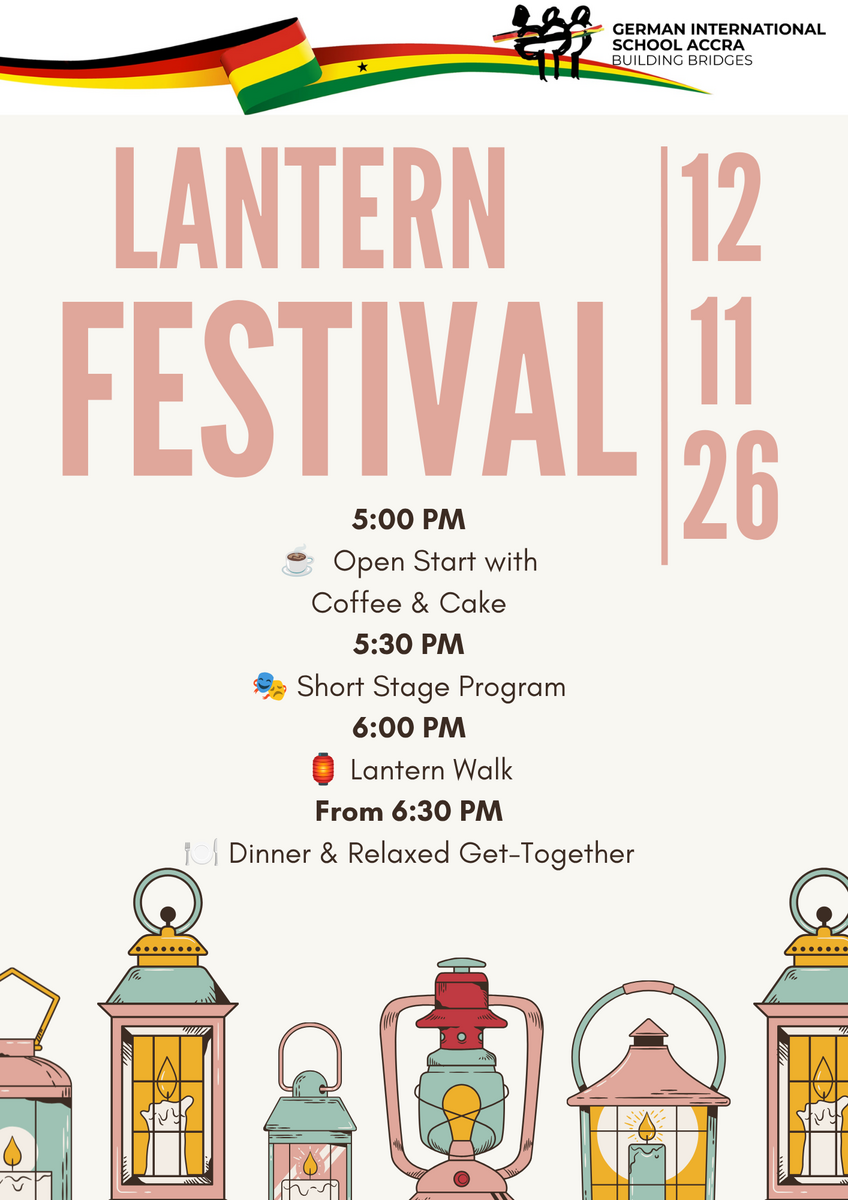
Lantern Festival
The Long Night of Mathematics & Reading Aloud

☕ DaF Café: Speaking German and Connecting Through Conversation

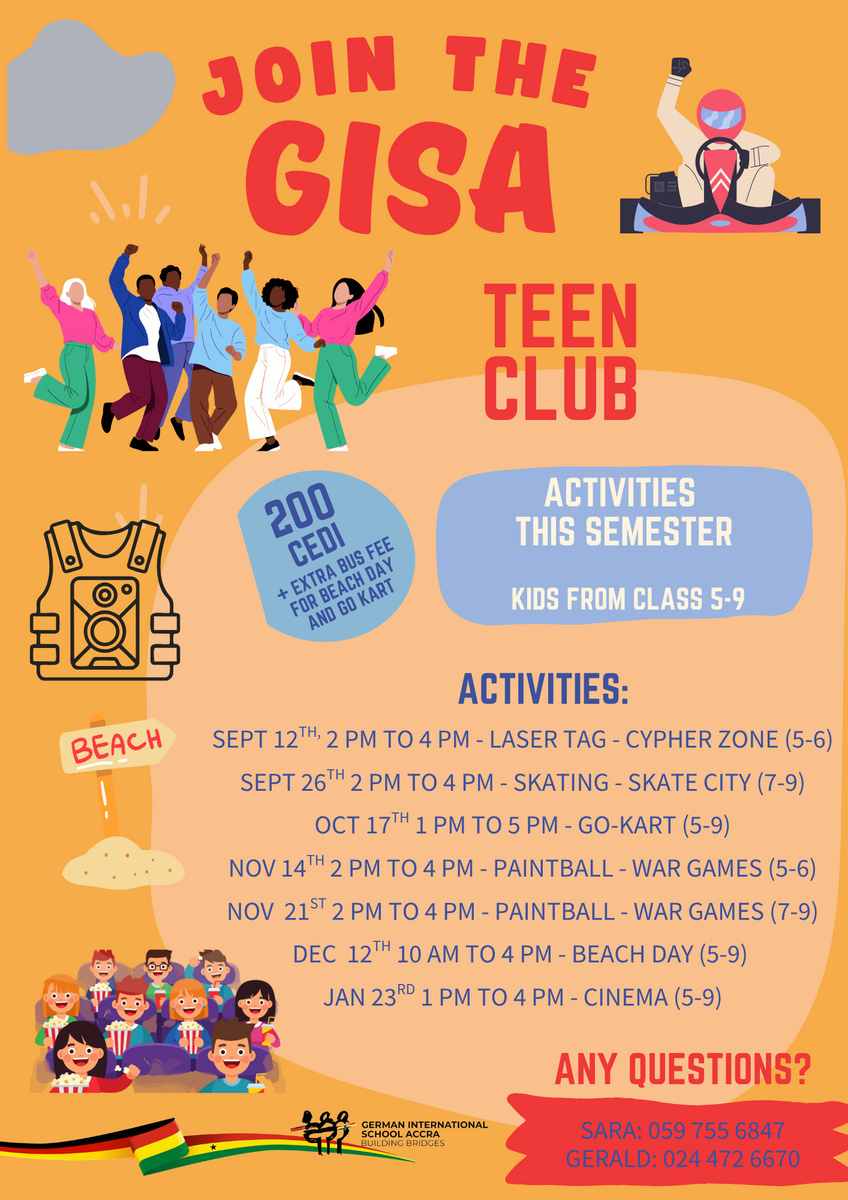
GISA Teen Club