Newsletter 04.09.2026


Our third week of school was filled with many small and big discoveries: students discussed, researched, calculated, read, created and experimented – from producing their first data charts to exploring philosophical questions about happiness, nature and civil courage, as well as writing fables, giving presentations in French and building historical landscape models.
At the same time, this week once again showed how much school life depends on community. New class representatives and trusted teachers are taking on responsibility, Rocky gained his first experience as a school dog, our older German-as-a-Foreign-Language students read to the children in Kindergarten, and there were many other moments of connection across the school.
Here is a glimpse into another varied week at GISA:
From our school community
Taking responsibility and shaping school life together
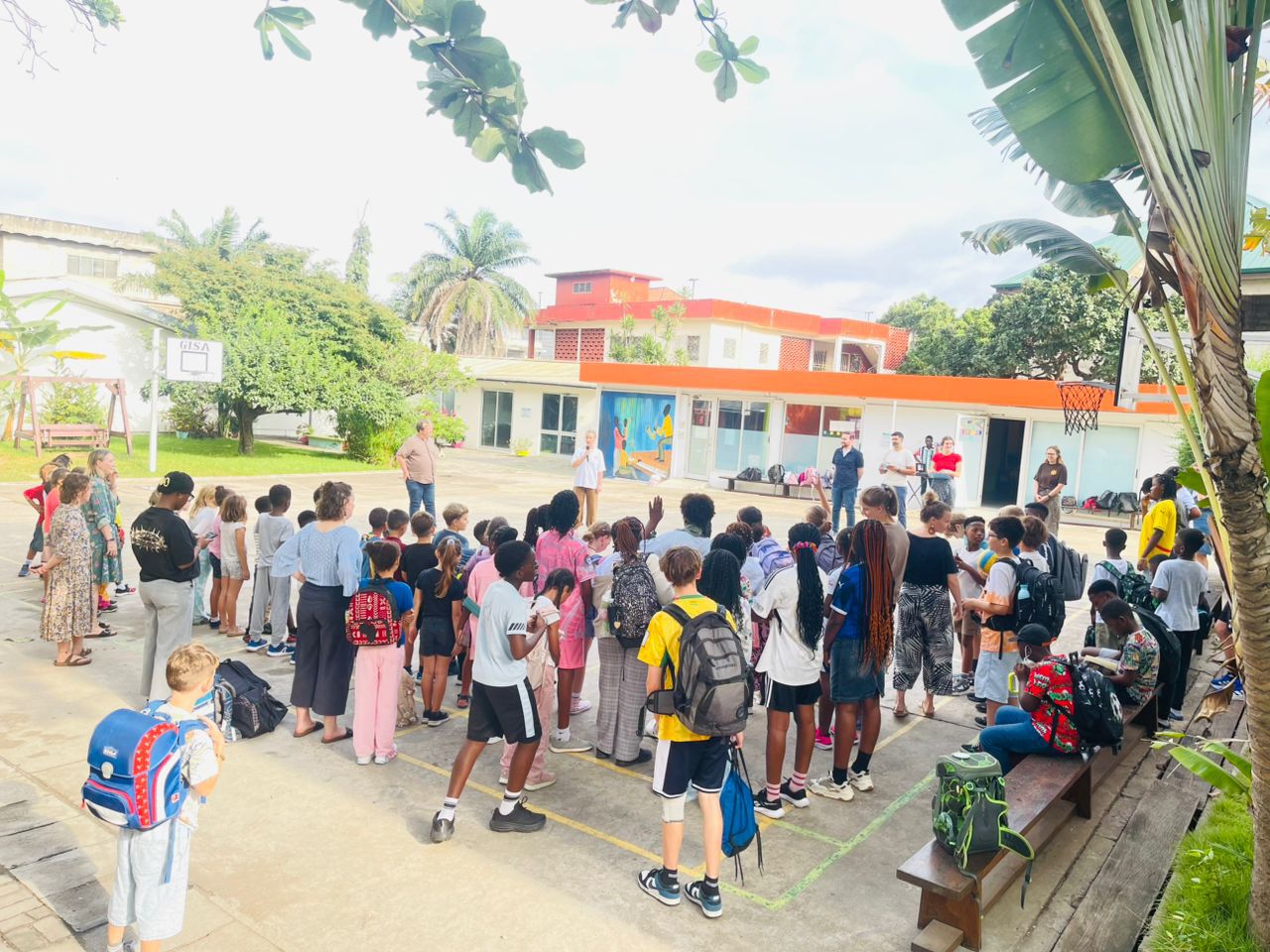 At our Monday Assembly, participation and responsibility took centre stage. Our newly elected trusted teachers, Haitham Albeiruthy and Angy Mamodaly, were introduced alongside the new class representatives. Together, students and teachers are taking on important roles within our school community.
➡️ Read more: Shaping school life together – our Monday Assembly
Rocky joins Ethics class
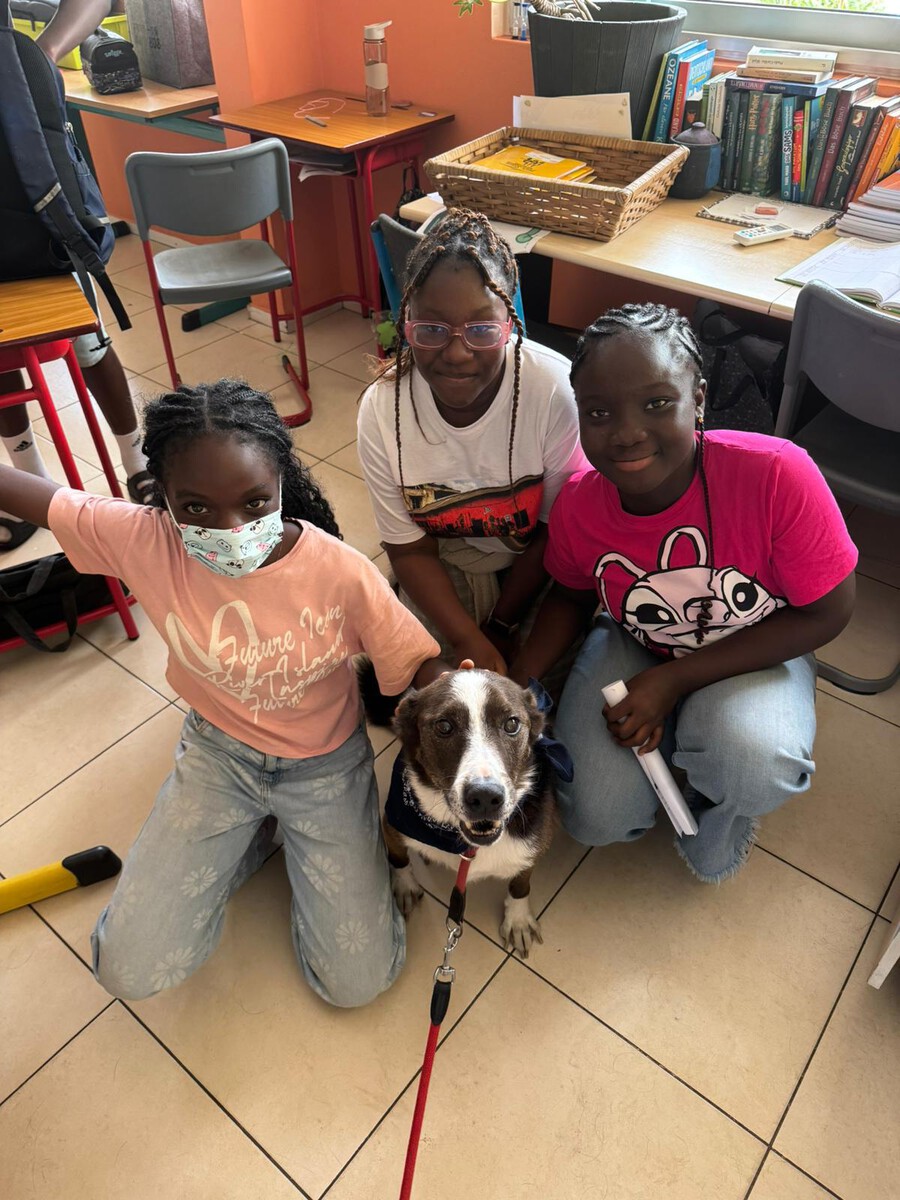 For the first time, our school dog Rocky joined an Ethics lesson – and his debut could hardly have gone better. The children approached him calmly, attentively and with great enthusiasm. At the same time, the lesson naturally focused on consideration, responsibility and respectful interaction.
➡️ Read more: Rocky joins Ethics class
Out and about together as the GISA team
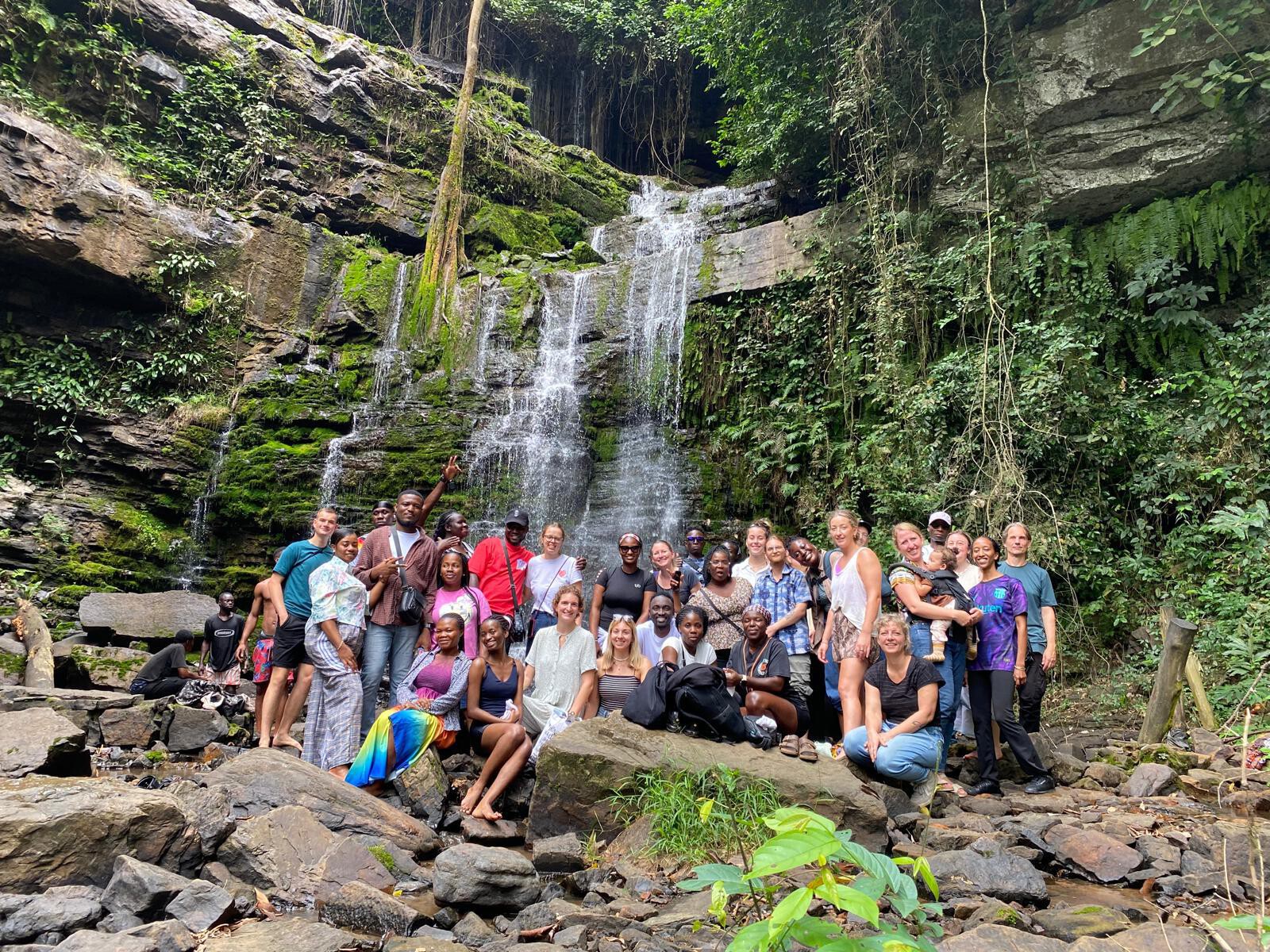 For our team day on 29 August, the GISA staff travelled to Oboadaka Waterfalls before enjoying a picnic together at the Aburi Botanical Gardens. The day was all about spending time together, exchanging ideas and simply enjoying one another’s company outside the usual school setting.
➡️ Read more: Out and about together – our GISA team day
Excellence Scholarship Programme 2027
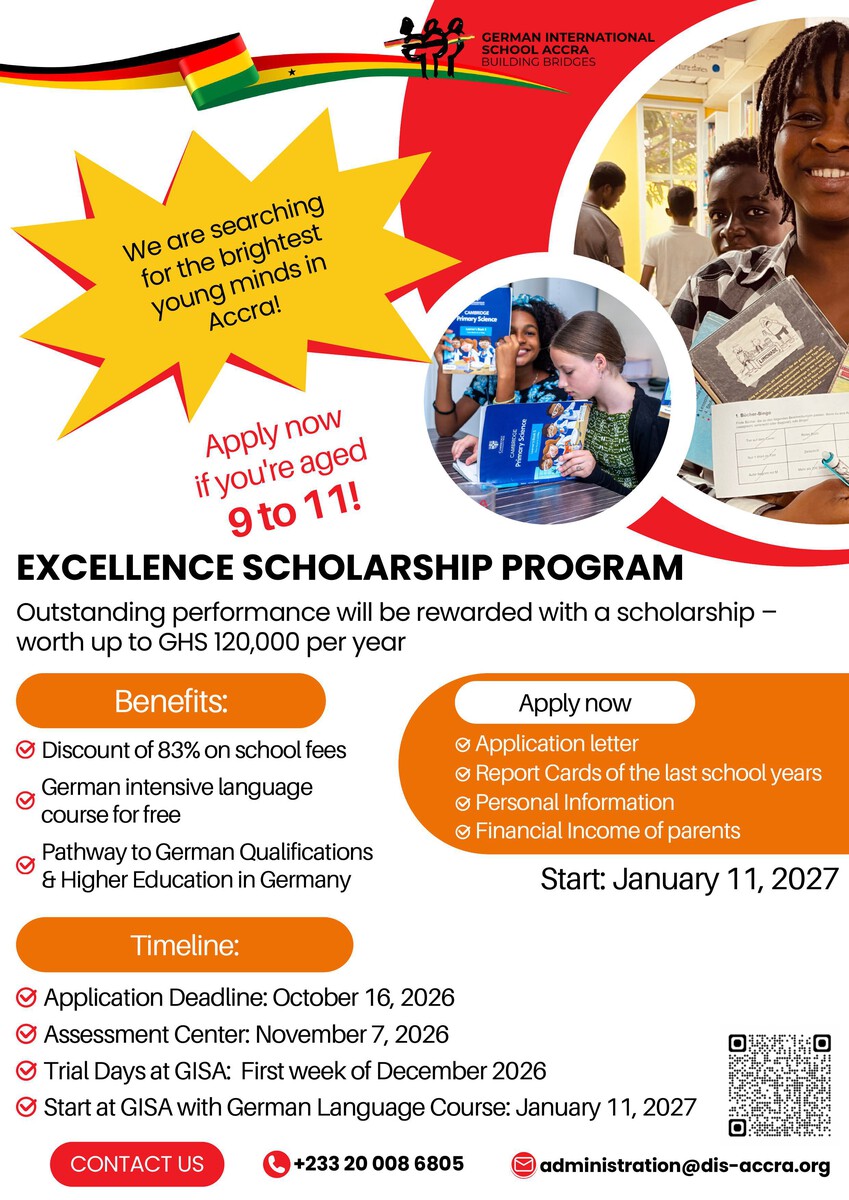 The Excellence Scholarship Programme is entering a new round. High-achieving and motivated children aged 9 to 11 can apply for a GISA scholarship until 16 October 2026. The scholarship covers 83% of the regular school fees and also includes an intensive German language course.
Making history visible
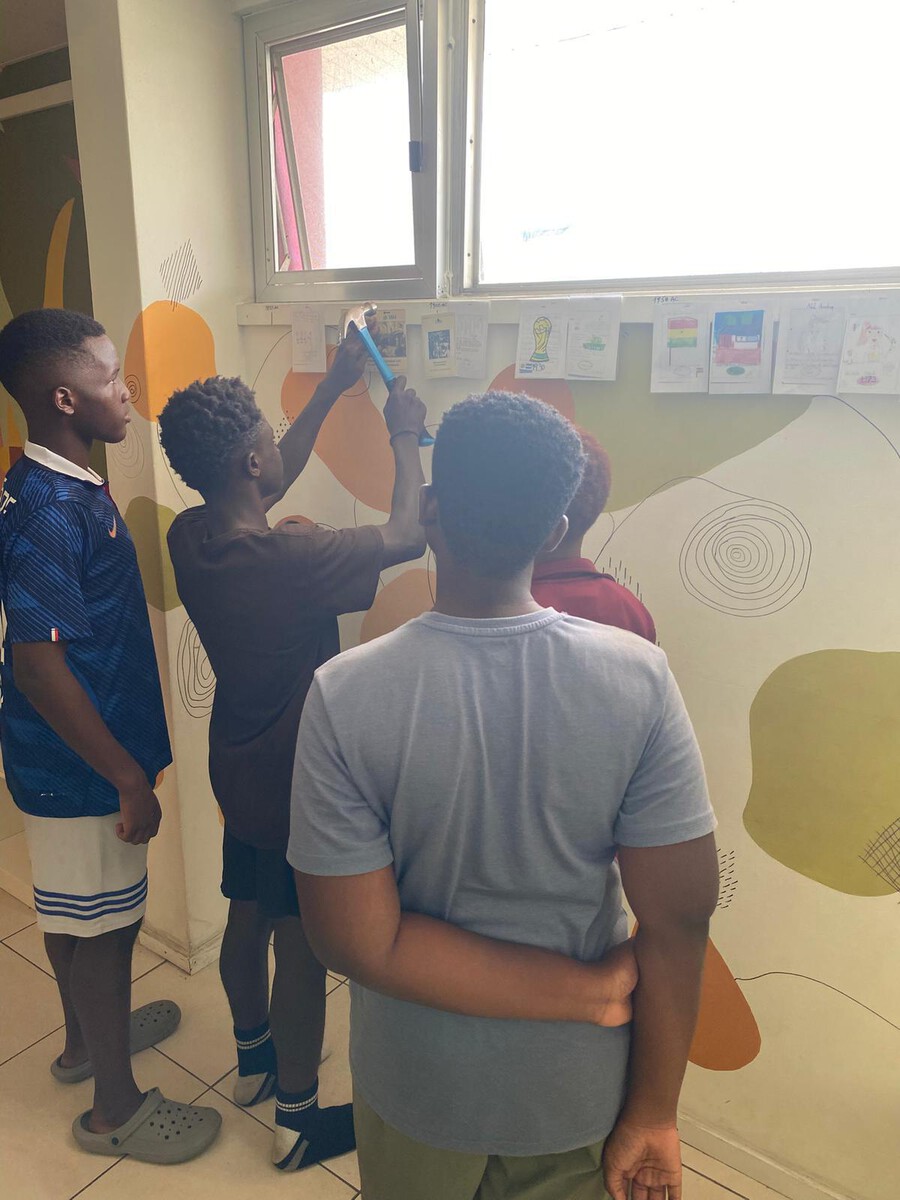 Since the beginning of the school year, a shared timeline has been growing along the Secondary School corridor. Grades 5 to 9 place their current History topics on it – from Ancient Greece and Charlemagne to the German Empire. Stretching for around 30 metres, the timeline makes historical periods, distances and connections much easier to visualise.
➡️ Read more: Making history visible – our growing timeline
A healthy start to the school year
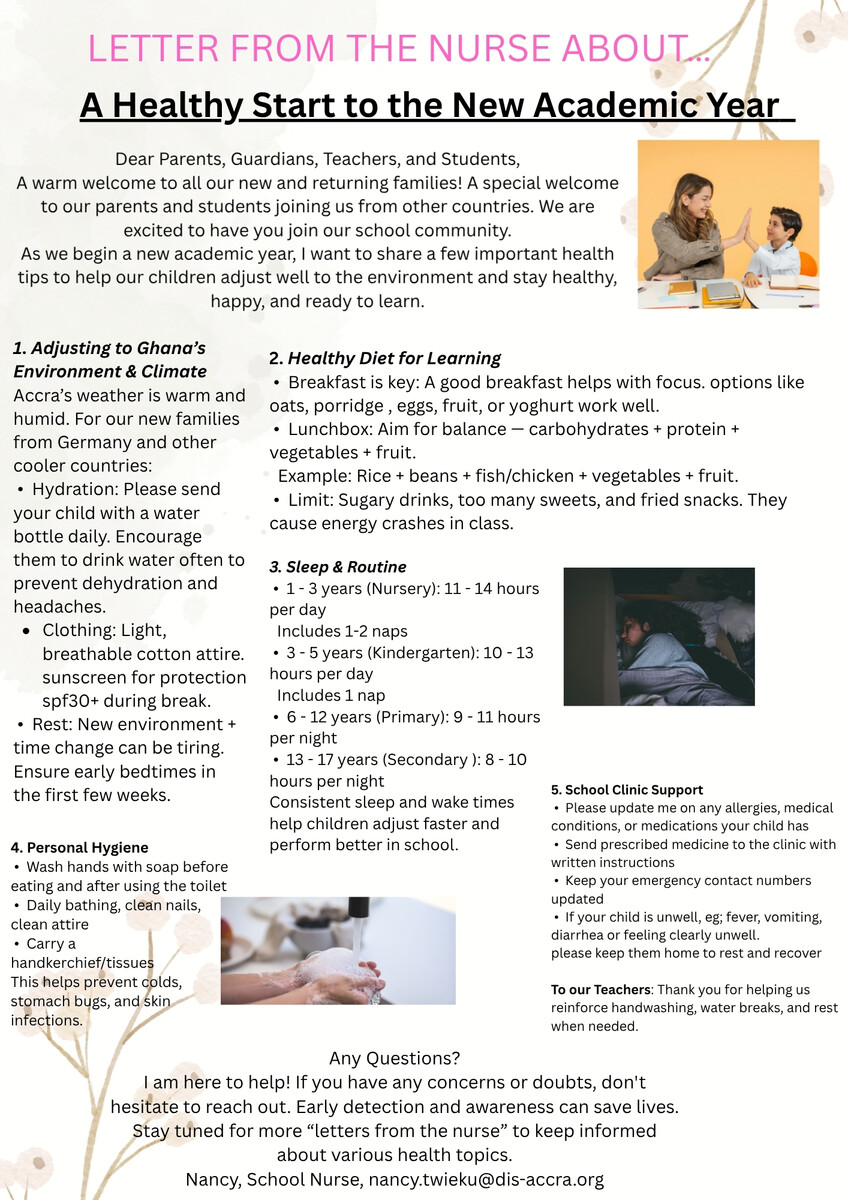 Our school nurse Nancy has put together some practical tips for families on staying healthy during the school year – from drinking enough water and eating well to sleep, hygiene and dealing with illness in everyday school life.
You can find the most important tips in the attached overview.
Sewing Club with Ernest
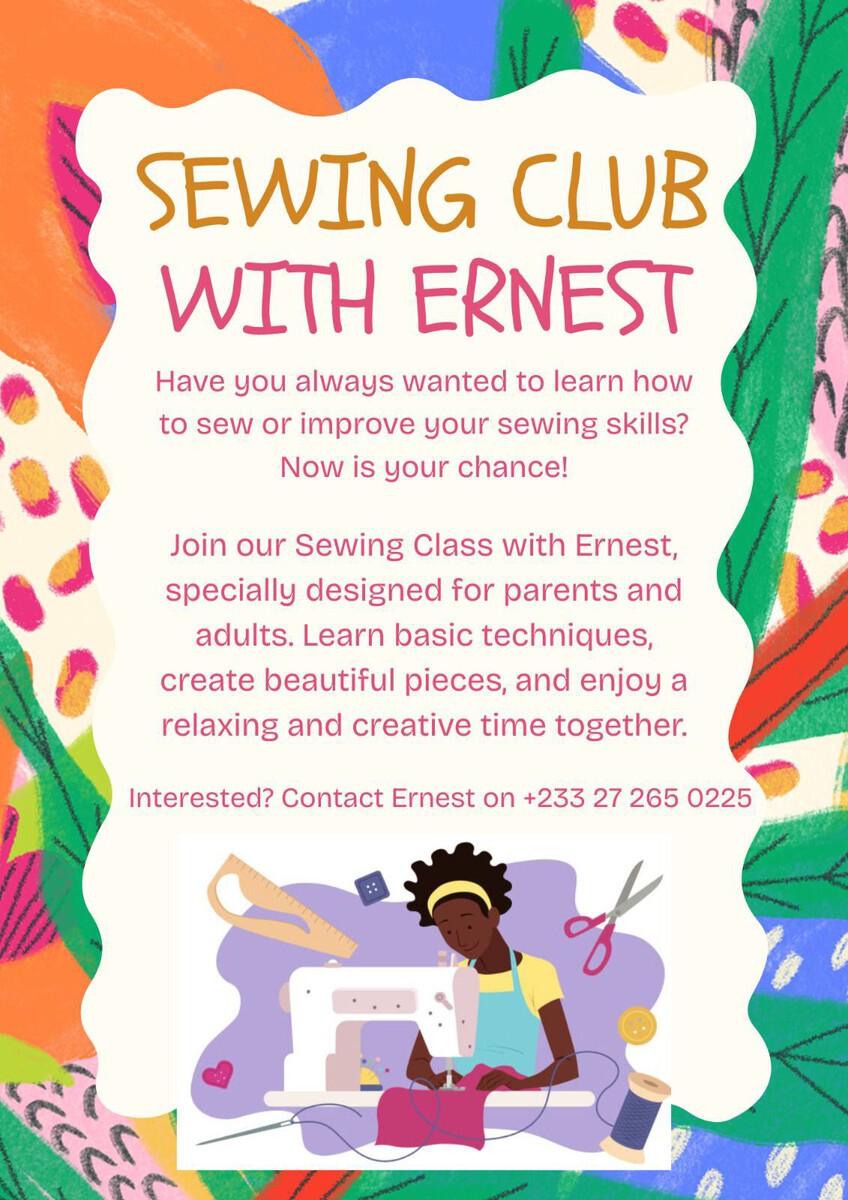 New at GISA: Ernest is offering a sewing club for parents and other adults. Whether you are taking your first steps at the sewing machine or would like to develop existing skills, the focus is on creativity, practical techniques and making things together.
🧵 Tuesdays and Thursdays, 9:30 a.m.–2:00 p.m.
📞 Registration and further information directly from Ernest: +233 27 265 0225
Please see the attached flyer for further details.
Our new Child Care Center concept
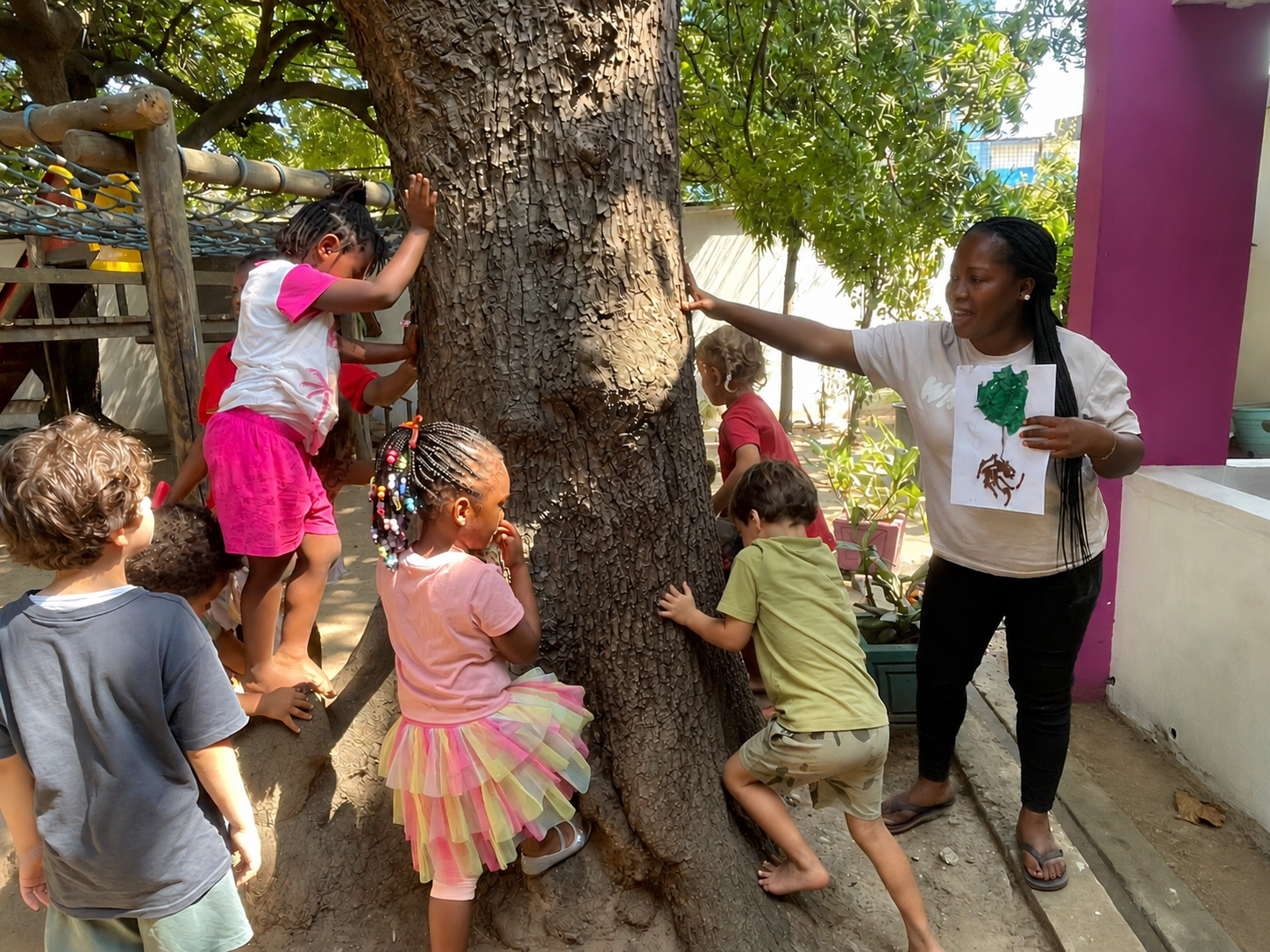 With the start of the new school year, we are continuing to develop our pedagogical work in the Child Care Center. New daily structures, regular learning activities, dedicated learning times and a weekly schedule give the children greater orientation while gradually creating more opportunities for participation and independent decision-making.
From the Nursery
Discovering and celebrating together
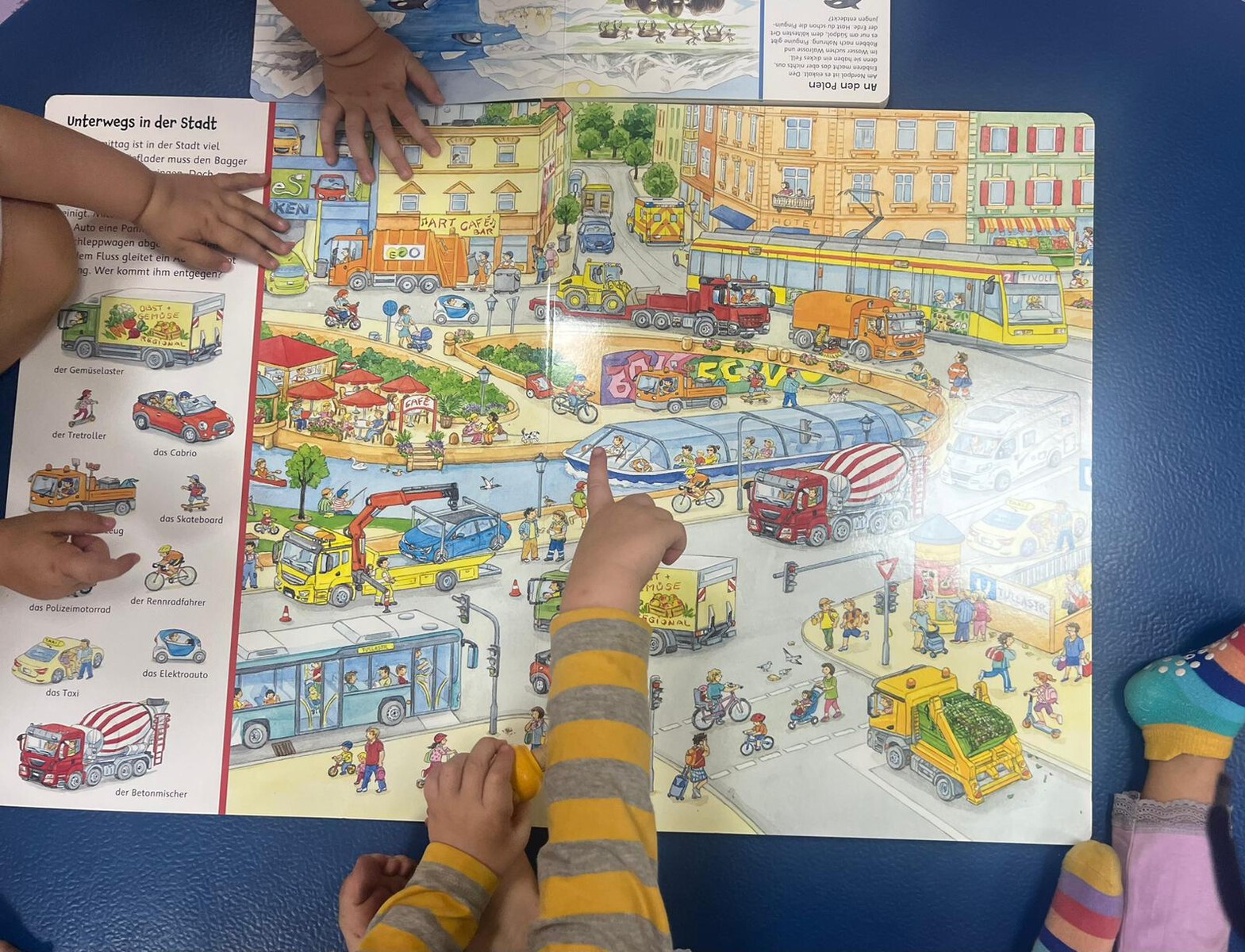 There were many lovely shared moments in our Nursery group again this week. One special highlight was celebrating a child’s first birthday with songs, games and cake.
There was also plenty of time for outdoor play, free play, books and exploring together. We are also very happy to welcome our new intern, who will support the team in our daily educational work.
From next week, our new afternoon activities will begin, bringing even more variety and new experiences for our youngest children.
From Kindergarten
Creative, colourful and full of stories
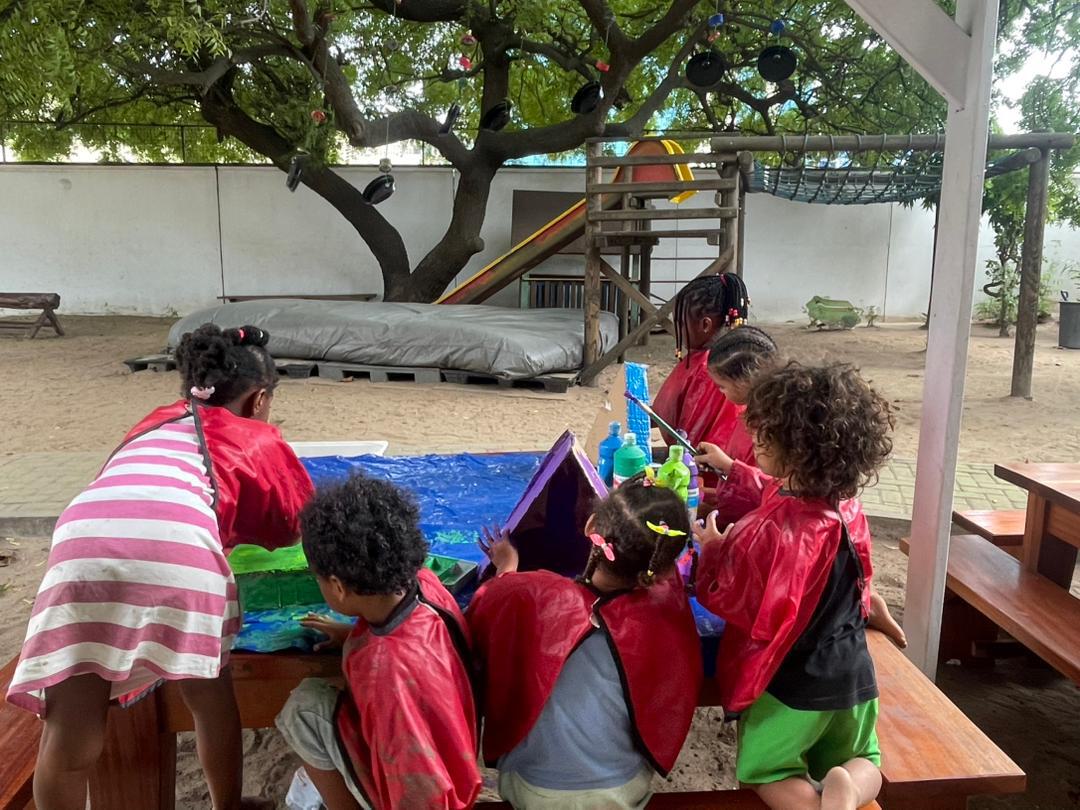
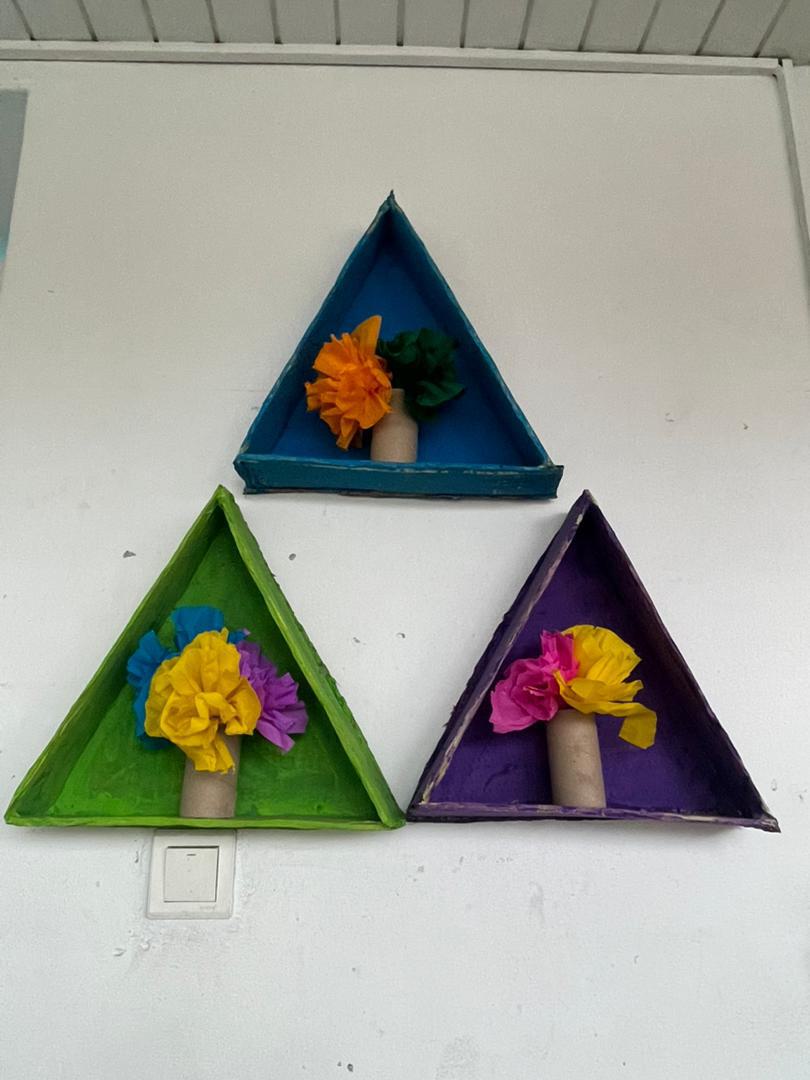 Kindergarten had another eventful week filled with both new and familiar activities. The children sang new songs, enjoyed creative crafts and worked together to make a colourful flower shelf from cardboard and paper.
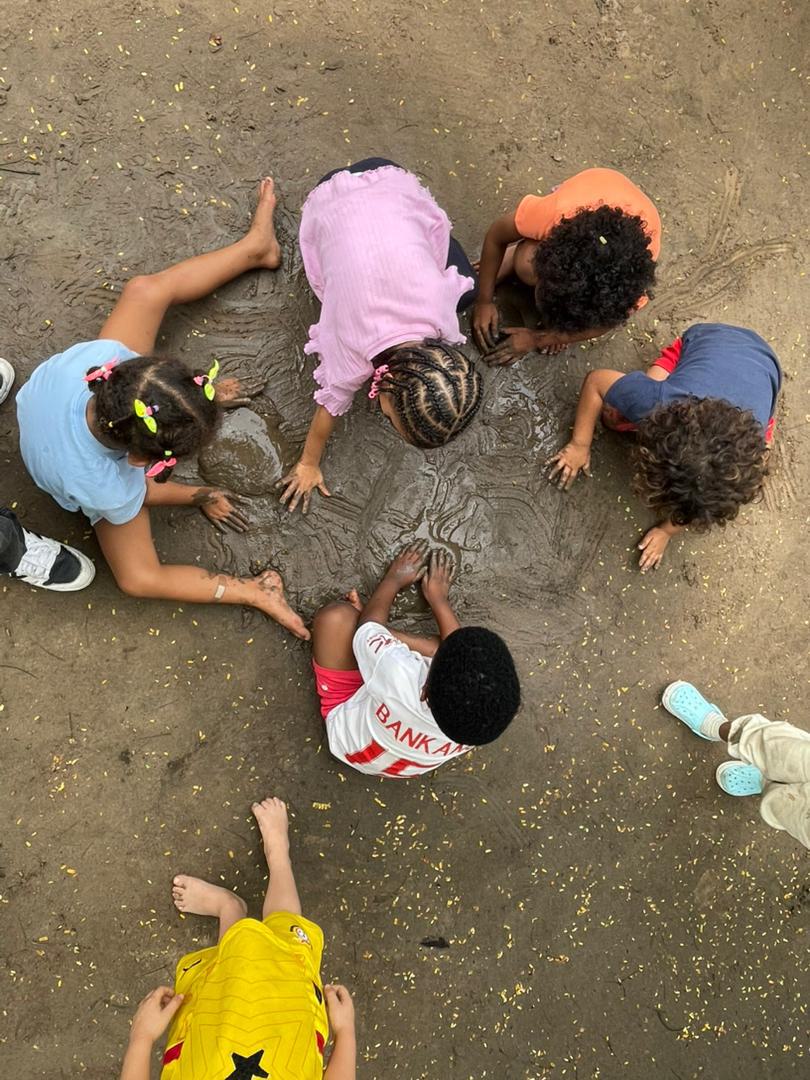
Our new baking activity continues to be especially popular – so popular, in fact, that we would like to expand it. The garden also continues to offer plenty to discover, along with lots of muddy play, laughter and fun.
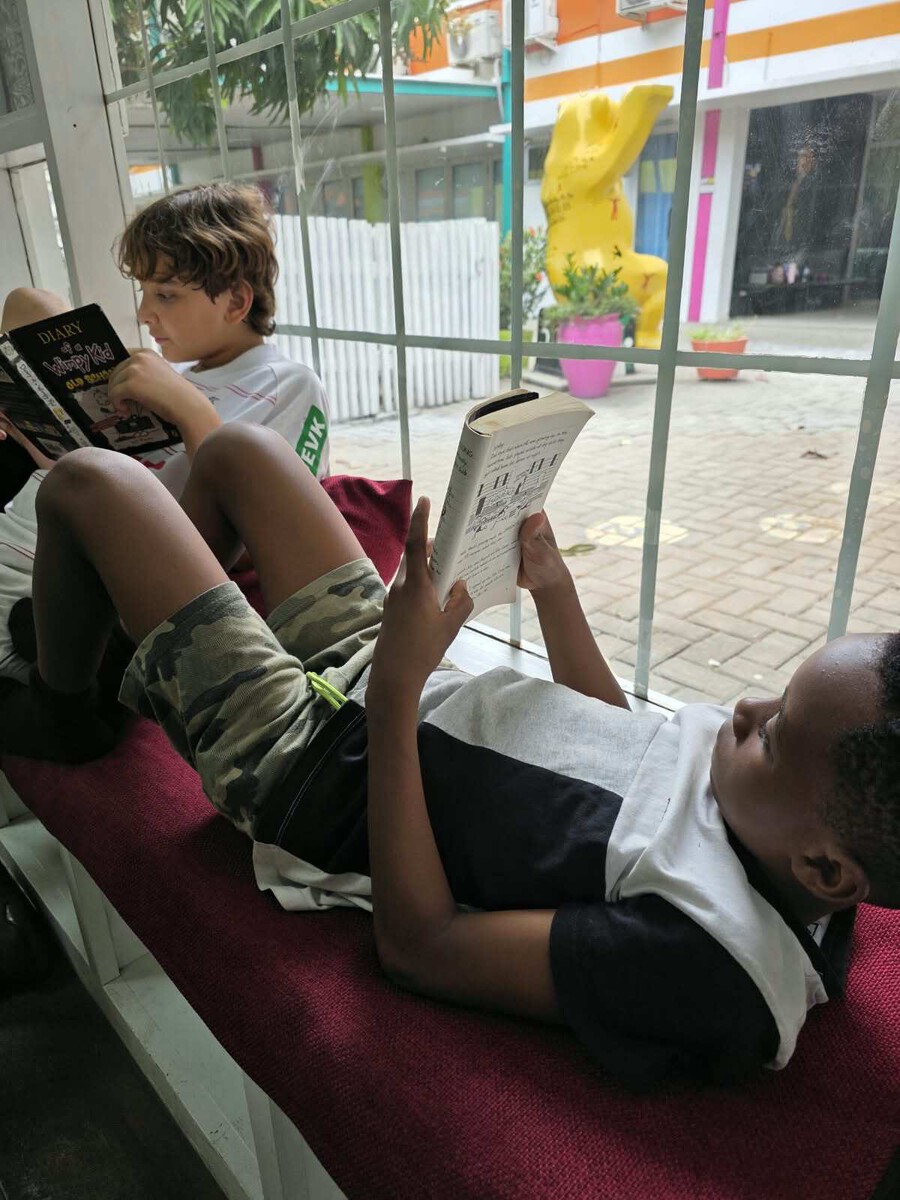
A special highlight was Friday’s Book Day. The children enjoyed reading together and were joined by students from Grade 7, who came to read stories to them.
And, of course, there was still plenty of time for friendship, silliness, laughter and many happy moments together.
From the Primary School
Grade 1/2: Learning and exploring together
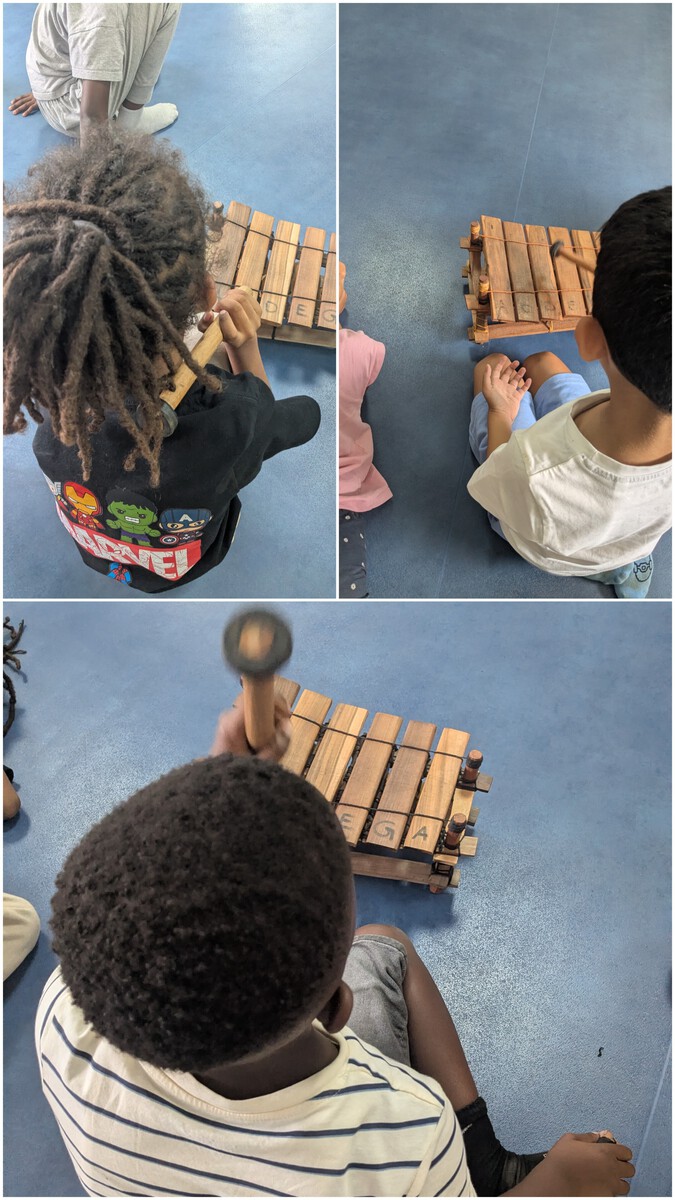
In Music, the children explored the differences between beat, rhythm and melody. They sang, clapped, played xylophones and, of course, listened carefully.
In Mathematics, Grade 1 worked on spatial concepts such as above, below, left and right, while continuing to practise writing the numbers 3 and 4. They also worked on identifying and comparing quantities.
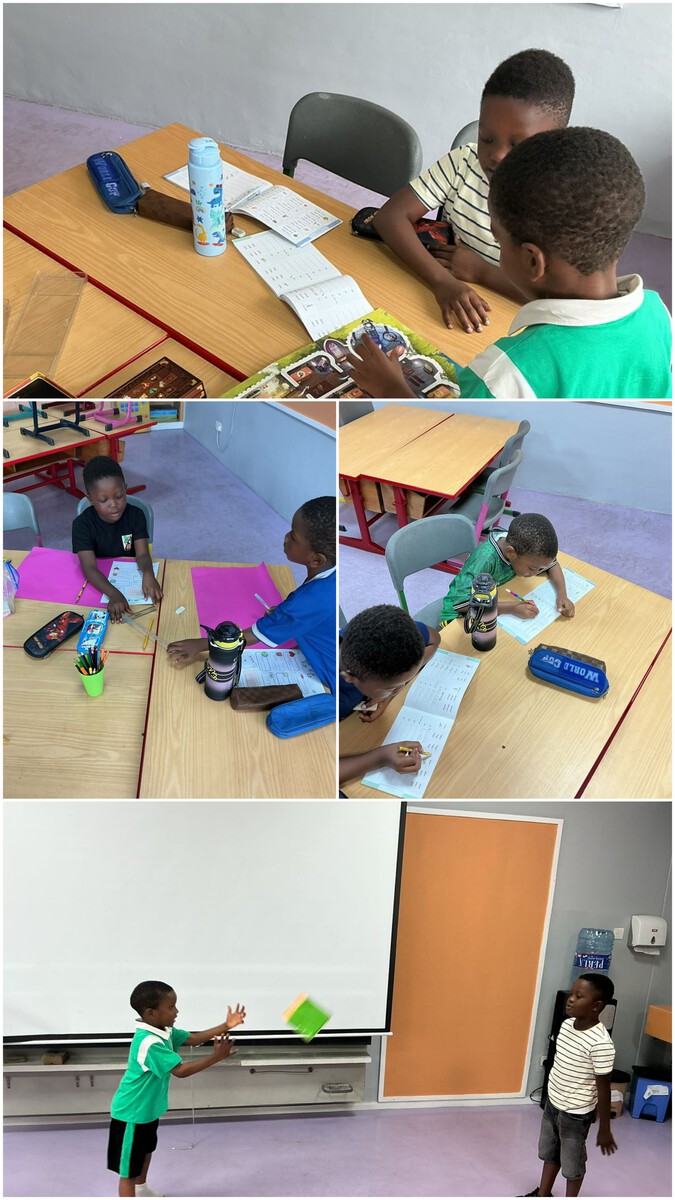
Grade 2 worked intensively with the hundred chart and represented different numbers up to 100. The children especially enjoyed using their “secret code”, where tens are shown as lines and ones as dots.
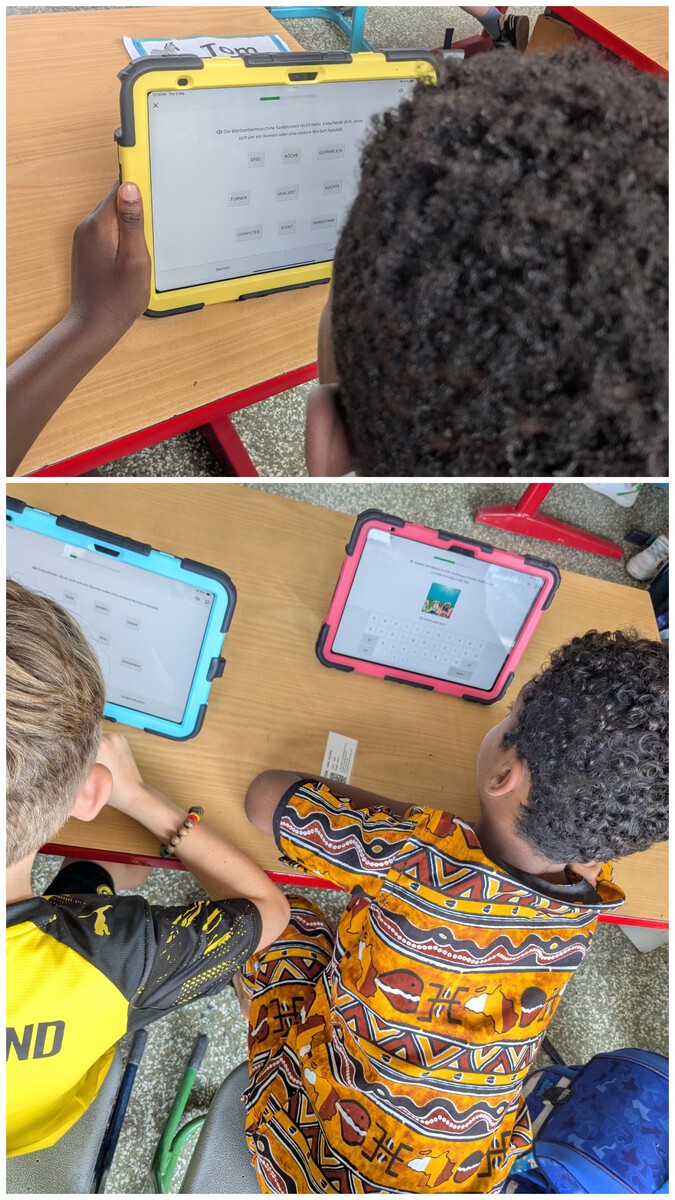
In German, the Grade 1 children learnt the letters M and I and can already read their first short sentences. In Grade 2, the focus was on nouns. The children practised identifying nouns in sentences and using capital letters correctly, with iPads also being used during the lessons.
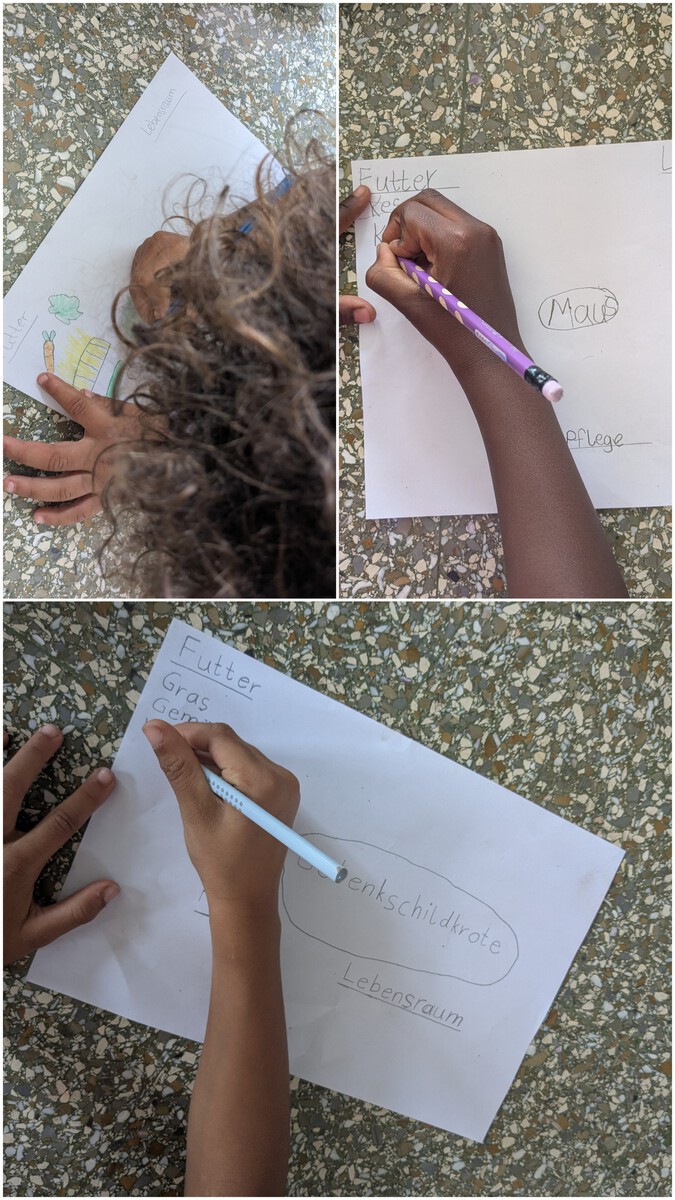
In General Studies, we started our new topic “Pets”. The children first distinguished between pets, farm animals and wild animals. They are now looking more closely at different pets and learning about feeding, housing and care.
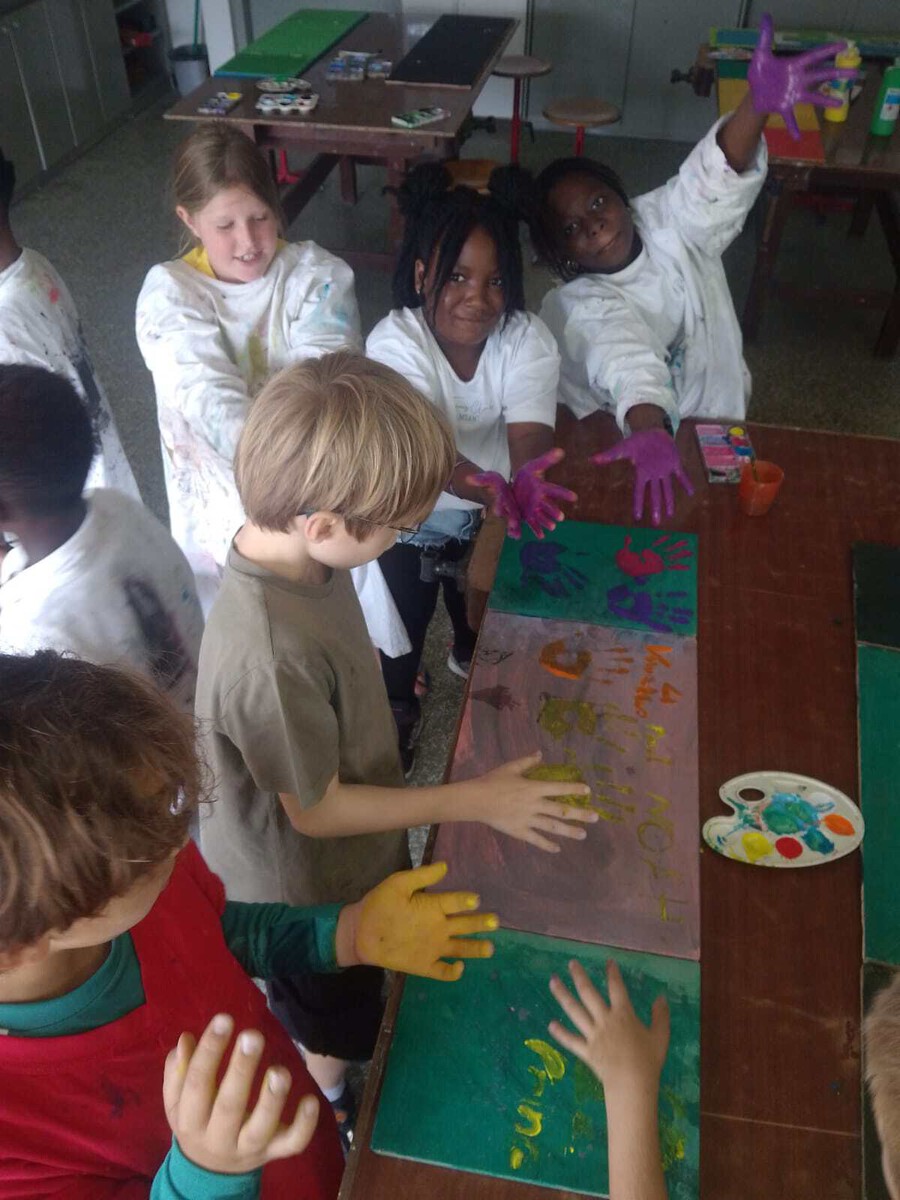
In Art, the big moment finally arrived: the children moved into the Art room. This was also where our colourful “hand zoo” came together, with many animal artworks created from handprints.
Learning German through movement
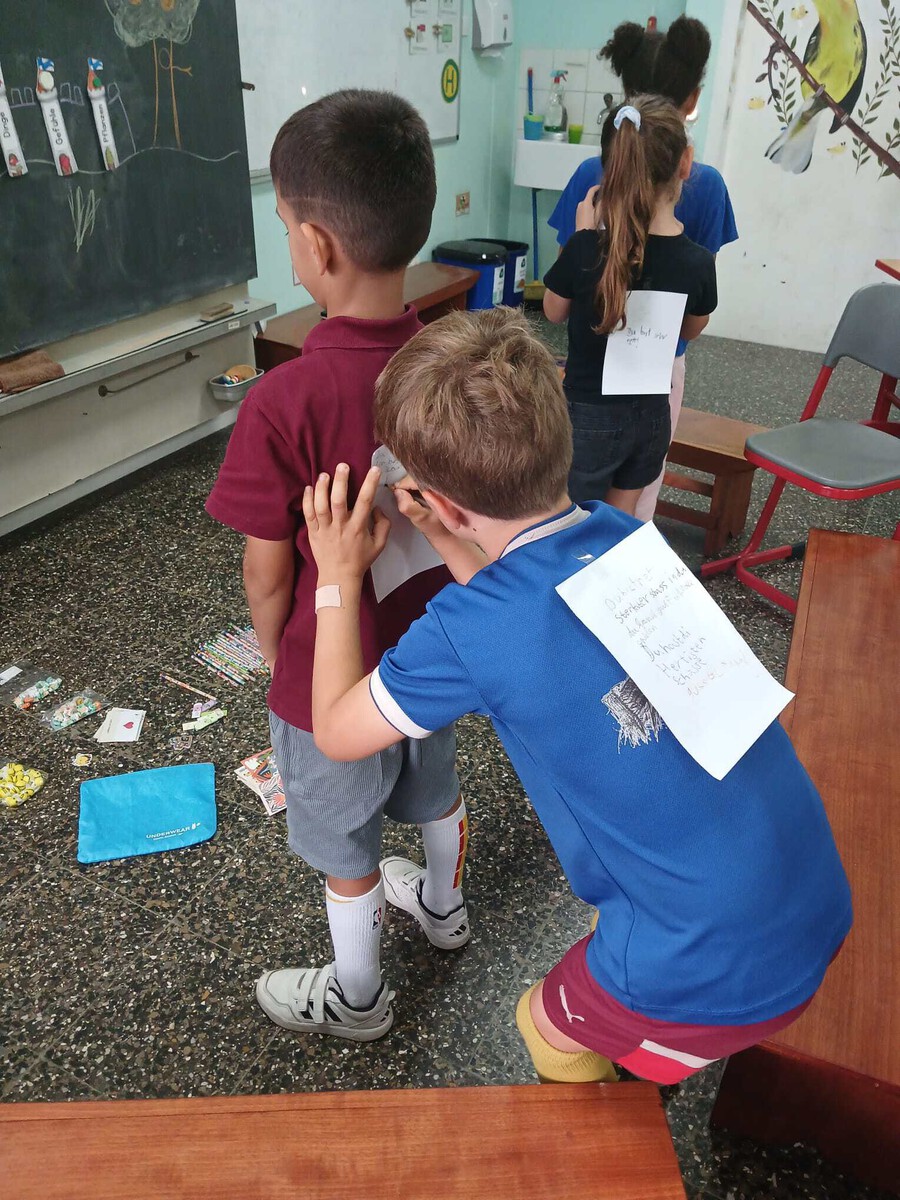
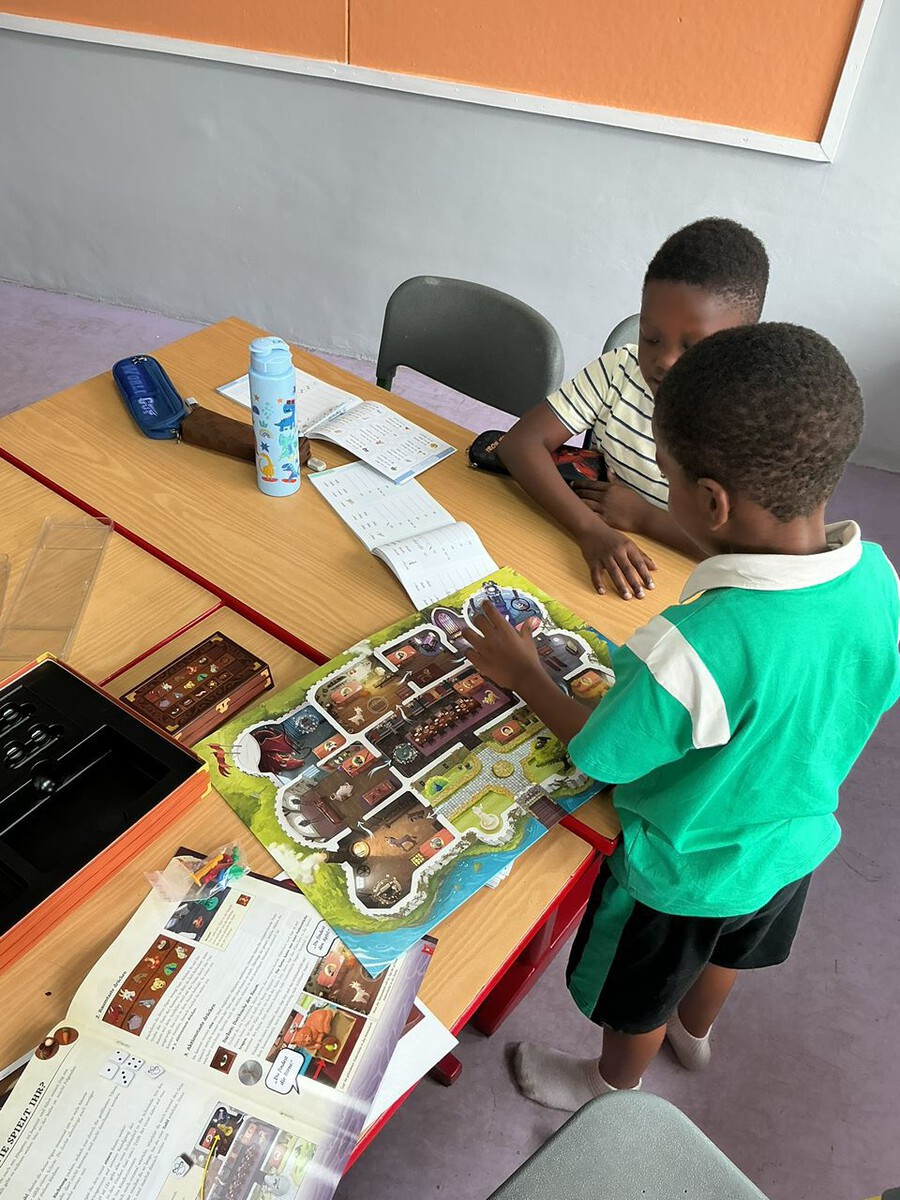 During our German-as-a-Foreign-Language support sessions, German was not only learnt but experienced. Through movement games, the children started conversations, asked questions and talked about themselves. At the same time, they continued to build their own personal “vocabulary bank”.
➡️ Read more: Learning German with joy – our support programme in Grades 1 and 2
Grade 3: Learning, discovering and creating
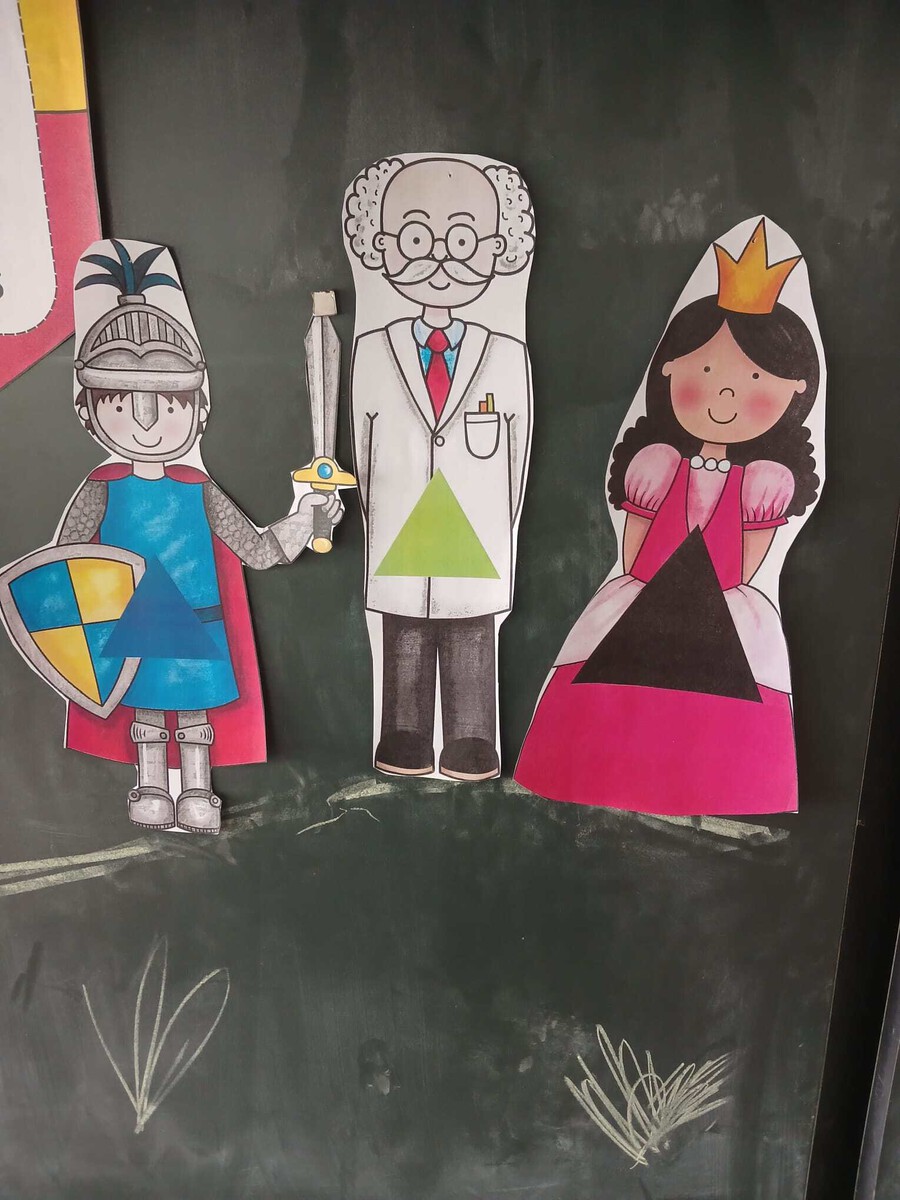
There were plenty of exciting discoveries in German this week. The children met “Professor Adjective”, explored the characteristics of adjectives and practised comparative forms. A visit to the library was another highlight, giving the children time to enjoy reading in a relaxed atmosphere.
In Mathematics, the students worked individually according to their own learning levels. Subtraction proved to be a small challenge, but one they tackled with plenty of perseverance. Important mathematical vocabulary such as add, subtract, difference and sum was also revised.
In General Studies, the focus was on elections. The children explored the five principles of elections: secret, equal, universal, direct and free.
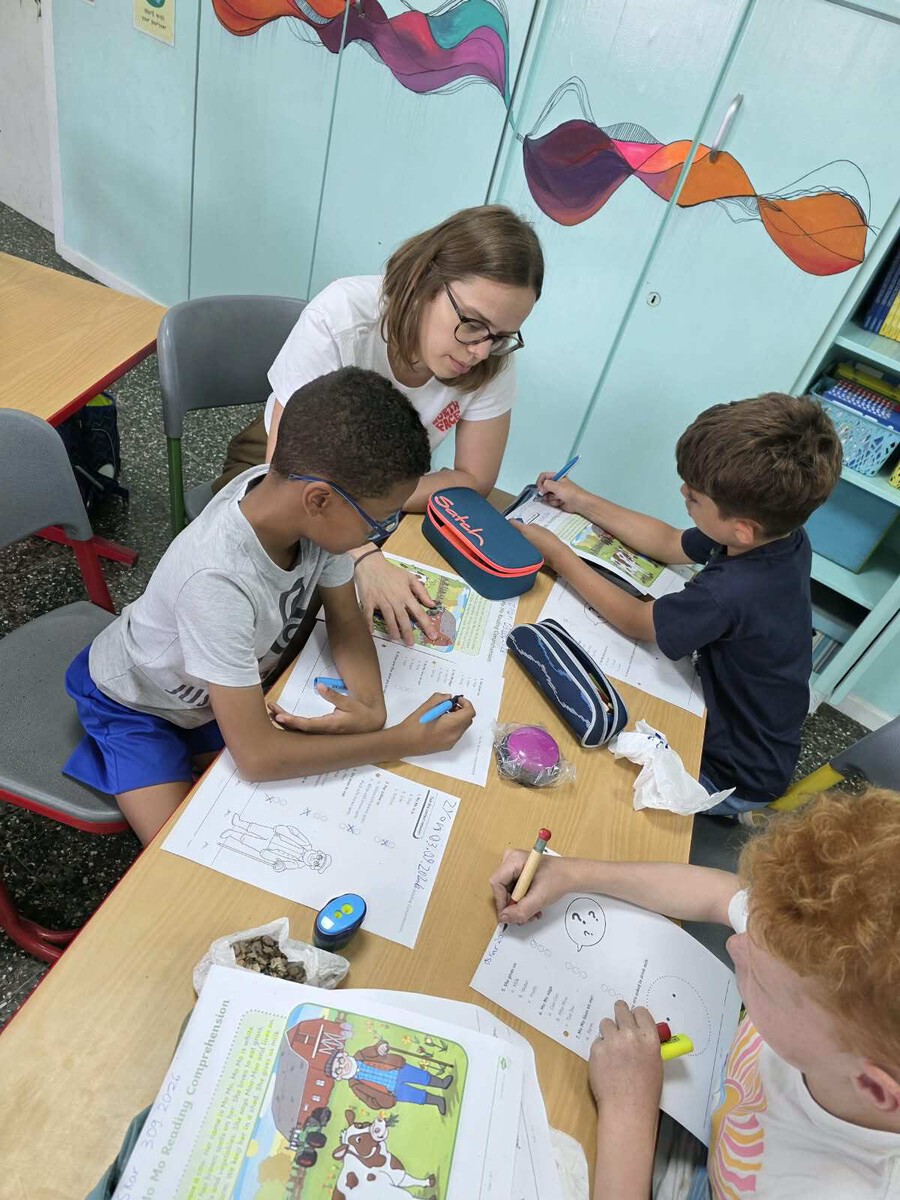
In English, students worked on a differentiated reading task. Teamwork proved especially motivating – not least because of the buzzer and the chance to collect points. Next week, the teams will give one another feedback.
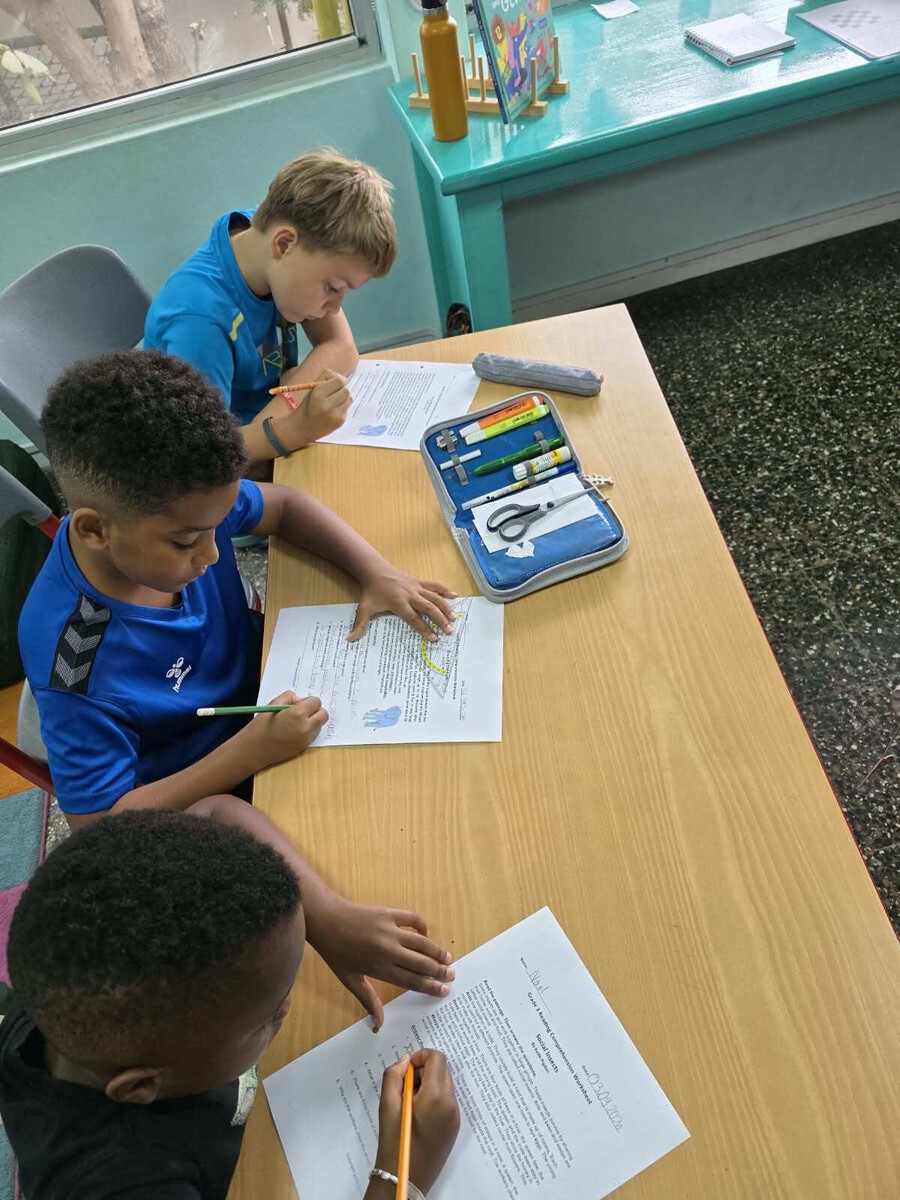
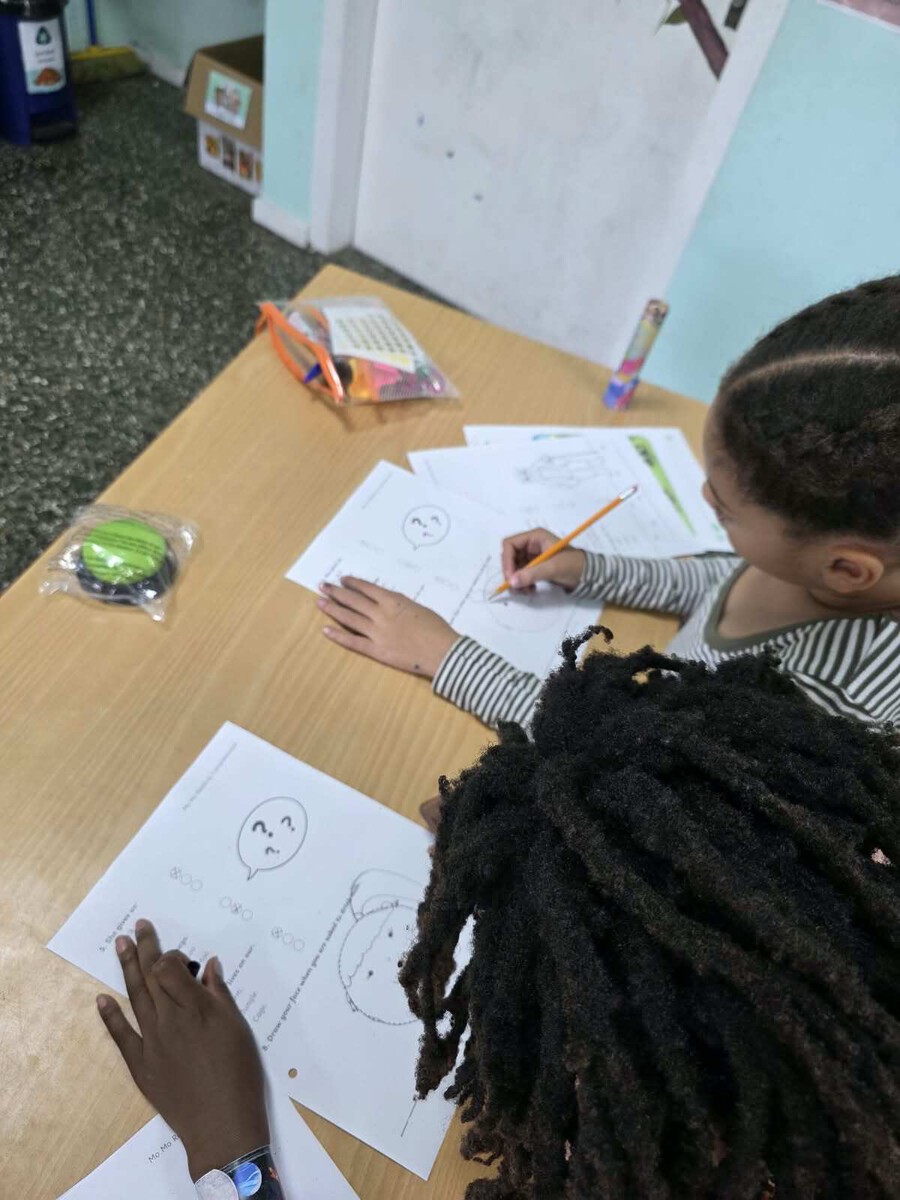
In Art, our “name aliens” are now ready for their next adventure. After receiving their final coat of colour, the children began planning new home planets with their own landscapes, colours, shapes and special features.
In Ethics, everyone received a “warm shower” of compliments. Each child wrote kind words for their classmates, leaving everyone with a page full of positive messages – and plenty of smiles.
Grade 4: Words, numbers, sounds and colour
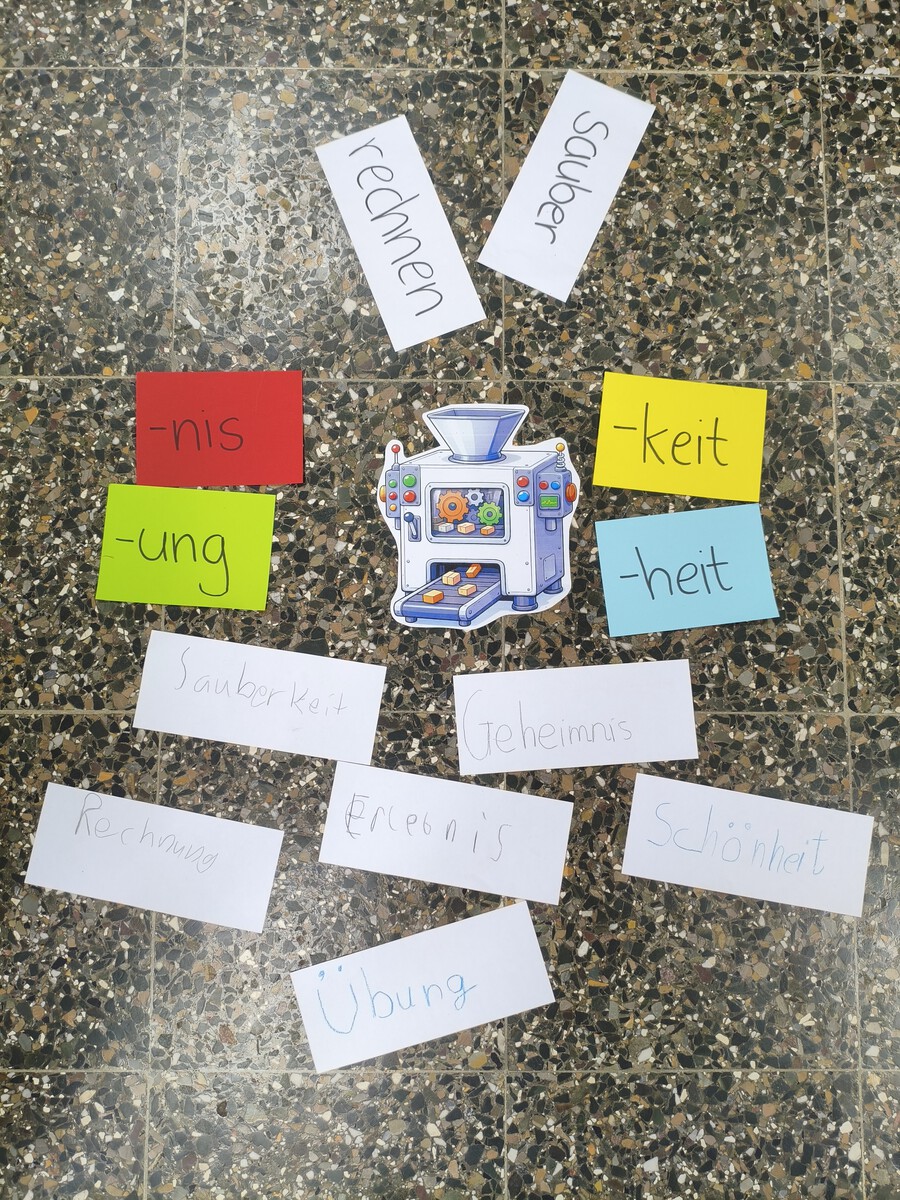
In German, Grade 4 continued exploring nouns. Using a “word machine”, the children formed new nouns from adjectives and verbs, examined common suffixes and then looked up words and plural forms in the dictionary. This helped them strengthen spelling, vocabulary and confidence in using alphabetical order.
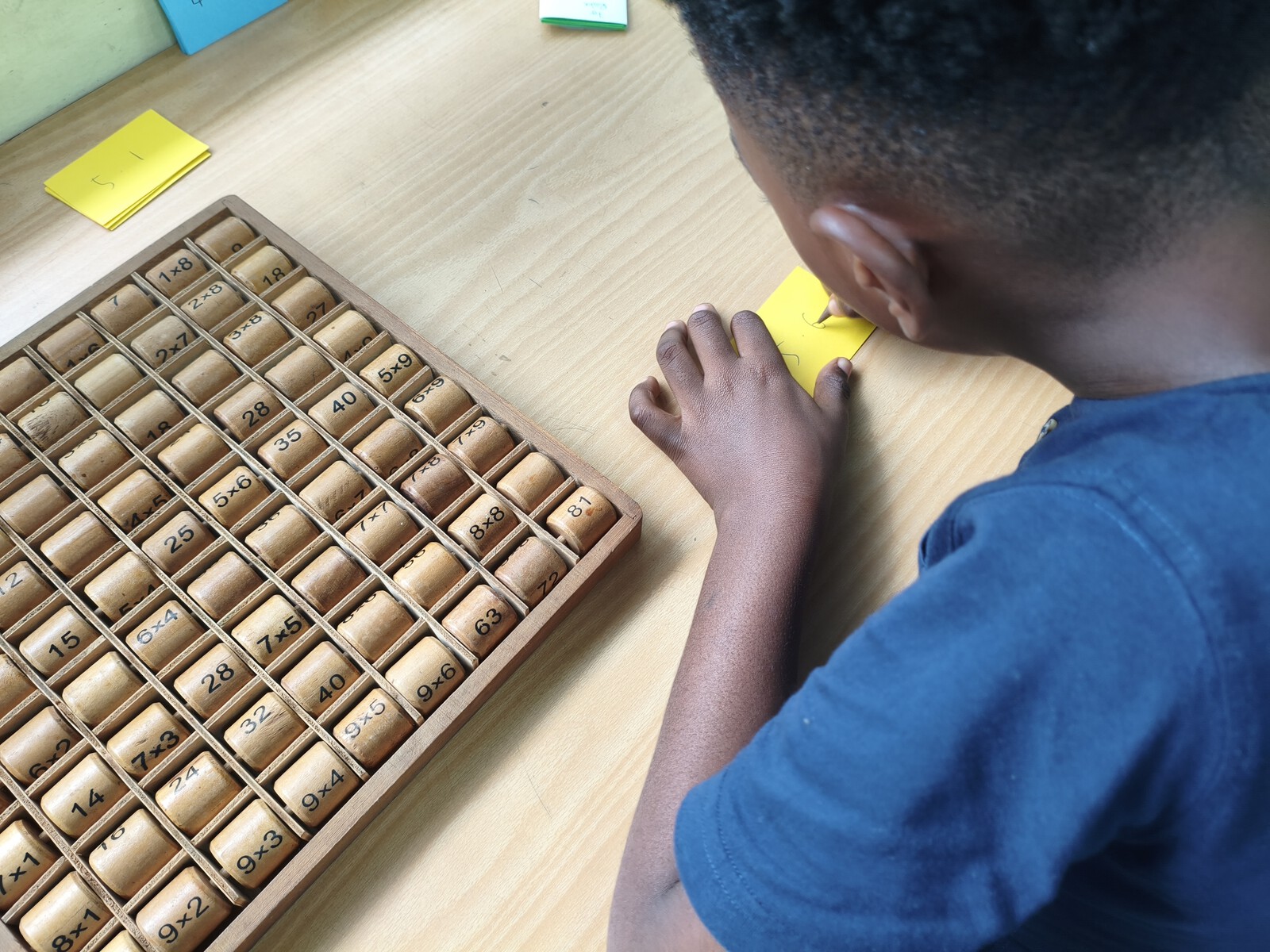
In Mathematics, the class completed its revision of addition and subtraction. Tricky number puzzles required not only accurate calculation but also careful reading and suitable problem-solving strategies. At the same time, the children revised their multiplication tables thoroughly in preparation for multiplication and division.
In English, students continued working on identifying the main idea and supporting details in paragraphs. Additional reading time in the library helped strengthen their reading comprehension.
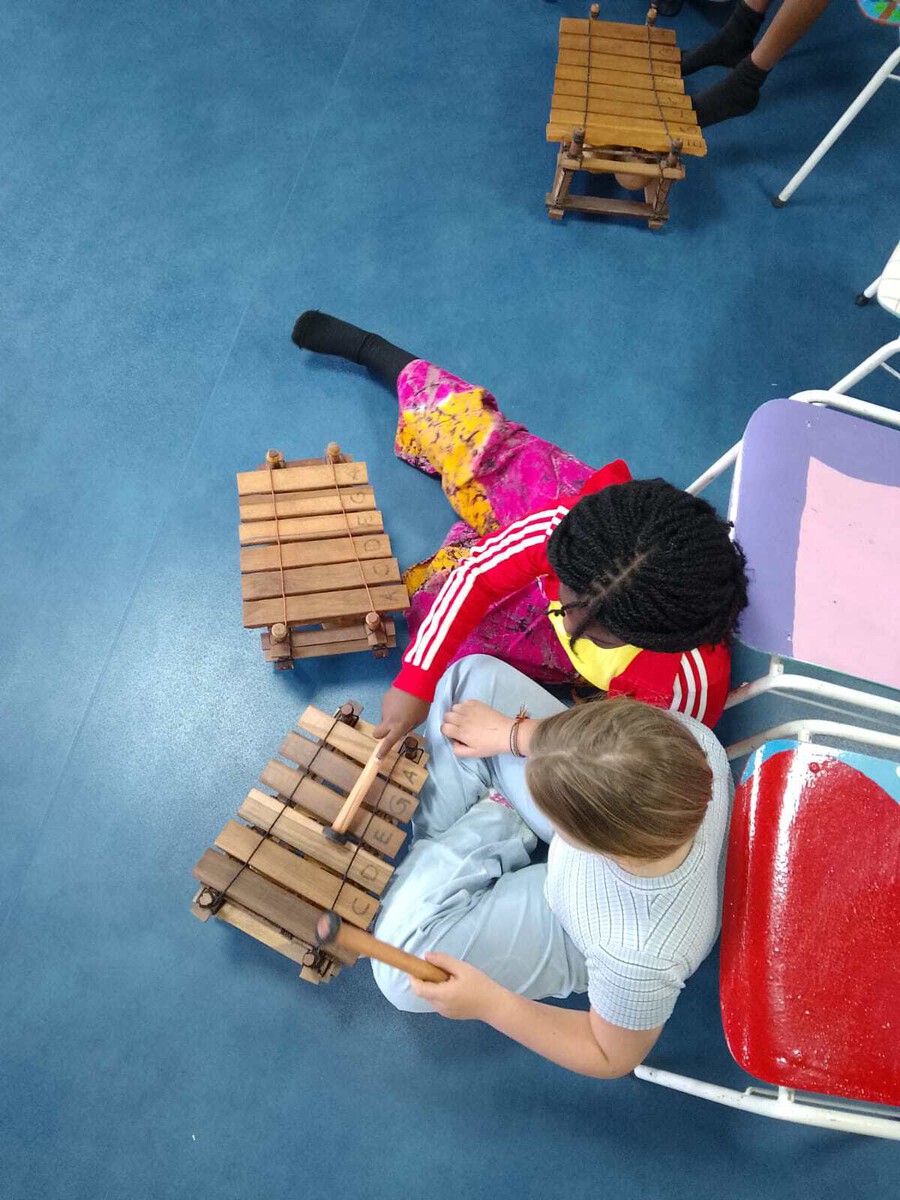
In Music, the focus was on pitch. Students explored different pitches on the xylophone and created their own short melodies in pairs, combining creativity with collaboration.
In Art, the children continued adding colourful finishing touches to their individual learning booths. Patterns, details and new ideas have gradually transformed the simple wooden structures into a bright shared project. Soon, the booths will begin their actual job of supporting focused and undisturbed learning.
From the Secondary School
Grade 5: Researching, presenting and creating
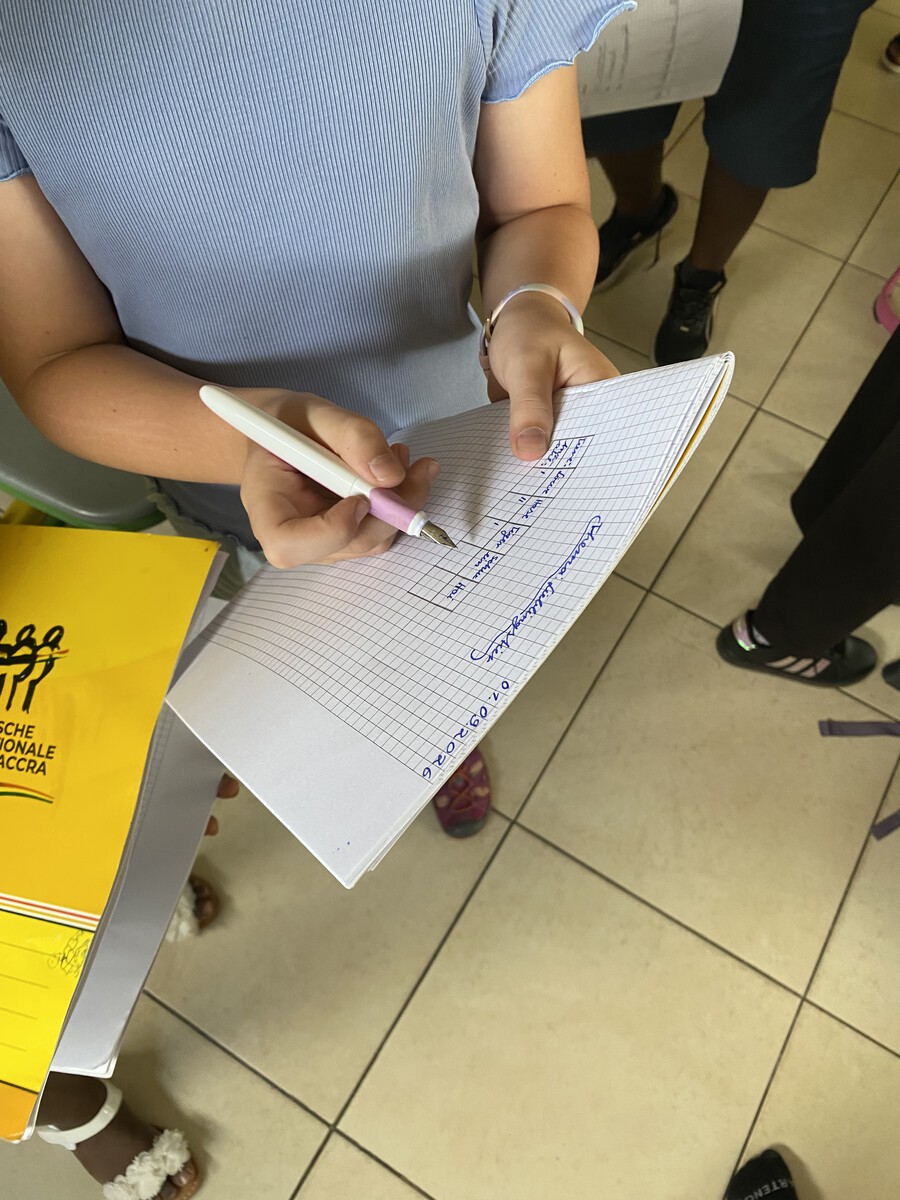 In Mathematics, we explored data by looking at minimum, maximum, rankings and range. The students then carried out their first data collection on a topic of their own choice, interviewing students and teachers before presenting their results in bar or column charts. They also learnt how tree diagrams can be used to represent different possibilities clearly.
In Ethics, we created personal profiles and learnt more about ourselves and our classmates.
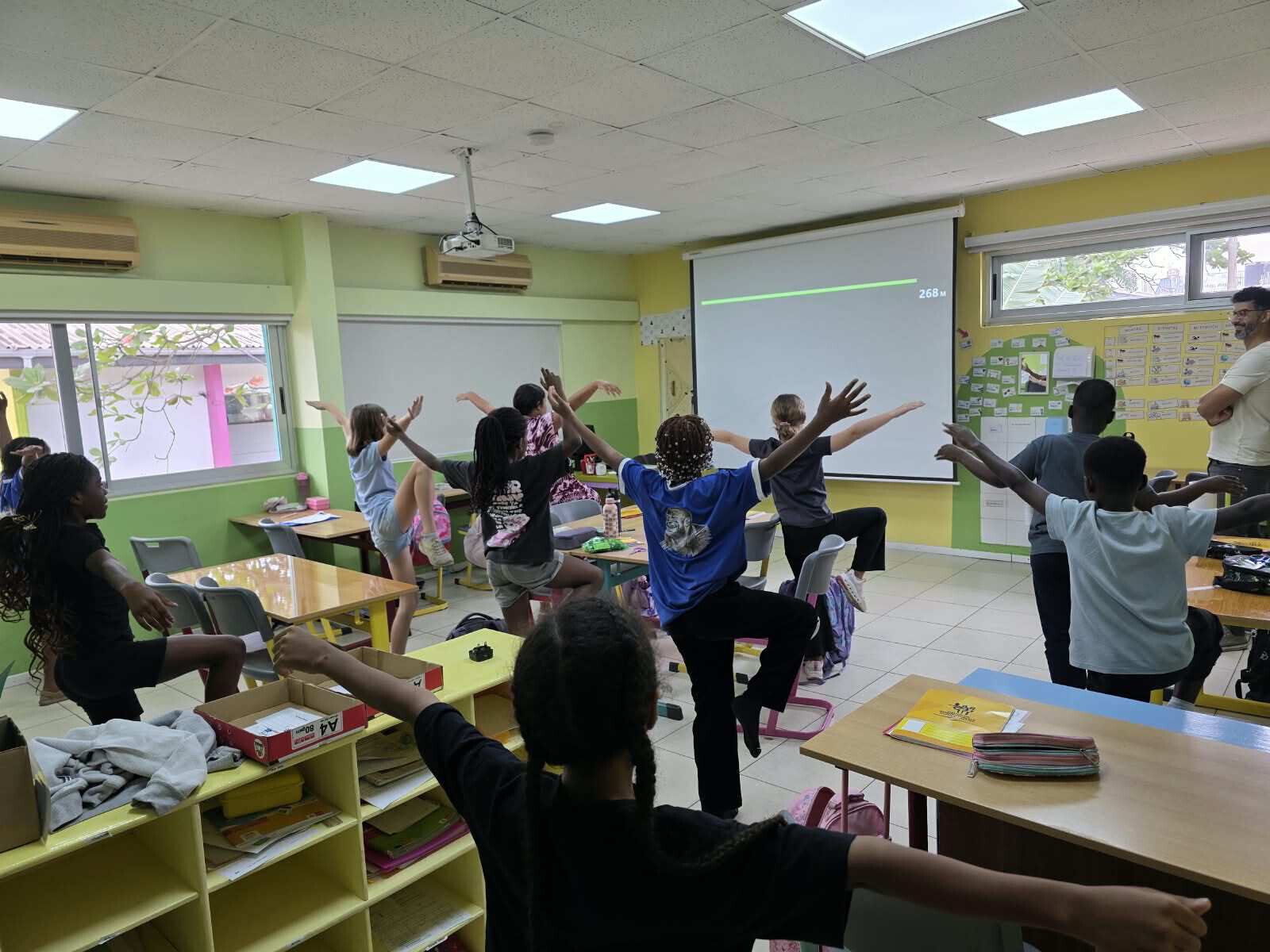
In PE, we played a version of Brennball with two balls and two “burners”, training speed, reaction and throwing accuracy.
In Geography, we focused on continents and oceans. A crossword and quiz helped us check our knowledge before we moved on to the global grid of latitude and longitude.
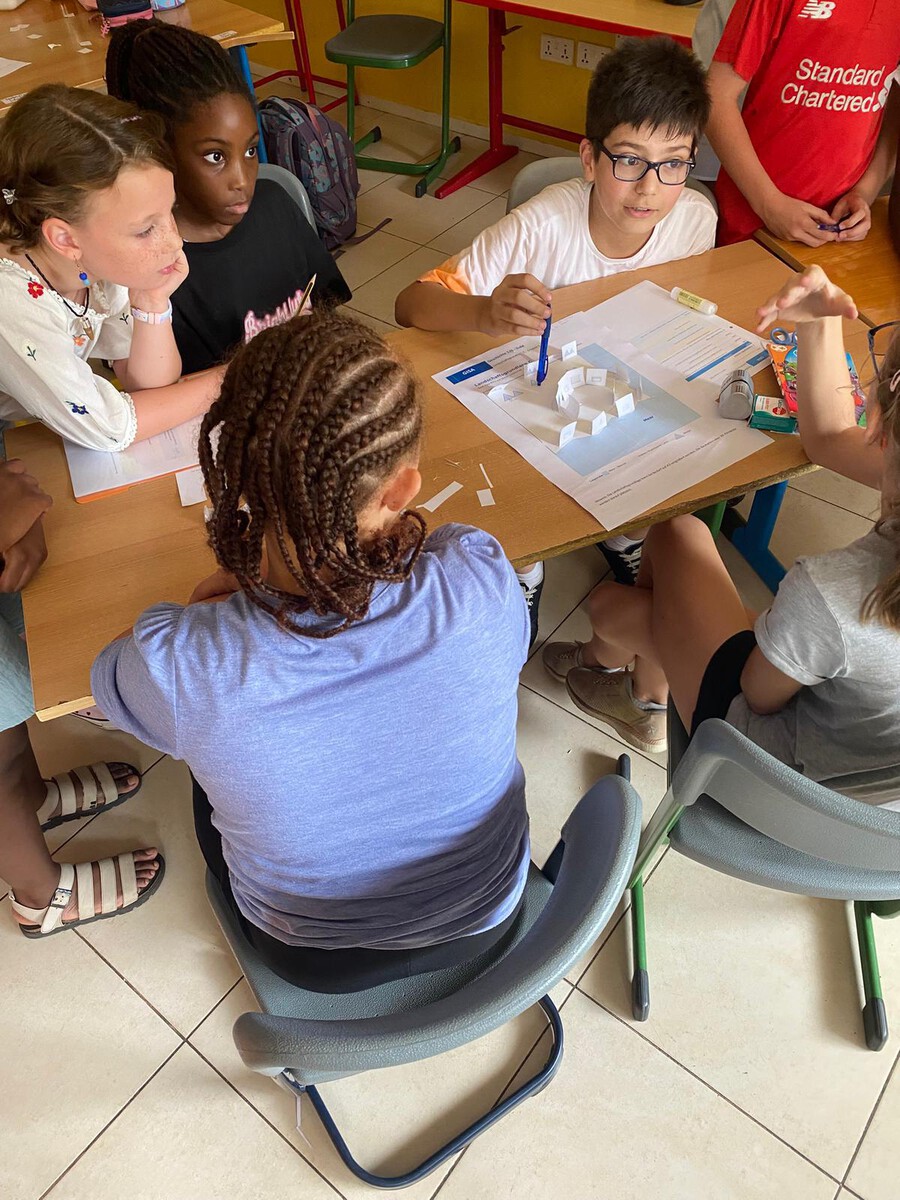 In History, Ancient Greece became something students could literally get their hands on. Working in small groups, they built landscape models with mountains, coastlines, islands and settlements. This made it easier to understand how the landscape shaped life in Ancient Greece and why many independent city-states developed.
➡️ Read more: Ancient Greece hands-on – discovering history through active learning
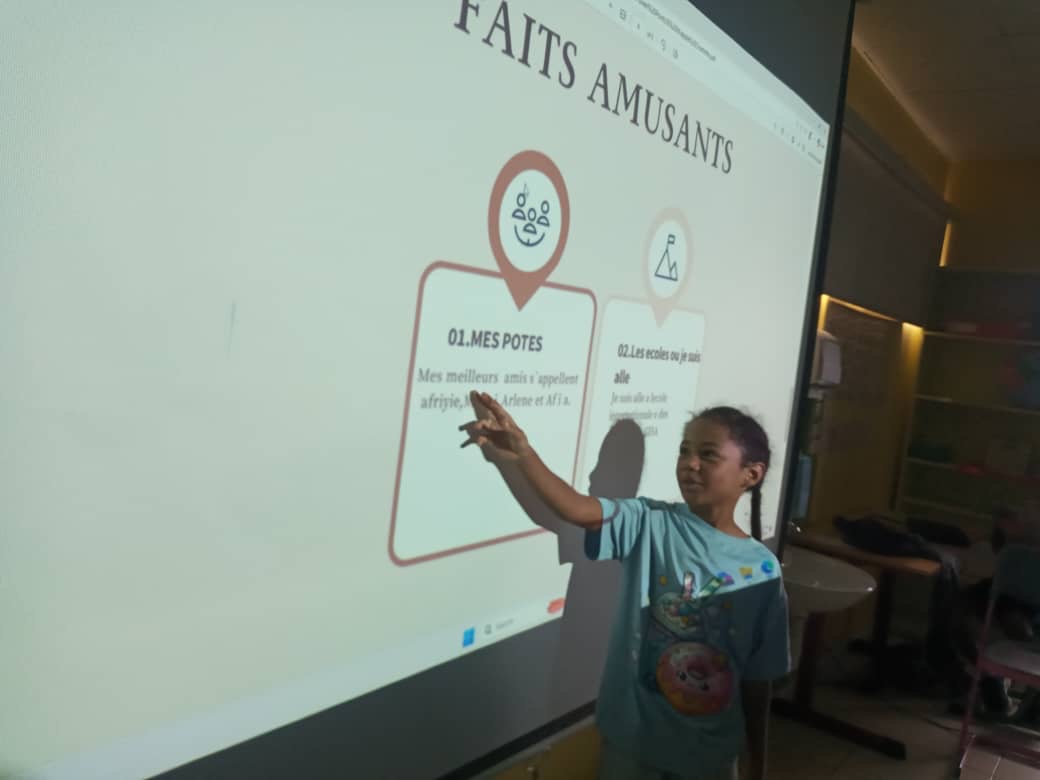
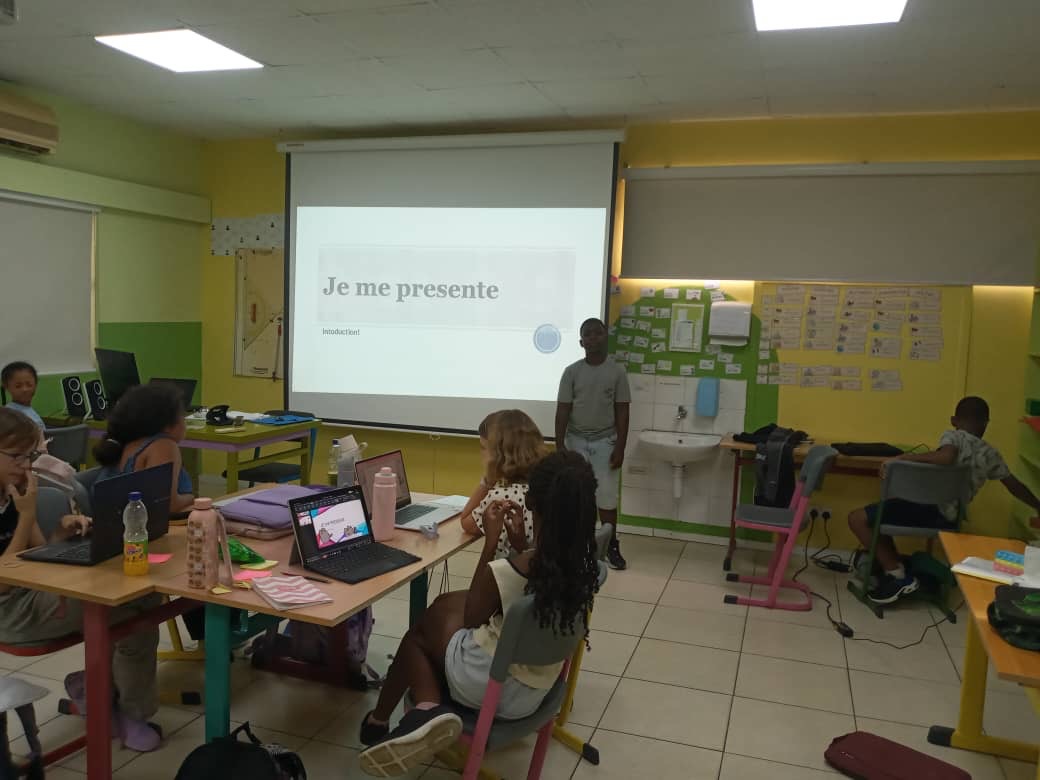
In French, the students gave their first short presentation. Each student came to the front and bravely introduced themselves in French, giving their name, age, nationality and place of residence.
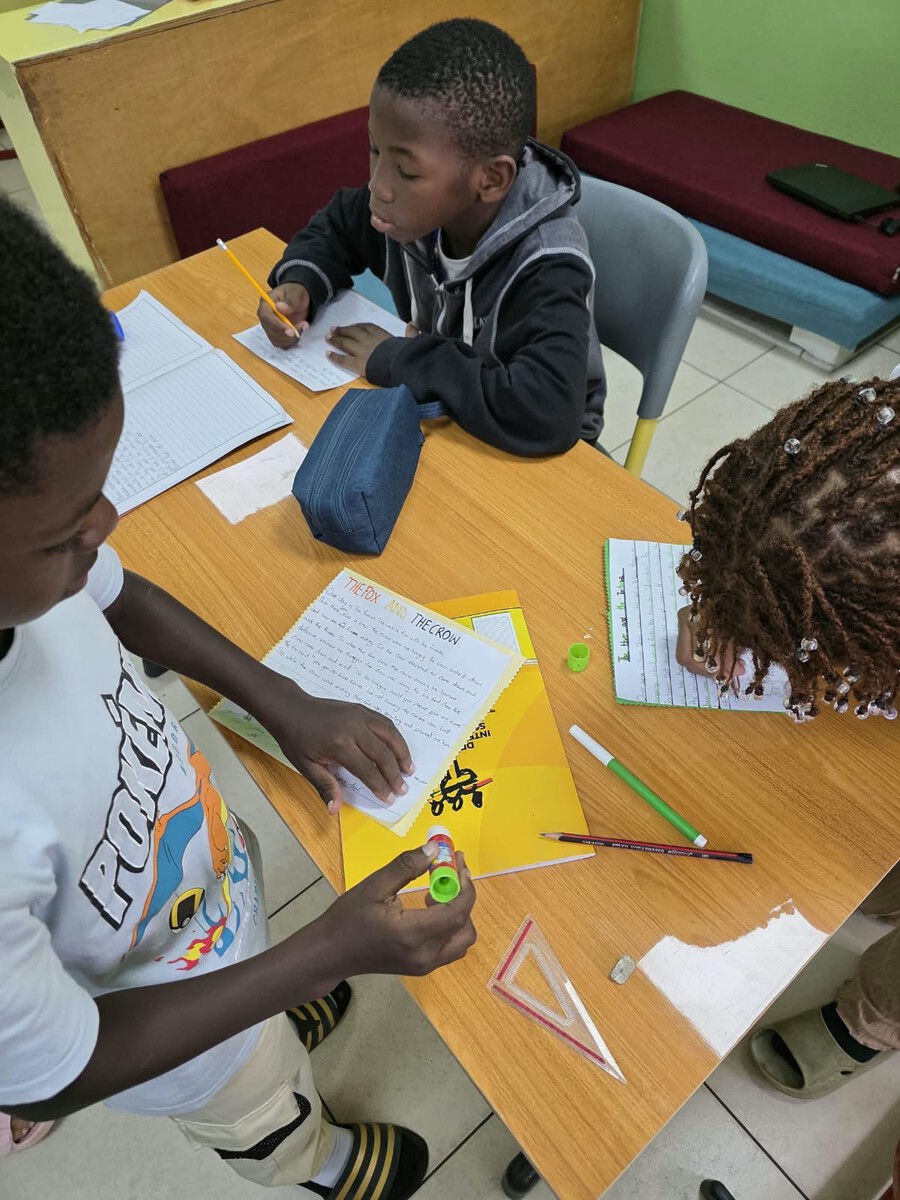
In English, the class explored fables, their typical features and their purpose. Inspired by the book “Fable”, students wrote their own stories. They also worked on adjectives and descriptive settings in differentiated tasks. Next, they will read one another’s work and give constructive feedback.
In Art, Grades 5 and 6 explored the distinctive visual language of Keith Haring. The students looked closely at his typical figures, lines, colours and sense of movement before developing their first designs in the style of the artist.
Grade 6: Language, happiness and Ancient Greece
In German, we continued developing our work with weekly learning plans, with a particular focus on nominalised verbs.
In Ethics, we started our first topic, “Happiness”. Our shared goal is to create a “Happiness Magazine”. This week, the children drew different objects from a bag and discussed whether these things can make us happy – and, if so, why. This led to an interesting question: Is the object itself happiness, or does it simply contribute to the feeling of being happy?
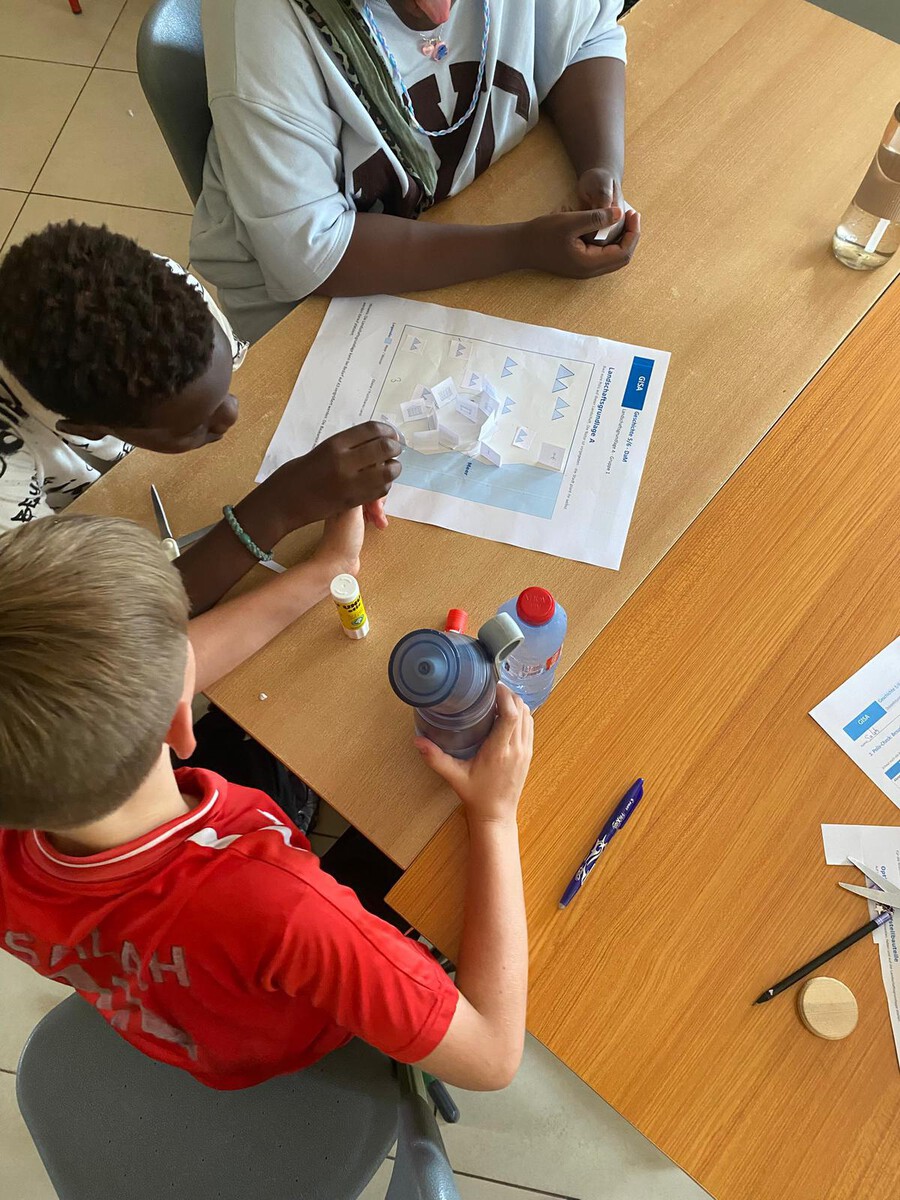 In History, Ancient Greece was explored in a very visual and hands-on way. Using their own landscape models, students investigated how mountains, coastlines and islands shaped people’s lives and why many independent city-states emerged.
In Art, Grade 6 joined Grade 5 in exploring the distinctive style of Keith Haring. After analysing several works, the students identified key features of his art and began creating their own designs. One thing is already certain: these figures are unlikely to stand still.
Grade 7: Arguing, calculating and explaining the world
“For or against?” – that is exactly what our first major German topic is all about. This week, we explored the question “School without grades?”. Students first analysed different sources and collected arguments before carrying out a small survey among students from Grades 1 to 9 as well as some teachers. The surprising result: a clear majority were in favour of keeping grades.
In Mathematics, the focus was on efficient calculation with rational numbers. Students used the commutative and associative laws to rearrange and group numbers strategically. Negative signs in front of brackets and the rules for multiplying positive and negative numbers were also part of the week’s work.
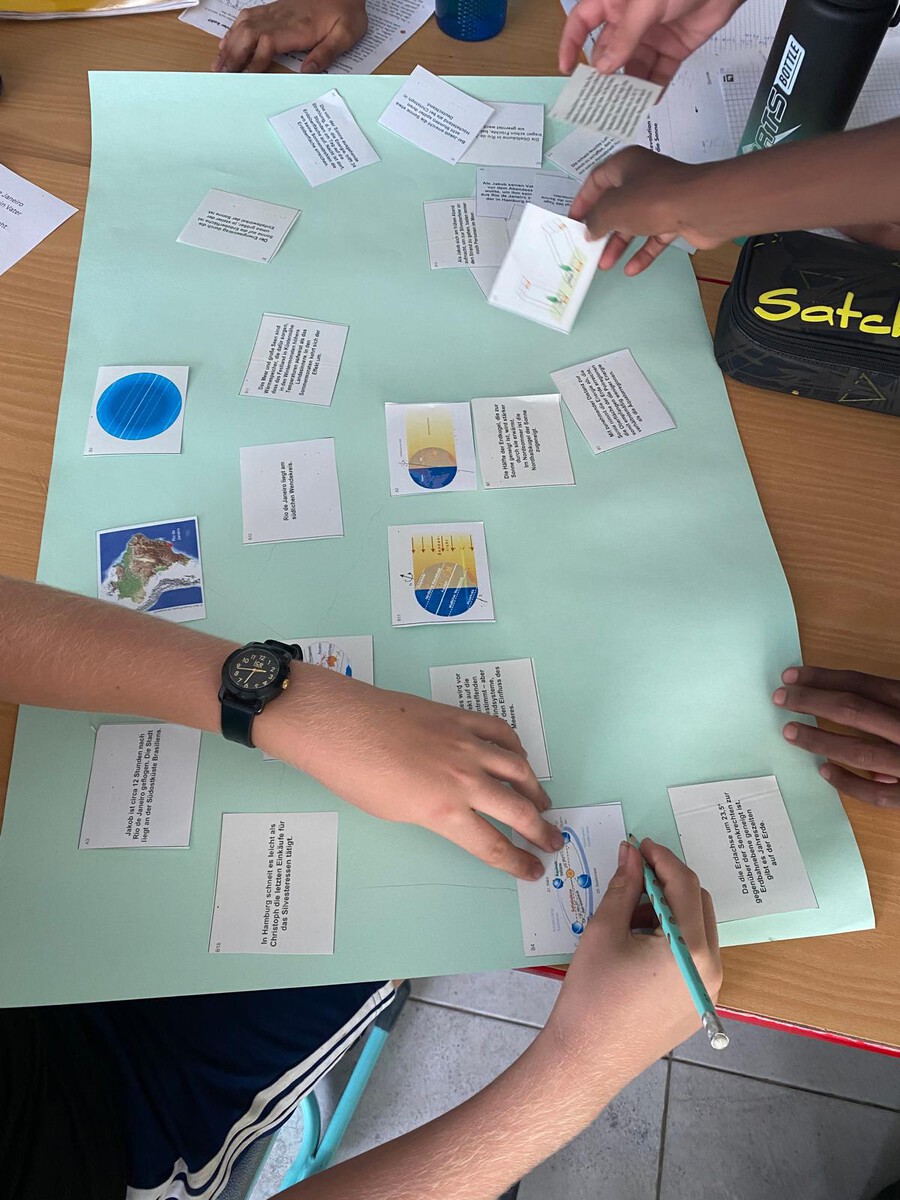 Why does Jakob celebrate New Year in Rio de Janeiro eight hours later than his father in Hamburg – and why can he do so comfortably in a T-shirt? Through a mystery activity, the students explored the Earth’s rotation and revolution, the position of the Sun and the seasons.
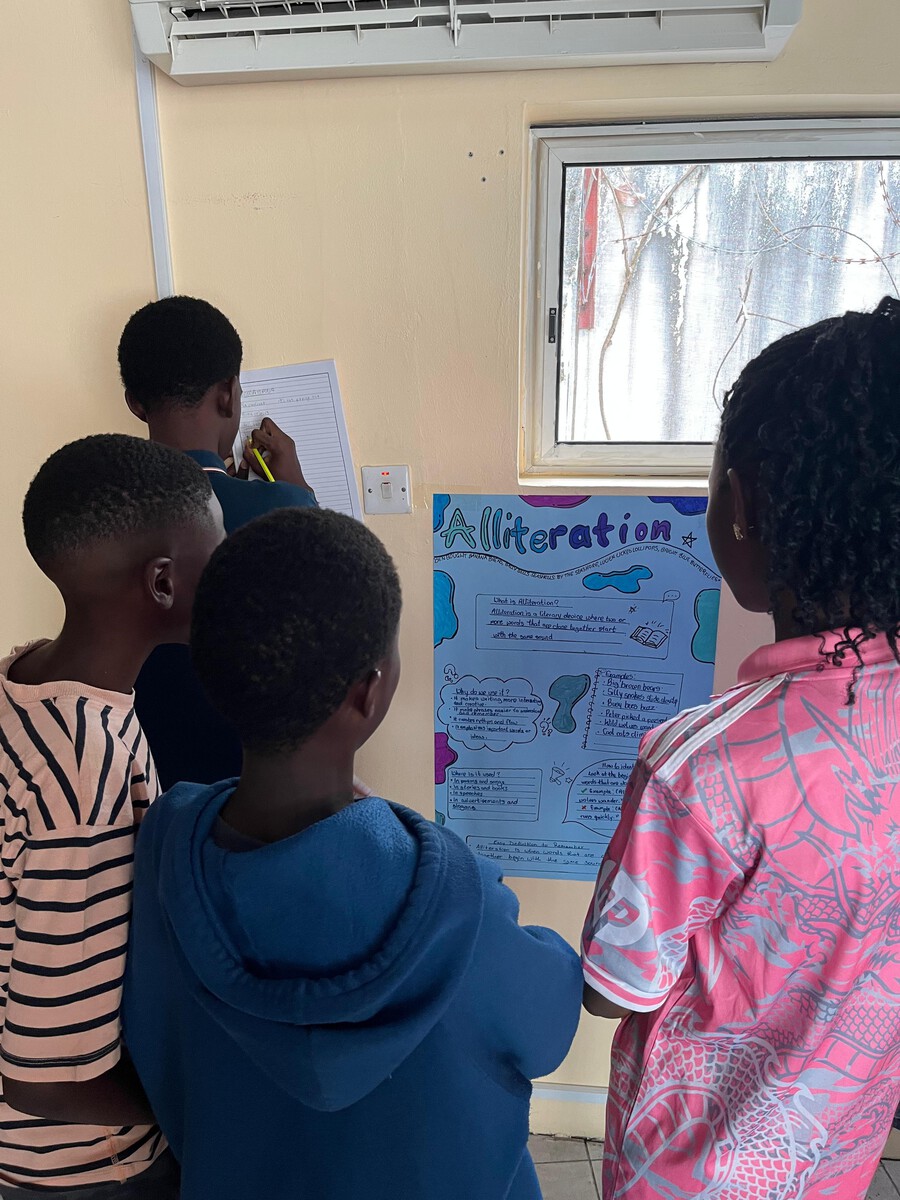
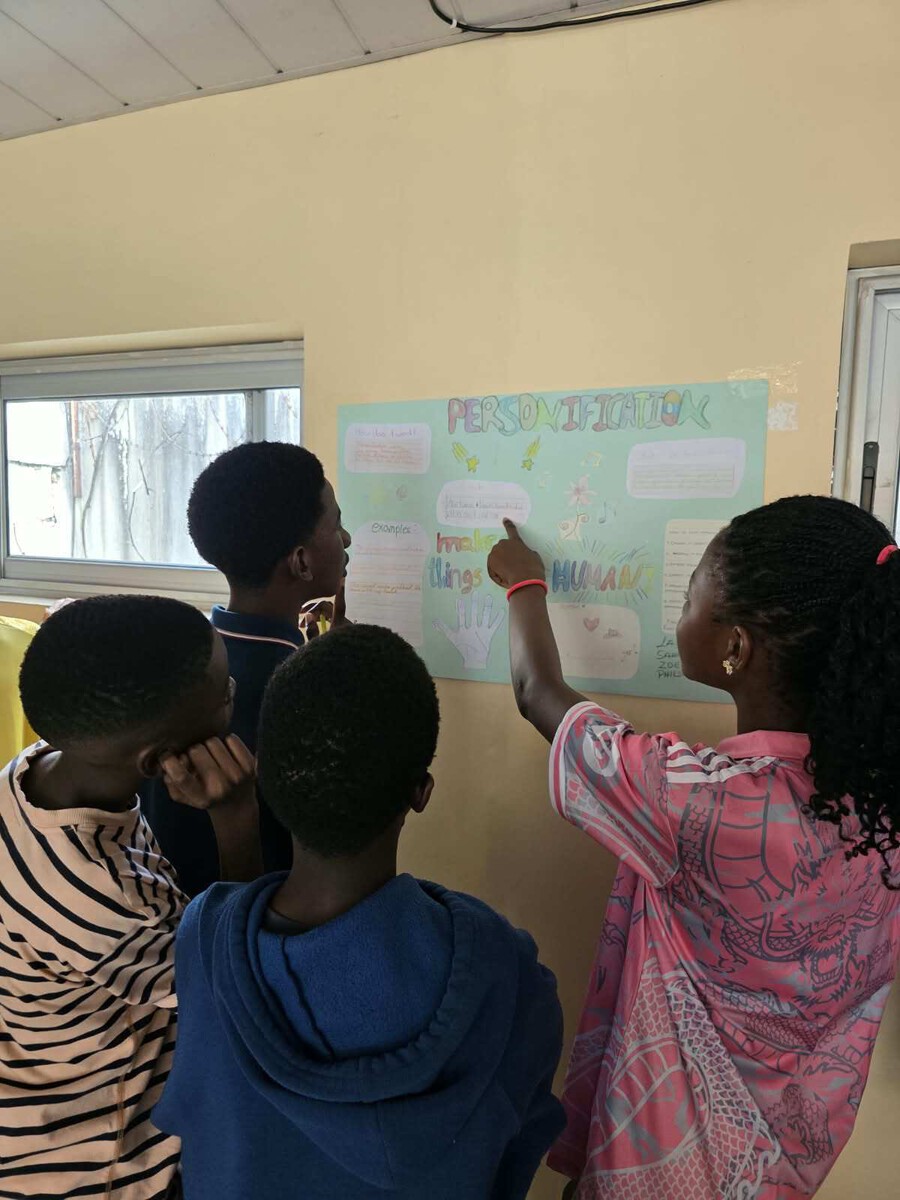
In English, together with Grade 8, the groups presented their work on different language devices during a gallery walk, gave one another constructive feedback and continued developing their presentations.
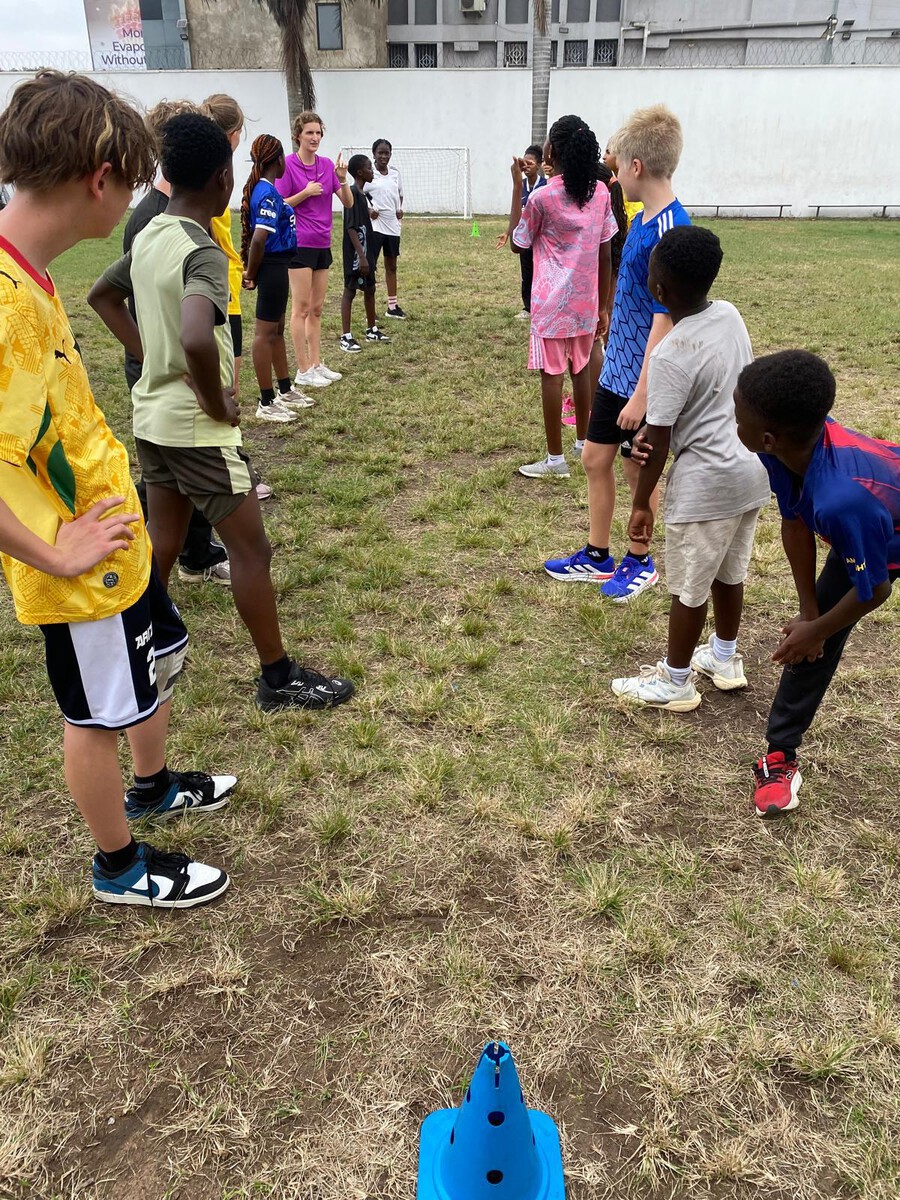 In PE, reaction speed was the main focus: full concentration, quick legs – and no false starts!
In History, the class explored Charlemagne and the question of how rule was organised and secured in the early Middle Ages. Different historical sources and representations were also examined critically.
In Biology, Grades 7/8 explored invertebrates. Students looked at how they are classified within the animal kingdom, discussed different groups and typical examples, and then focused on the structure and function of different insect mouthparts.
Grade 8: Responsibility, nature and new perspectives
In Ethics, the class began exploring the relationship between humans and nature. Students discussed whether nature belongs to humans and may therefore be controlled and used for our purposes – or whether humans are themselves part of nature and therefore carry a particular responsibility to protect it.
In Biology, Grades 7/8 explored invertebrates. They first looked at how these animals are classified within the animal kingdom before learning about different groups and typical examples. Within the insect group, particular attention was given to different mouthparts, their structure and function. In the coming lessons, students will prepare presentations to explore the diversity of invertebrates in greater depth.
In Mathematics, Grade 8 continued practising how to transform algebraic expressions: factoring, expanding brackets, multiplying out and dividing with variables were also explored through applied examples.
There was exciting news in Social Studies: Grade 8 will actively support the Gerald Asamoah Foundation’s project for children with heart conditions during the second week of November. While doctors from Germany perform heart operations on children in Accra, our students will help support the medical team during their breaks by providing snacks, drinks and coffee. Over the coming weeks, the project will be prepared in both Social Studies and Ethics. The students reacted very positively and are already looking forward to taking part.
In German, the class started a challenging and highly relevant topic: civil courage. Using different situations and images, students discussed what courageous and responsible action really means. An extract from the novel “Call Me Ismael!” then led to the question of whether – and how – one should intervene when a conflict becomes violent. The shared conclusion: civil courage does not mean playing the superhero; it means paying attention, taking responsibility and acting thoughtfully.
In History, the rule of Charlemagne was examined in greater detail. Sources and representations helped students understand how closely politics, religion and power were connected in the Middle Ages.
In French, the class took another step into the world of the passé composé. Students explored the auxiliary verbs avoir and être and then applied their knowledge in a reading task. At the same time, they expanded their vocabulary and practised identifying past events in French texts.
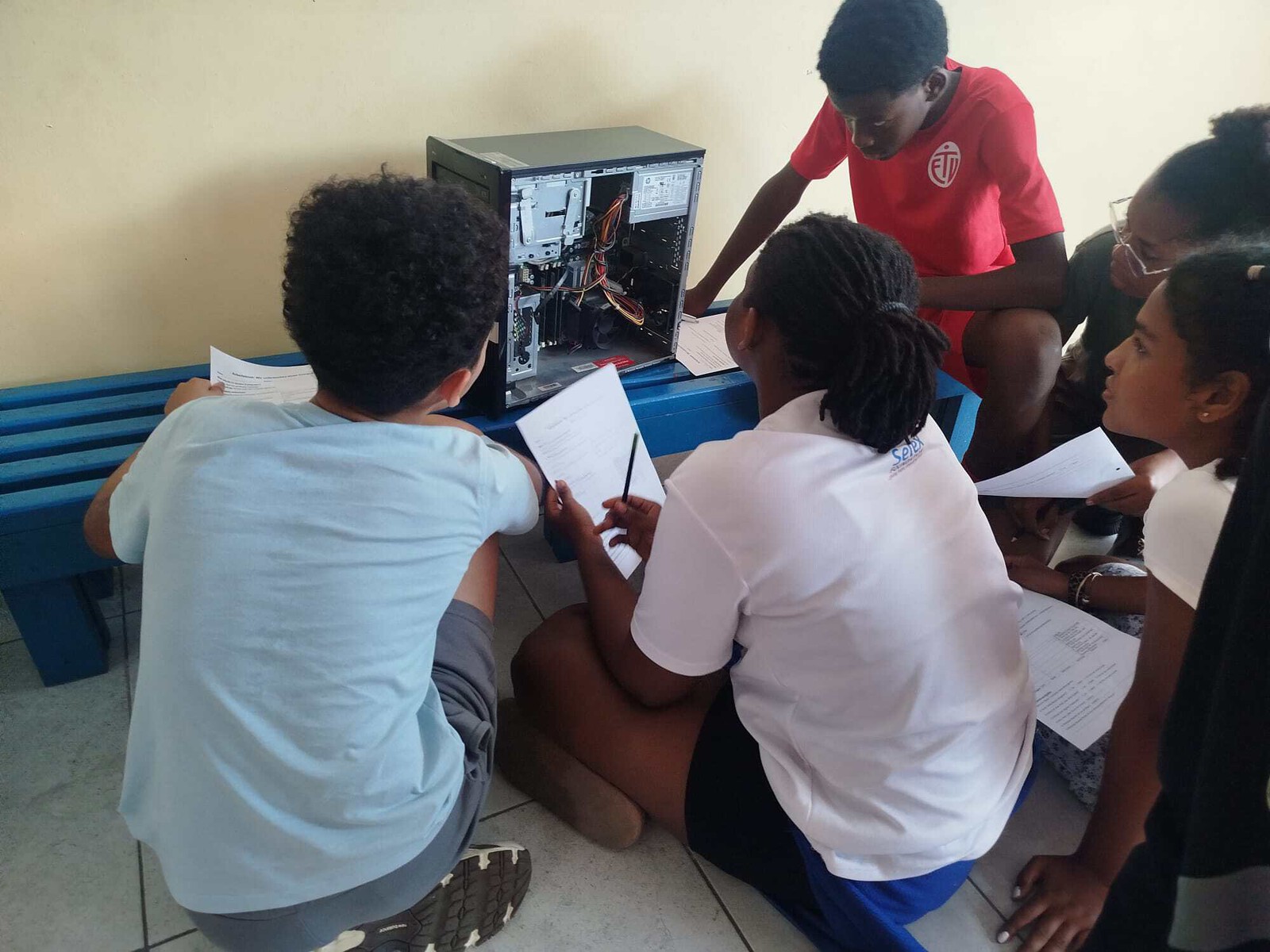 In IT, students learnt about the most important components of a computer. Using a real computer, they examined the individual parts and matched them with their functions. In a follow-up quiz, they analysed different fault scenarios and identified which component was missing or defective – and why the computer therefore could not work.
German as a Foreign Language, Grades 7/8: Digital and shared learning
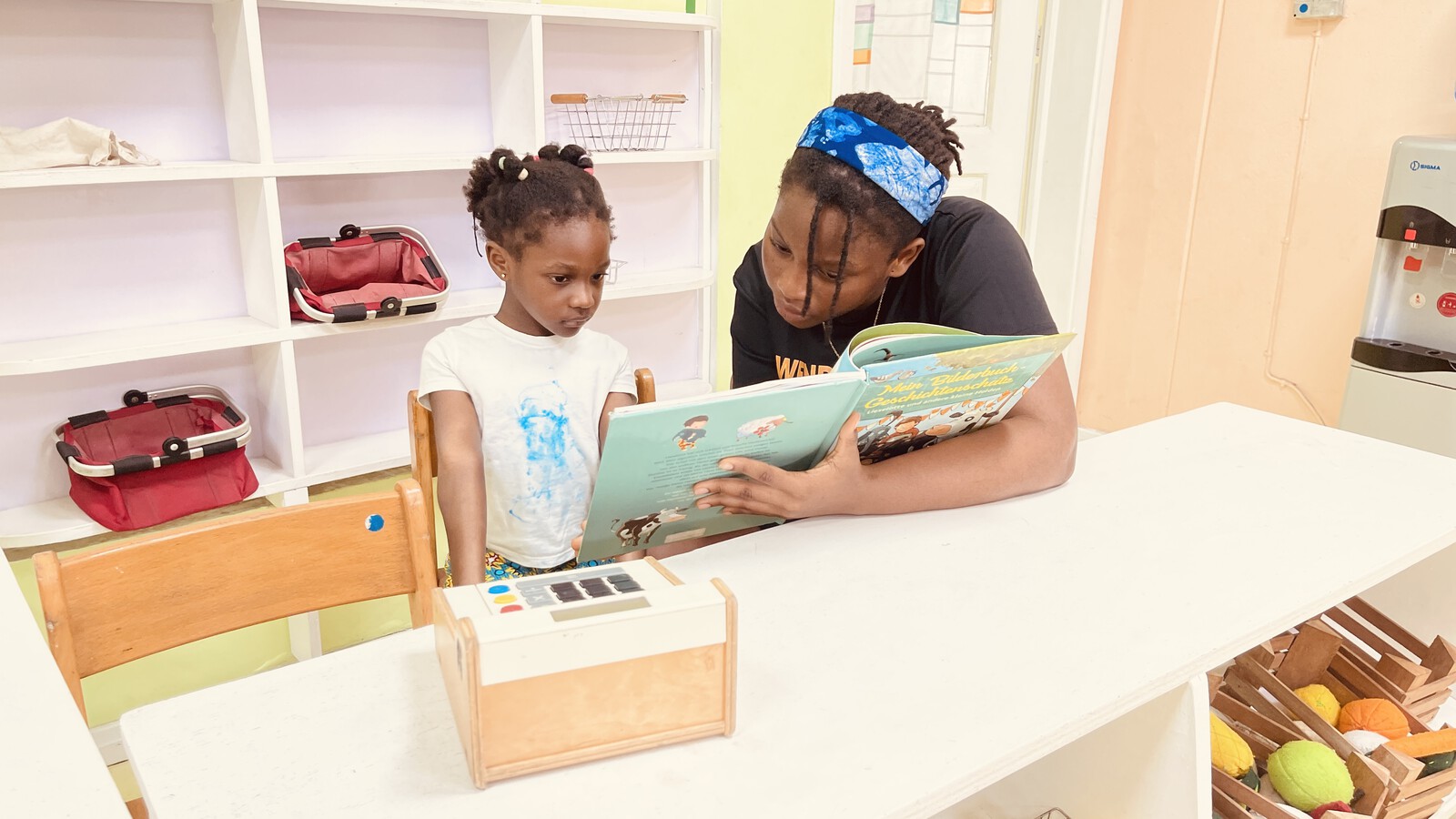 In German as a Foreign Language, students revised vocabulary and grammar from the topics “Shopping & Shops” and “Media & Communication”. They also got to know LearningView, a new digital tool that will be used for homework, vocabulary practice and audio and video assignments.
A particular highlight was the spontaneous reading session in Kindergarten. The DaF students read from the children’s favourite books and experienced German in a completely different setting outside their own classroom.
➡️ Read more: A week full of highlights in German as a Foreign Language
Grade 9: Continuing to learn together
In the third week of school, Grade 9 continued working with motivation and focus.
In Mathematics, we continued working with algebraic expressions and the binomial formulae. Independent learning was also integrated into lessons. At the end of each lesson, students completed a digital quiz on important mathematical terminology in both German and English. This helps consolidate subject-specific vocabulary and prepares students for their qualification next school year.
In Chemistry, we continued our work on atomic structure and learnt about isotopes. Students discovered that isotopes of an element have the same number of protons but a different number of neutrons. Digital learning platforms were also used.
In German, we were on the trail of several linguistic suspects: the different German s-sounds and the eternal question of “das or dass?”. We revisited knowledge from previous years and looked closely at when “das” functions as an article, demonstrative or relative pronoun – and when “dass” is used as a conjunction.
Then things suddenly became political and historical: “No shopping on Sundays” – really? Looking at Germany, we explored why most shops remain closed on Sundays. Our research led directly to the German Basic Law and even back to the Weimar Constitution. Through independent research, students discovered further historical connections surrounding the origins of Germany’s Basic Law. German lessons this week therefore offered far more than spelling – and we now even know how to write “dass” correctly when saying so.
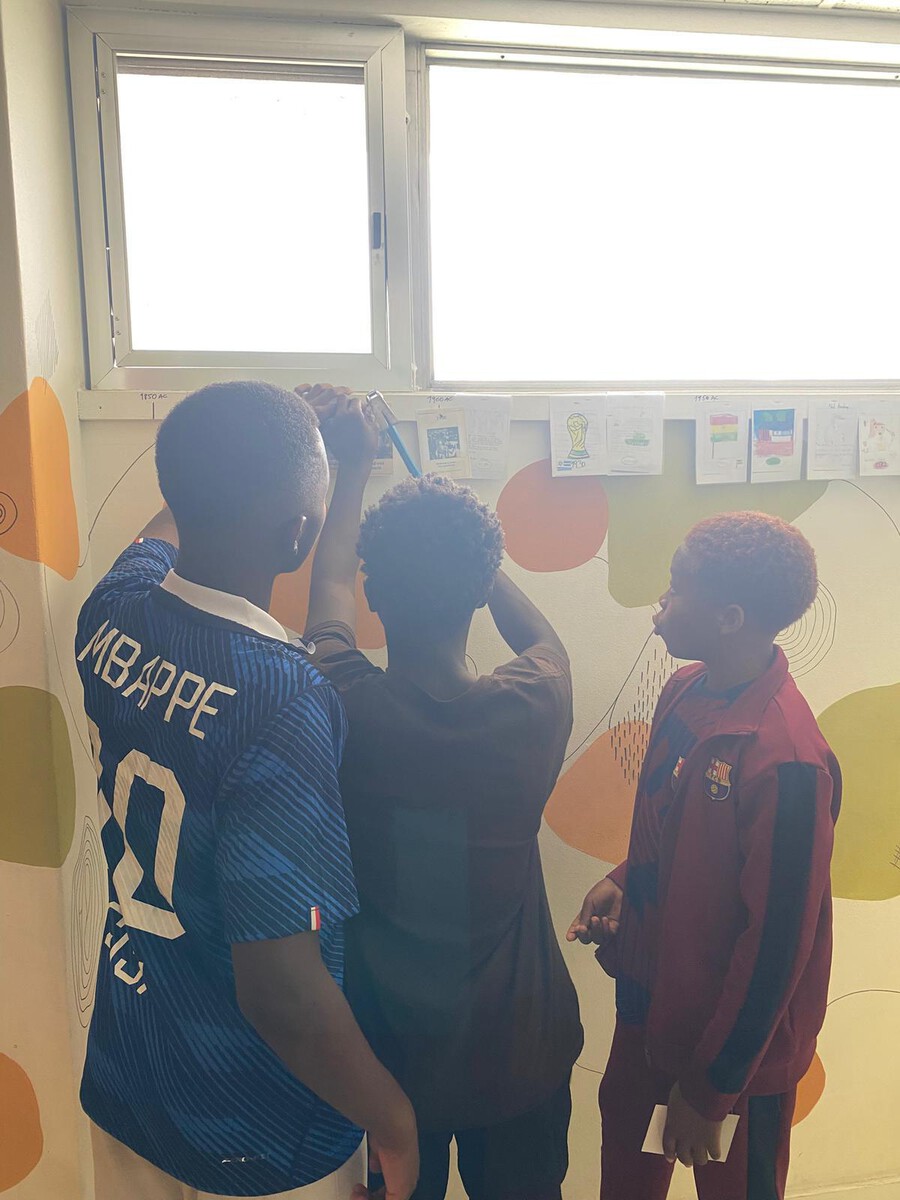 Following the assassination in Sarajevo, Grade 9 is now tracing the July Crisis of 1914 in History. Step by step, students are reconstructing how political decisions and alliances led Europe into the First World War within just a few weeks.
In French, the class combined history, culture and grammar while exploring French-speaking Canada. Students learnt how the French language and culture became established in Canada and linked this knowledge to their work on the passé composé. The focus was on the auxiliary verb être and agreement of the past participle with the subject.
In Social Studies, students discussed what an ideal society might look like and what we need and hope to achieve in our own society. This serves as an introduction to the concept of democracy, which will be explored in greater depth in the coming lessons.
In Biology, students investigated plant roots, their structure and their importance for the absorption of water and nutrients. They also learnt the relevant German scientific terminology and linked the topic to their previous work on stems and shoots. These foundations will lead into photosynthesis in the coming lessons.
In Ethics, the class explored the basic principles of Buddhism. The idea of deliberate renunciation in particular led to a lively and interesting discussion. In the coming lessons, presentation topics will be assigned so that individual aspects can be explored in greater depth.
Dates & Outlook
⛪ Sunday, 6 September 2026, 11:00 a.m.
Welcome Service of the German Protestant Congregation in Accra
The congregation will welcome Jens Junginger and Heidi Hafner at Ridge Church. A church café will follow afterwards. No registration is required.
👨👩👧 Tuesday, 8 September 2026, 4:00 p.m.
Grade 9 Parents’ Evening
The Parents’ Evening will take place in the Grade 9 classroom.
🌊 Saturday, 19 September 2026
Beach Clean-up with Mayekoo at Ananse Beach in Nungua
Together as a school community, we want to lend a hand and make a visible contribution to environmental awareness and the protection of our beaches and oceans.
🇬🇭 Monday, 21 September 2026
Founder’s Day – no classes
📚 Friday, 25 September 2026
Professional Development Day – no classes / emergency childcare available
There will be no regular lessons on this day. Emergency childcare will be available for families who require it.
⚽ Tuesday, 29 September 2026
Faces of Football – 3rd Edition at GISA
Together with former German international footballer Petra Landers, “Faces of Football” will bring together around 30 girls from UWSA, Chance for Children and GISA. Football, encounters and community will be at the heart of the day.
🍂 Monday, 19 October – Friday, 23 October 2026
Autumn Break
🇩🇪 Saturday, 31 October 2026
German Language Day at GISA
❤️ 7–14 November 2026
Heart operations in cooperation with the medical team from Duisburg
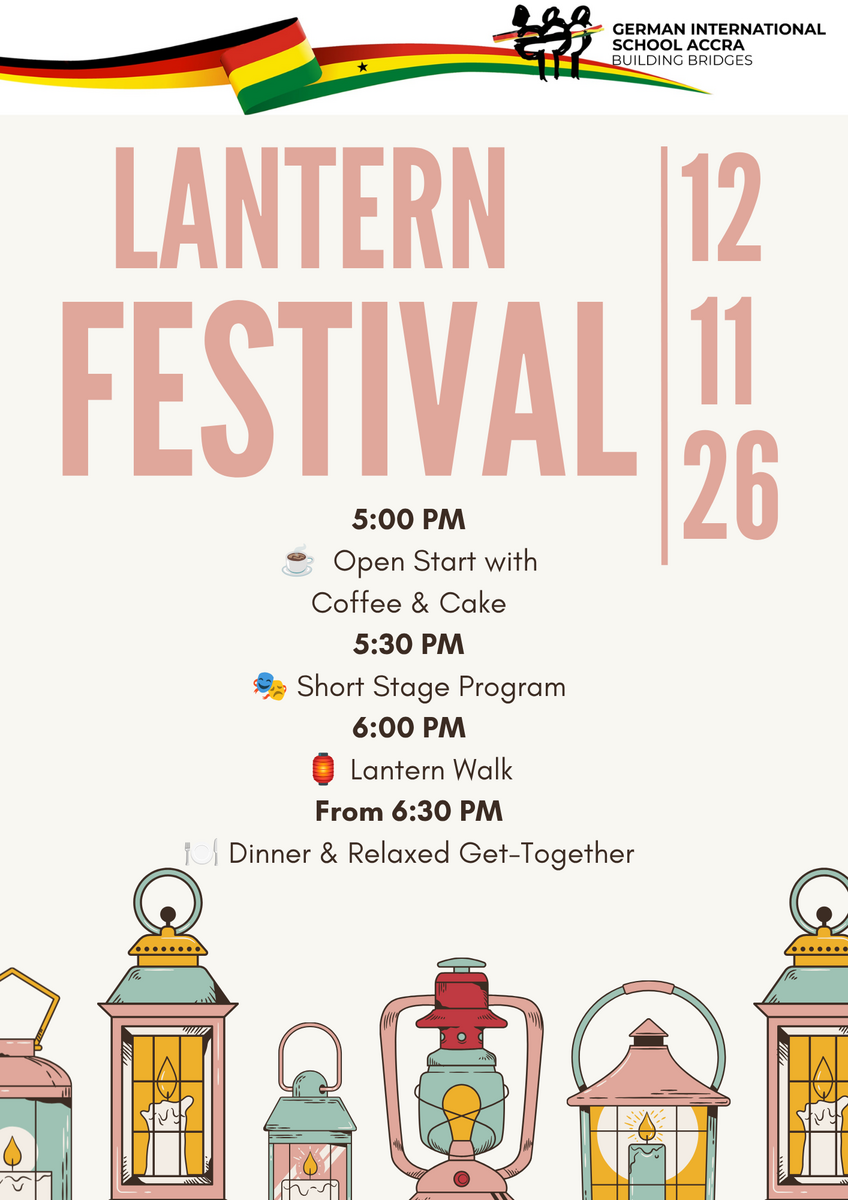
🏮 Thursday, 12 November 2026
Lantern Festival at GISA
🎭 Friday, 13 November 2026
Cultural Festival at the Goethe-Institut
🎄 Saturday, 28 November 2026
GISA Christmas Market
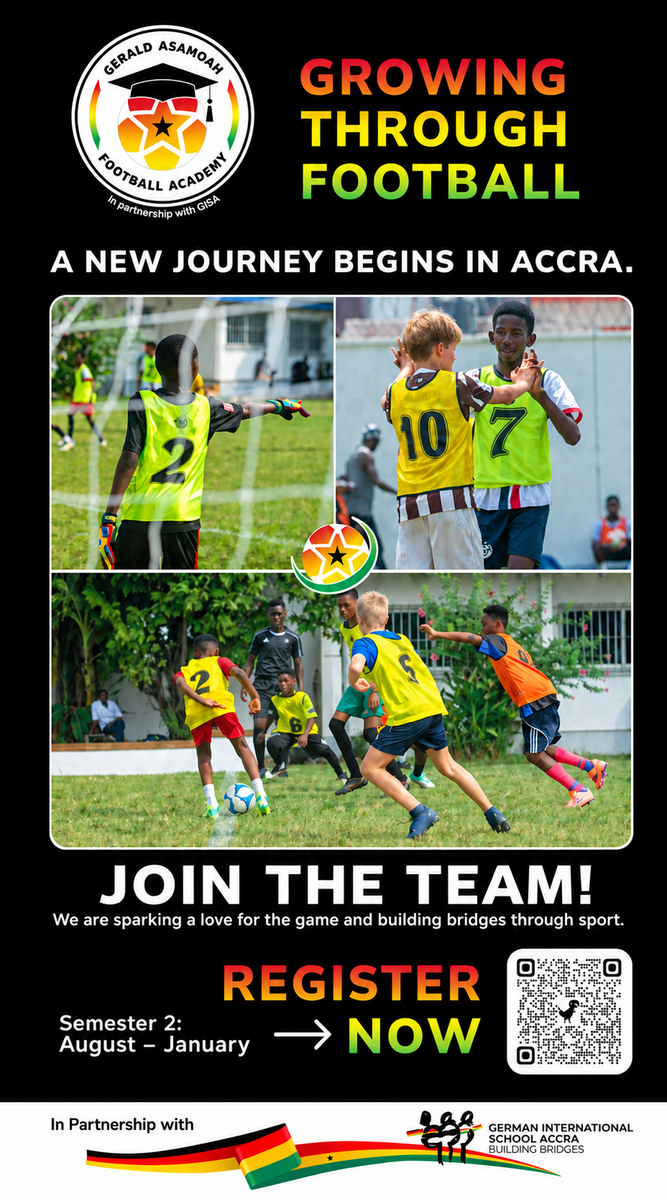
⚽Gerald Asamoah Football Academy
🇩🇪 German Language Day

Lantern Festival
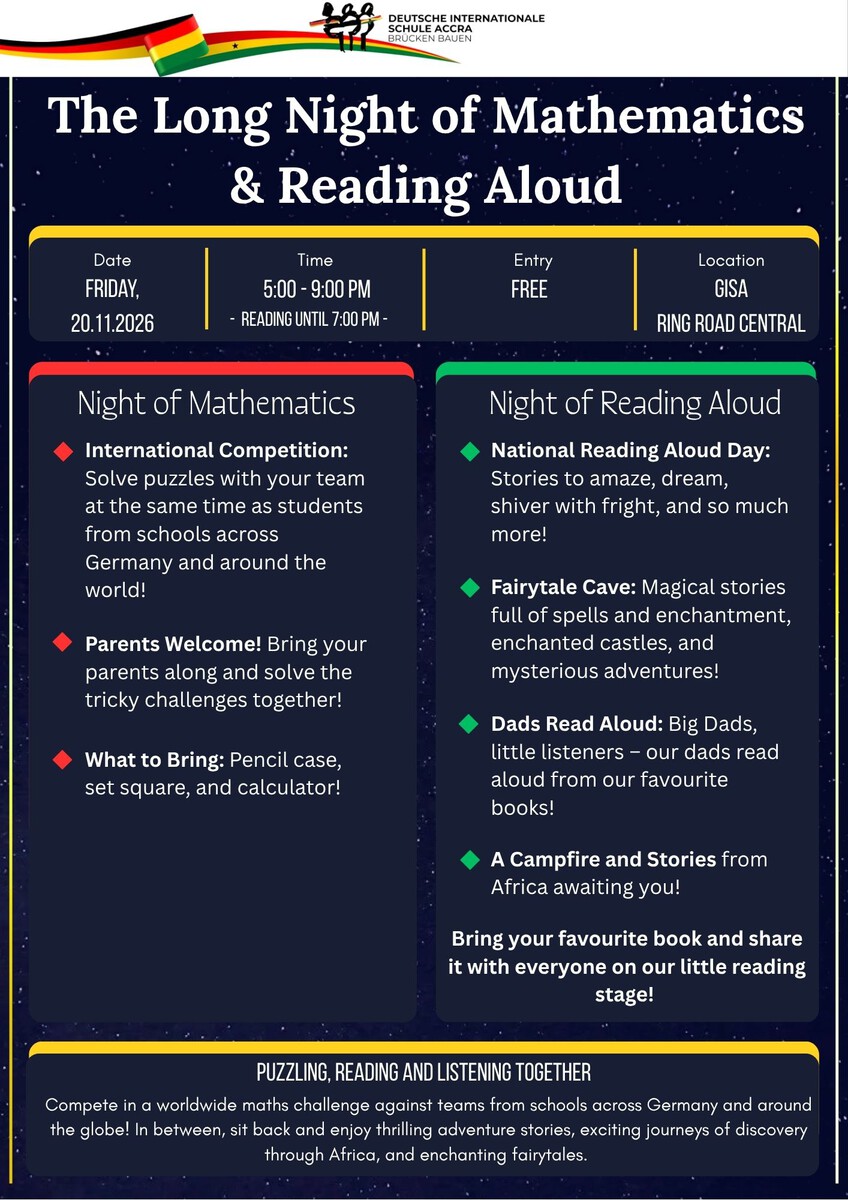
The Long Night of Mathematics & Reading Aloud
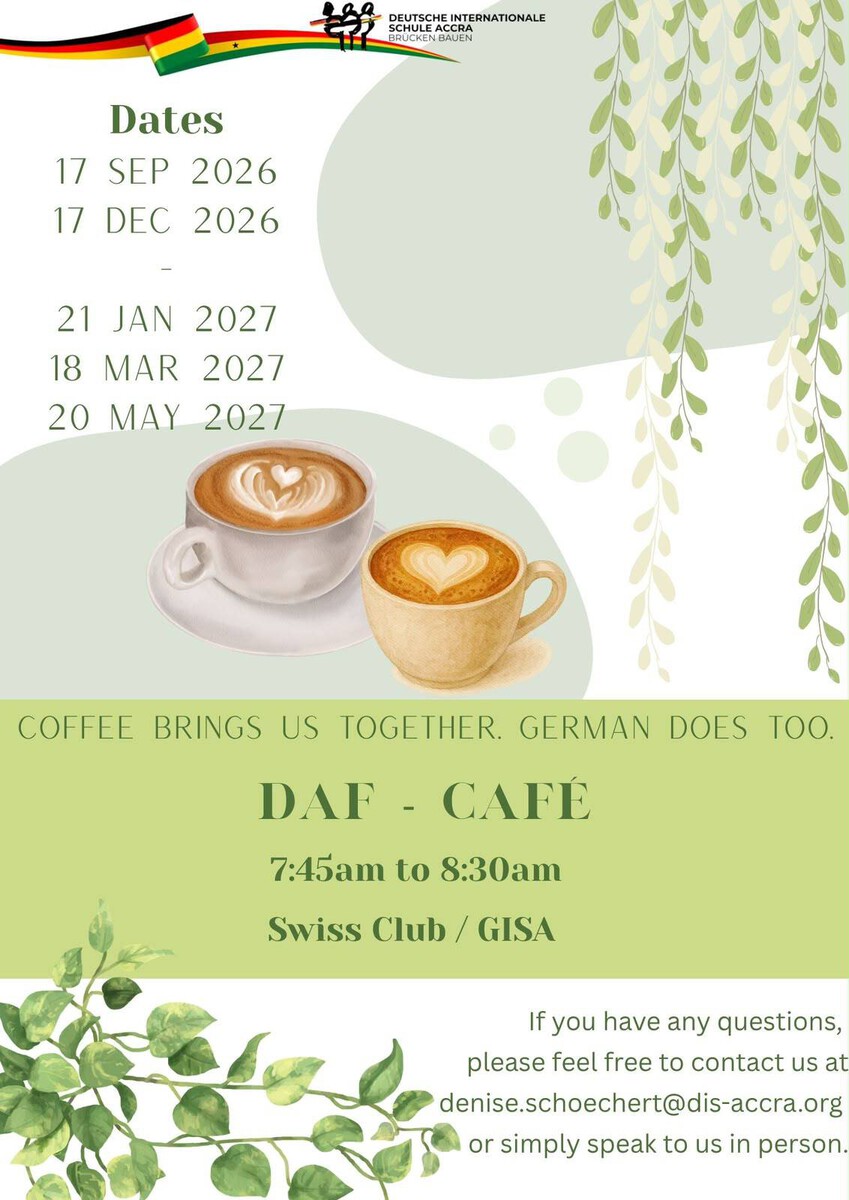
☕ DaF Café: Speaking German and Connecting Through Conversation
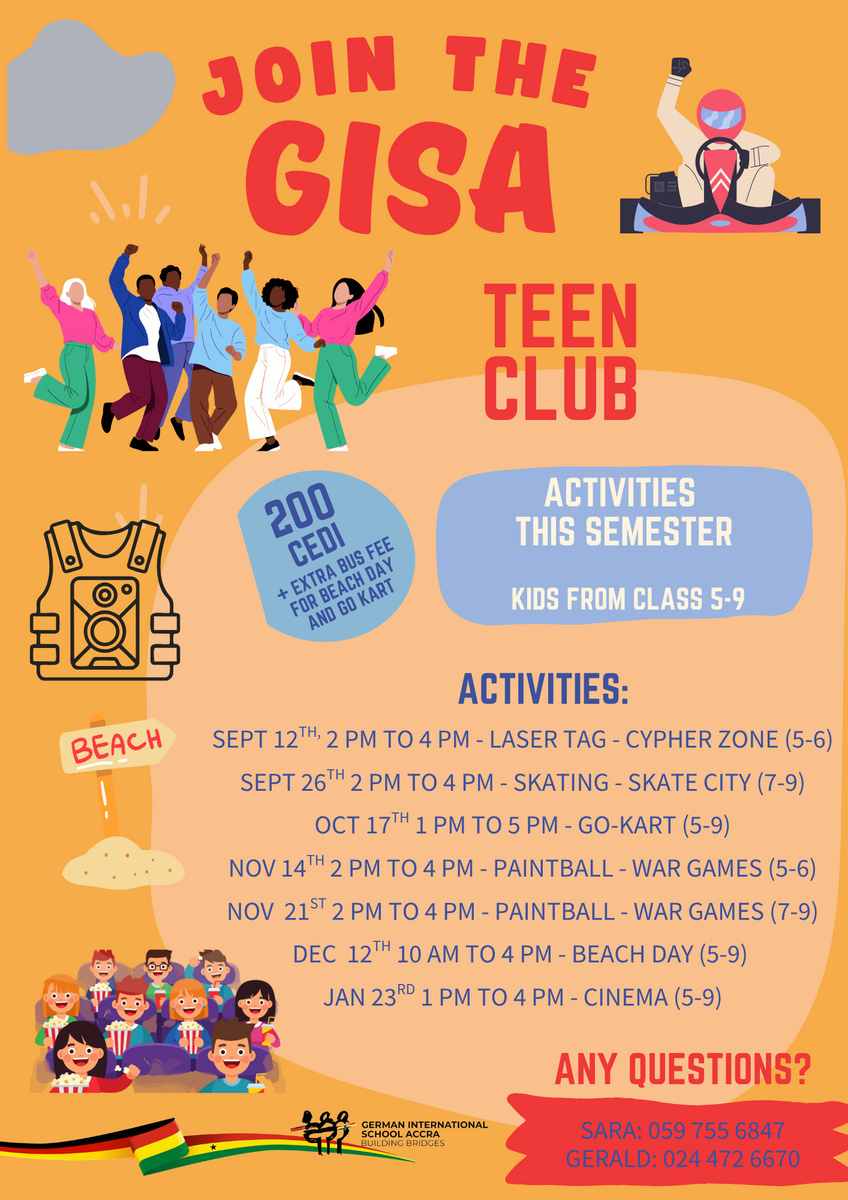
GISA Teen Club